NORAD Pact Would Change if Canada Pulls Out of F-35 Deal, Trump Envoy Tells Ottawa

U.S. Ambassador to Canada Pete Hoekstra said American interventions in Canadian airspace would increase if the country were not to purchase the fighter jets.
NORAD Pact Would Change if Canada Pulls Out of F-35 Deal, Trump Envoy Tells Ottawa
An F-35A Lightning II fighter jet practices for an air show appearance in Ottawa, Canada, on Sept. 6, 2019. The Canadian Press/Adrian Wyld
|Updated:
0:00

The U.S. ambassador to Canada has warned that the arrangements involving the North American Air Defense Command (NORAD) may have to change if Ottawa doesn’t follow through on a deal to purchase 88 American-made F-35 fighter jets.

“NORAD would have to be altered,” U.S. Ambassador to Canada Pete Hoekstra told CBC News in an interview published on Jan. 26.

He said that if Canada were not to move ahead with the full order, the United States would probably have to purchase more of the aircraft for its own air force and more frequently fly them into Canadian airspace.

“If Canada is no longer going to provide that [capability], then we have to fill those gaps,” Hoekstra said.

He called the defense relationship between the two countries “awesome,” but he said that interventions by U.S. Air Force planes over Canada would increase if the Canadian government were not to increase its order of F-35s from the 16 it has currently paid for.

NORAD is a partnership between Canada and the United States dating back to 1957 that tracks inbound threats and scrambles aircraft from either nation to intercept if required.

Canada in 2023 finalized a $14.2 billion deal to purchase 88 Lockheed Martin F-35s with the company and the U.S. government.

However, in 2025, Ottawa said it was reconsidering the deal, suggesting that it would instead purchase European alternatives, such as the Swedish-built Gripen fighter jet.

“If they decide they’re going with an inferior product that is not as interchangeable, interoperable as what the F-35 is, that changes our defense capability. And as such, we have to figure out how we’re going to replace that,” Hoekstra said.

The ambassador’s comments come at a time of increasing strain between the United States and Canada, as Washington has been particularly concerned about Ottawa’s warming relationship with Beijing.

Over the weekend, U.S. President Donald Trump lampooned a deal struck between Canada and China.

“Canada is systematically destroying itself. The China deal is a disaster for them. Will go down as one of the worst deals, of any kind, in history,” Trump said in a Jan. 25 post on Truth Social. “All their businesses are moving to the USA. I want to see Canada SURVIVE AND THRIVE!”
In a subsequent Truth Social post, Trump said China is “successfully and completely taking over the once Great Country of Canada.”
Trump has made other posts over the past few days expressing concerns about Canada’s recent agreements with China, saying that if Canada “makes a deal with China,” it will be subject to 100 percent tariffs on all Canadian goods exported to the United States.
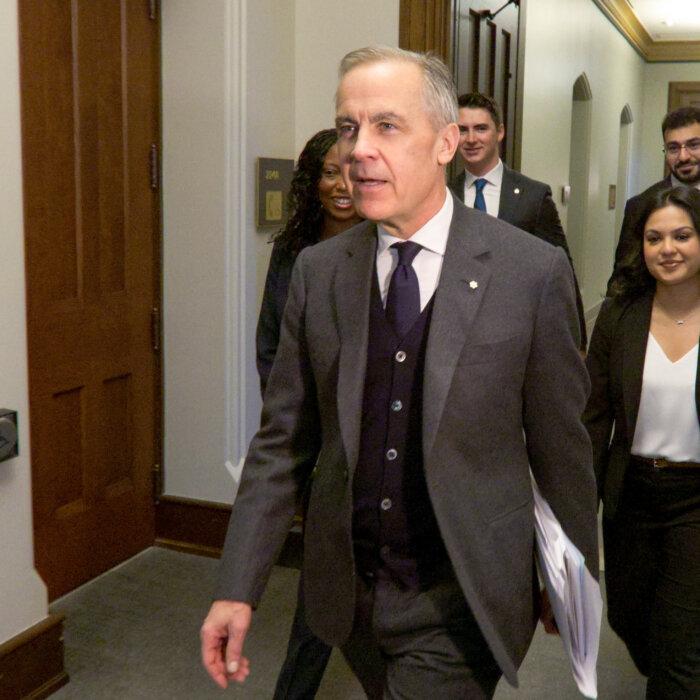
During his trip to China earlier this month, Canadian Prime Minister Mark Carney signed a series of agreements with Beijing, including deals slashing tariffs on Chinese electric vehicle imports from 100 percent to 6.1 percent for the first 49,000 vehicles in exchange for a reduction of Chinese tariffs on Canadian canola until at least the end of the year.

While he was in China, Carney said that Ottawa was in a “strategic partnership” with Beijing and that the progress made in the partnership “sets [Canada] up well for the new world order.” He also said relations between Ottawa and Beijing had entered a “new era.”

In response to Trump’s 100 percent tariff threat, Carney told reporters on Jan. 25 that Canada has “no intention” of pursuing a free trade agreement with China. He said Canada has commitments under the United States–Mexico–Canada Agreement “not to pursue free trade agreements with non-market economies without prior notification.”

“We have no intention of doing that with China or any other non-market economy,” Carney said. “What we’ve done with China is to rectify some issues that developed in the last couple of years.”

Olivia Gomm contributed to this report.
Google LogoMark Us Preferred on Google
Guy Birchall
Guy Birchall
Author
Guy Birchall is a UK-based journalist covering a wide range of national stories with a particular interest in freedom of expression and social issues.