Defence Minister Chris Penk has confirmed the New Zealand government has no plans to increase defence spending beyond 2 percent of GDP, despite the Trump administration’s expectation that allies lift military expenditure to at least 3.5 percent of GDP.
At a recent parliamentary review of his department, Penk said a “fundamental point” was that defence spending required a social license and that there was an opportunity cost to every dollar spent, which could otherwise go to health or education.
“I think that’s worthwhile just to place in context that any discussions with the United States of America, or any other [country are] subject to that general understanding and agreement that we have as New Zealanders, that we have an independent foreign policy,” he told the Foreign Affairs, Defence and Trade Select Committee.
“We are a sovereign nation. We make our own decisions as to the way that we [resource] our defence force. In terms of the reflections about appropriate levels of defence expenditure, the New Zealand government, on behalf of the New Zealand people, makes its own decisions in that regard.
“We have come to the conclusion as a government—and are grateful for the fact that it appears to be broadly supported—that 2 percent of our GDP is the right level for us to attain by the year 2032-33, and that’s why we’re getting on and doing exactly that.”

He warned that countries carrying their weight would be prioritised for expedited arms sales and intelligence sharing, while others would face a “clear shift in how we do business.”
Penk said he had also addressed the forum, and emphasised that New Zealand personnel were “present everywhere.”
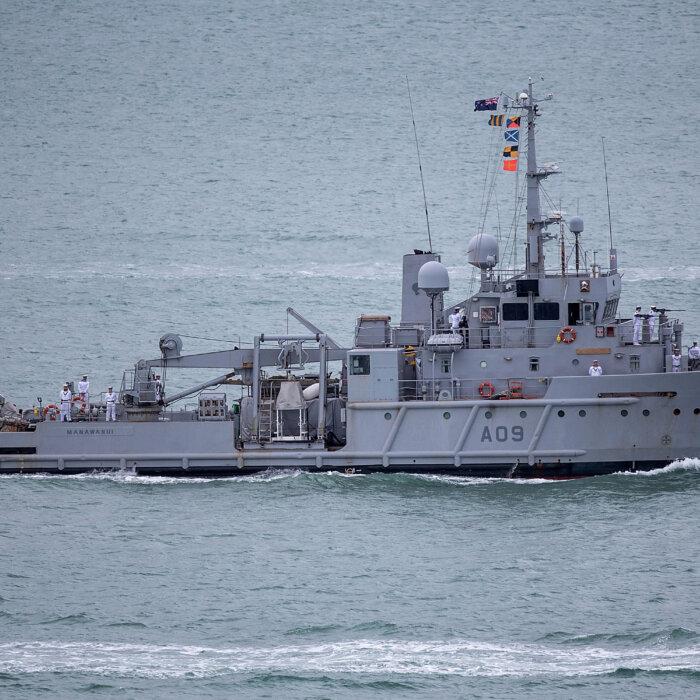
“And yes, we know that our platforms do need upgrading and indeed replacing in some cases, but again, that’s the decision we’ve already made in terms that we are comfortable with,” the minister said.
“My concern there is if they continue to push, and we concede to them, they'll ask for something else.
“I’m happy to state very clearly, for the record, that the position of this government is that we will make decisions that we consider to be the right ones for the New Zealand people. The comments or the views of other nations are interesting, so far as they go, but they’re not determinative of the decisions that we make.”
Moreover, Penk said a major focus of the government’s new spending would be on local industry.
“Clearly operational efforts are the key driver, but actually I think it is possible to say that we are able to achieve more than one aim at once ... to the extent that we see additional defence investment as an opportunity for the New Zealand defence industry,” he said.
“I think the economic growth potential, including through skills employment, including in our regions, is considerable, and if we take a thoughtful approach to the additional expenditure, then it will be possible to realise benefits for the New Zealand public that go beyond the straightforward, but obviously significant outcomes, that can be achieved under what you would traditionally think of as defence spending.”