Australia and New Zealand are entering a new era of co-operation as leaders from both nations embrace shared values in an increasingly turbulent world.
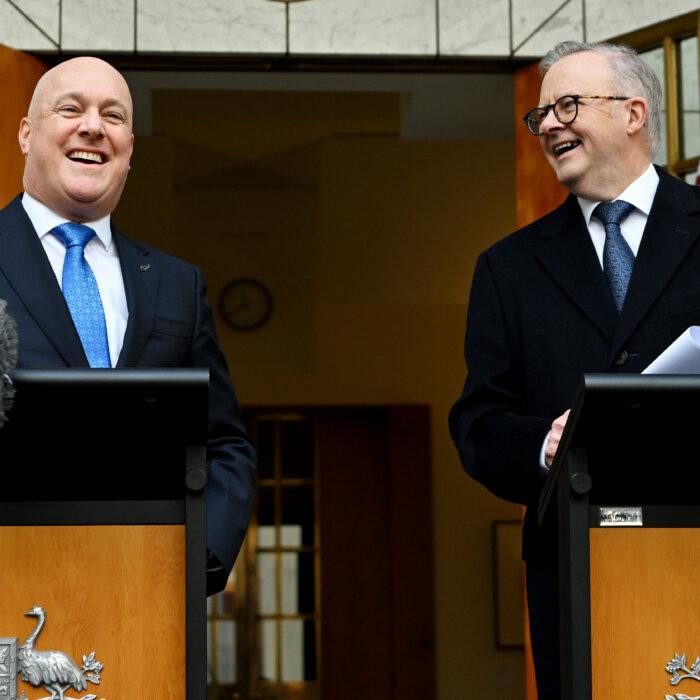
Prime Minister Anthony Albanese is in Queenstown for a two-day meeting with his New Zealand counterpart Christopher Luxon, marking his second time crossing the Tasman as leader after last visiting in 2023.
In a show of the bond between the two nations, Luxon warmly embraced the Australian prime minister as they met on Saturday for leadership talks.
The first day centred on unity between the two nations and how they can co-operate on various issues, including safeguarding security and prosperity in an increasingly uncertain geo-strategic environment.
This included committing to further integrating the two nations’ economies in the “most unpredictable and dangerous” strategic environment in decades.
Foreign policy challenges relating to dealing with China, the United States and China’s encroachment in the South Pacific region would be agenda-topping issues during the talks, University of Otago politics researcher Nicholas Khoo said.
Both leaders agreed that competition between China and the U.S. needed to be managed, and continued dialogue was important to reduce risks of misunderstanding, miscalculation, escalation, and conflict in the Pacific region.
China was the main topic on everyone’s lips, with the pair discussing their grave concerns over its increasingly “dangerous and provocative” behaviour in the South China Sea.
Luxon said the nation was a significant player in the world and a permanent feature of global affairs.
“We have an approach which is about co-operating where we can ... We disagree where we must. We have different systems, different values,” he said, which Albanese echoed.
Both leaders praised work to strengthen military co-operation, which Khoo said was appropriate given the increasing uncertainty in international politics.
“It’s an area where we could legitimately expect to see very real progress,” he told AAP.
Khoo said this meeting showed the two neighbours’ “steady build-up” of co-operation, which he said didn’t exist until two years ago.
“This is, in some aspects, a new era of co-operation, which is a positive development for both sides,” he said.
Khoo said New Zealand only had one alliance partner in Australia, and this summit showed its investment in that relationship.
“In these very turbulent times, this is one of the linchpins of regional security that deserves the attention,” he said.
The Australian and New Zealand standards bodies have also announced a new agreement to renew joint standards arrangements, which will streamline regulations for certain sectors, including construction, healthcare and manufacturing, to boost economic growth.
In a sign of closer ties, Albanese joked about going for a “cuddle” as both leaders sauntered off after the media conference arm-in-arm, laughing.