Nearly half of Canadians who have renewed their mortgages since last year are facing housing costs that eat up at least half of their monthly household budget, a new survey suggests.
A poll from rate comparison website Rates.ca found 45 percent of those who participated in the survey reported that at least 50 percent or more of their monthly income was allocated to housing expenses.
At the same time, borrowing costs have increased for 82 percent of Canadians who have renewed their mortgages since January 2025, according to the survey conducted last month by Leger for Rates.ca. The majority of those polled said they had experienced an increase in their mortgage rates, ranging from 2 percent to 4.99 percent.
Hardest hit are young and foreign-born homeowners as well as lower-income households.
The survey found that 90 percent of homeowners aged 18 to 34 renewed their mortgage at an increased rate. Among this group, 56 percent reported spending between 50 and 70 percent of their monthly budget on housing.
Meanwhile, 56 percent of foreign-born homeowners say their mortgage accounts for 50 to 70 percent of their household budget, compared with 35 percent of Canadian-born borrowers.
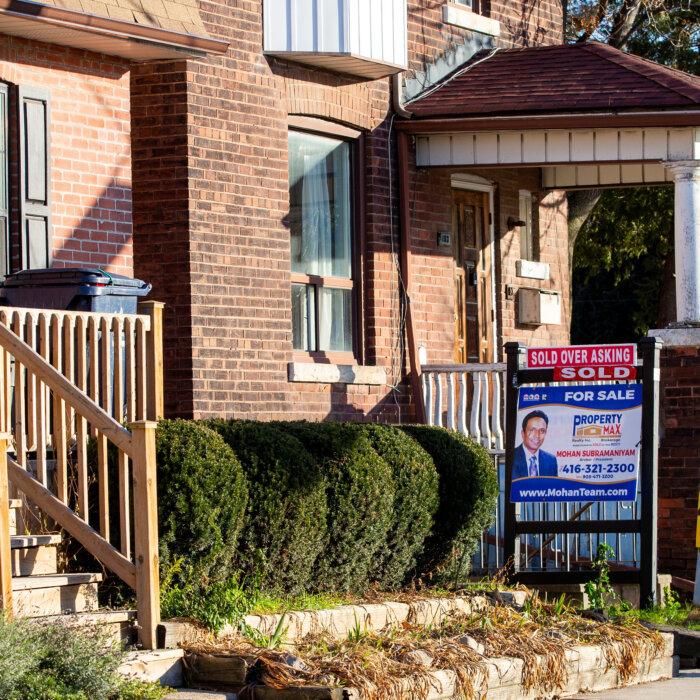
Fifty-four percent of participants earning $60,000 to $100,000 each year said they spend half or more of those earnings on their mortgage.
The survey results come amid a historical wave of residential mortgage renewals across the country. Roughly 60 percent of all outstanding Canadian mortgages are maturing between 2025 and 2026, forcing millions of households off pandemic-era low interest rates into a higher rate environment.
The Canada Mortgage and Housing Corporation (CMHC) defines housing as affordable when it costs less than 30 percent of a household’s before-tax income.
Major Canadian financial institutions like the Royal Bank of Canada (RBC) also say that housing costs should not exceed 30 to 32 percent of a household’s gross income. The bank says that the 30 percent should cover mortgage expenses, property taxes, heating costs, and condo fees.
The Financial Stability Report released by the Bank of Canada in May indicated that the majority of borrowers with five-year fixed terms who renewed their mortgages in the previous year are likely to see increases. In the upcoming 12 months, the Bank anticipates that 12 percent of all mortgage renewals will encounter average payment hikes of approximately 15 percent.
Ontario mortgage agent Jenny Tate said most households can absorb the increase without defaulting, but that doesn’t mean that households aren’t stretched thin.
“Technically everyone who got these mortgages was stress-tested at roughly two points above their contract rate, and mortgage arrears in Canada remain low,” Tate said in the report. “But ‘absorb’ is doing a lot of work in that sentence. It’s not missed payments. It’s the vacation that doesn’t happen, the RESP contribution that gets skipped, the emergency fund that quietly stops growing. The damage shows up in savings rates, not default rates.”
The survey also found that 40 percent of all homeowners who renewed their mortgages this year chose to lock for a five-year term, while 35 percent chose three-year terms. Just 7 percent opted for a term longer than five years.
Tate said while “everyone remembers someone who locked in five years at the peak and regretted it,” she still cautions against trying to predict where rates are headed.
“Nobody knows, and anyone who tells you they know where rates will be in 2029 is guessing with confidence,” she said. “The right term is about your buffer, not your forecast. If a one-point increase at your next renewal would break you, you shouldn’t be making rate bets at all.”