Nearly 20,000 U.S. citizens have returned safely from the Middle East since Feb. 28, when the Iran conflict broke out, Dylan Johnson, assistant secretary at the Bureau of Global Public Affairs, said in a March 5 statement.
“These figures do not include the many Americans who have safely relocated to other countries or those who have departed the Middle East but are still in transit back to the United States,” Johnson said. “At the direction of Secretary [Marco] Rubio, Department of State charter flight and ground transportation operations are underway and will continue to ramp up with additional flights and ground transports taking place today.”
“Through the State Department’s 24/7 Task Force, we have assisted over 10,000 Americans abroad, including offering security guidance and travel assistance. The State Department will continue to actively assist any American citizen abroad, who wishes to depart the Middle East, to do so.”
Johnson highlighted that the department has set up an online Crisis Intake form for Americans residing in Kuwait, Bahrain, the United Arab Emirates (UAE), Qatar, Saudi Arabia, and Israel.
U.S. citizens completing the form will receive information about upcoming ground transportation and charter aviation options. Americans in the Middle East can contact the State Department at +1-202-501-4444 for assistance.
In a March 5 post on X, the State Department’s Bureau of Consular Affairs said that in the UAE, limited commercial flights are currently operating out of international airports in the country.
“Passengers are advised not to travel to the airport unless they hold a confirmed ticket and have been explicitly advised by their airline to do so. There are overland routes to Oman and Saudi Arabia where commercial options to depart the region are operating, but there are reports of congestion,” the bureau said.
In Qatar, the airspace and maritime routes remain closed, but the Salwa land border crossing into Saudi Arabia is currently open, the bureau said.
In Israel, the West Bank, and Gaza, the Ben Gurion Airport was scheduled to reopen on March 5 for limited inbound flights, according to a post on X by the agency.
However, “we have no information yet on when outbound flights may become available,” it said. “There are overland routes to Taba, Egypt, where commercial options to depart the region are operating. Americans should strongly consider departing on one of these overland routes if they believe it is safe to do so.”
Americans in Oman should consider leaving as some flights are departing from the nation’s international airports, the bureau said.
Firepower to ‘Surge Dramatically’
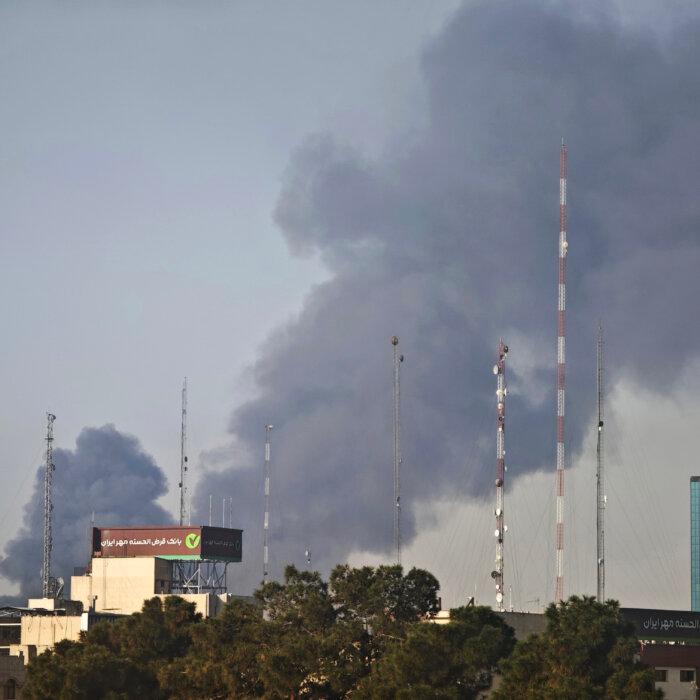
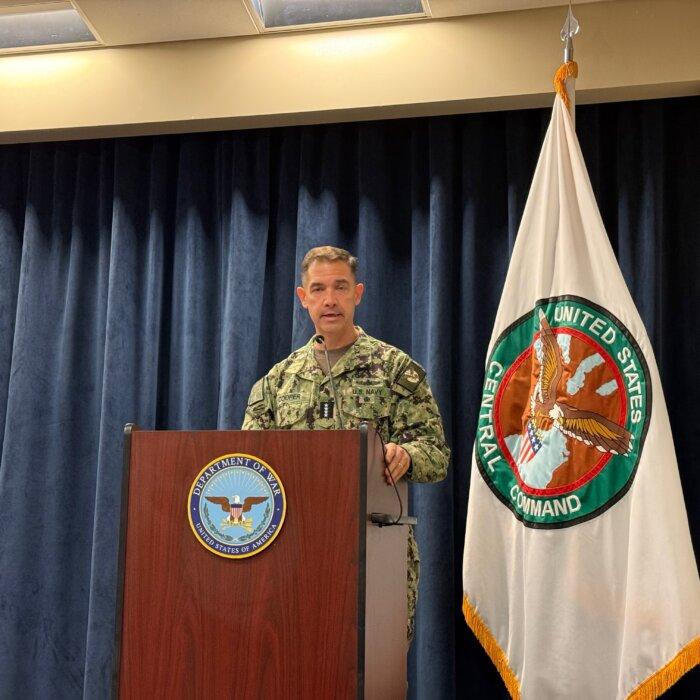
The Iran conflict, now in its sixth day on Thursday, began after U.S. and Israeli forces launched coordinated strikes against Tehran on Feb. 28.Adm. Brad Cooper, head of U.S. Central Command, said Thursday that strikes on the Iranian Navy have “intensified.”
U.S. forces have, to date, sunk more than 30 of Iran’s ships, including “an Iranian drone carrier ship roughly the size of a World War II aircraft carrier,” Cooper said.
Secretary of War Pete Hegseth said Thursday that firepower over Iran was about to “surge dramatically.”
“When we say more to come, it’s more fighter squadrons, it’s more capabilities, it’s more defensive capabilities,” Hegseth said. “And it’s more bomber pulses more frequently.”
“The threat has not yet been removed. Every missile is lethal and poses a danger,” Zamir said. “We are now moving to the next phase of the operation. In this phase, we will further dismantle the regime and its military capabilities. We have additional surprises ahead that I do not intend to disclose.”
After the House vote, Rep. Mike Johnson (R-La.), speaker of the House, said the United States was conducting a “limited operation” in Iran that is “limited in scope and duration.”
“We are not at war. We have no intention of being at war,” Johnson said, adding that the U.S. mission against Iran was “nearly accomplished.”