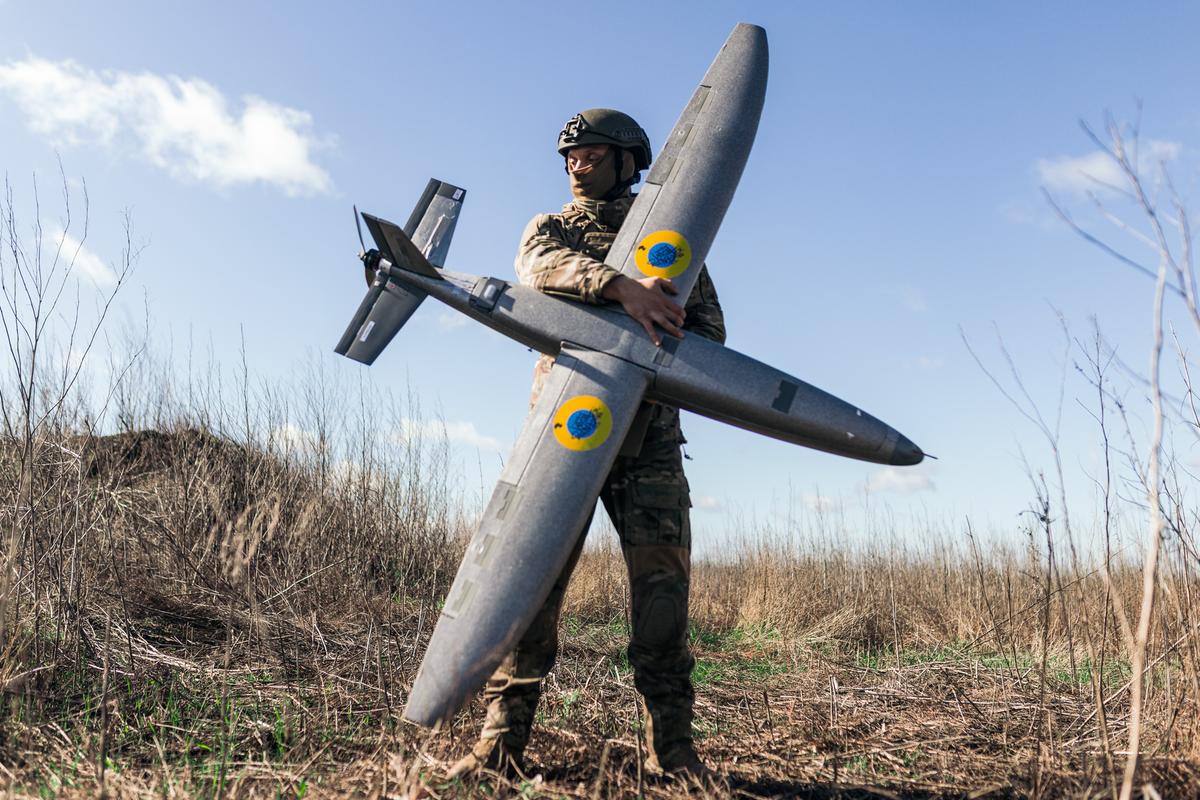
A drone was shot down by NATO air defense jets after it entered Latvian airspace on Aug. 14, the Latvian National Armed Forces (NBS) said.
“We inform you that there is a threat in Latvia’s airspace. Go indoors, follow the two-wall principle! Follow official announcements,” the NBS wrote in a post on X. “If you notice a low-flying or suspicious object, do not approach it and call 112!”
In a follow-up post, about 30 minutes later, the NBS announced that the threat had ended.
“Allied fighter jets have successfully shot down the unmanned aerial vehicle that entered the airspace!” the military said.
The Latvian Ministry of Defense said in a statement that “a foreign unmanned aerial vehicle that had entered Latvia as a result of Russian electronic warfare” had been successfully shot down.
It did not say where the drone had come from.


“The National Armed Forces, together with NATO allies, continuously monitor the airspace to ensure the ability to respond immediately to potential threats,” the defense ministry said. “The National Armed Forces have strengthened air-defense capabilities along the eastern border by deploying additional units.”
NATO spokesperson Allison Hart confirmed the organization’s involvement in the operation in an Aug. 14 post on X, saying that Italian Eurofighters based in Lithuania and Turkish F-16s in Estonia were scrambled, with one Eurofighter downing a drone over Latvian airspace.
She added that the day before, Romanian F-16s and Spanish F-18s were scrambled after drones entered Romanian airspace near the Ukrainian border.
“Day after day, NATO is ready and able to react to any potential threats, 24/7, to safeguard our territory & protect our people,” Hart said.
Finland, another EU and NATO member that borders Russia, temporarily restricted airspace and maritime activity in the eastern Gulf of Finland on Aug. 14, its defense forces said in a post on X.
The Finnish military added that this was a precautionary measure against possible drones. No drones strayed into Finland, and the restrictions were lifted a few hours later, it said.
Lithuanian Defense Minister Robertas Kaunas said on Aug. 6 that Russia is considering using captured Ukrainian drones to stage false flag attacks against countries in the Baltic region.
“We have information that Russia is considering carrying out unconventional kinetic attacks against critical infrastructure in the Baltic region,” Kaunas told Lithuanian outlet 15min, citing the nation’s military intelligence service.
“It is likely that Russia could use Ukrainian-made drones for this.
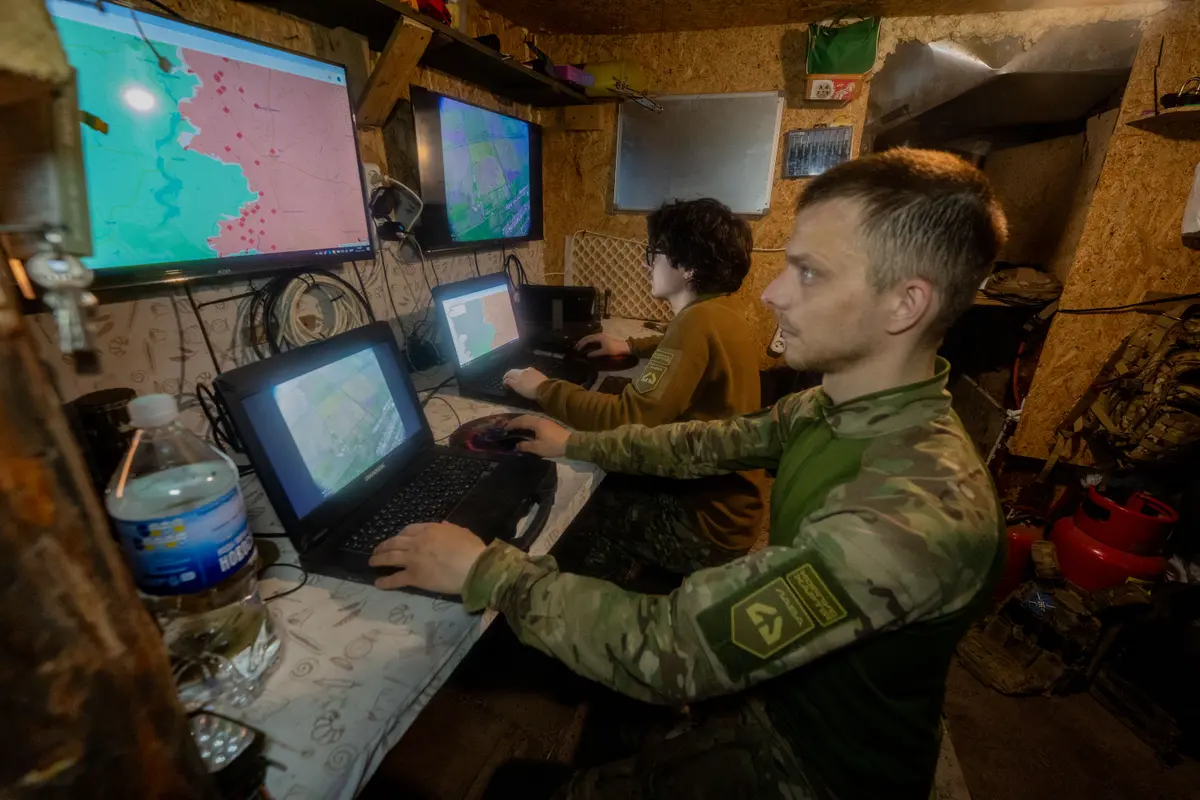
“Since Ukraine successfully attacks Russia, some of the Ukrainian drones are intercepted by Russia while defending themselves, and some of the drones crash.”
“Russia has these drone parts or fragments, and it is capable of constructing them, molding them into a working device, and the theoretical possibility that such drones could be used for a false flag operation exists,” the minister said, according to Lithuanian state outlet Lithuanian Radio and Television.
He added that such a false flag operation with a Ukrainian drone had been assessed as the “most realistic scenario.”
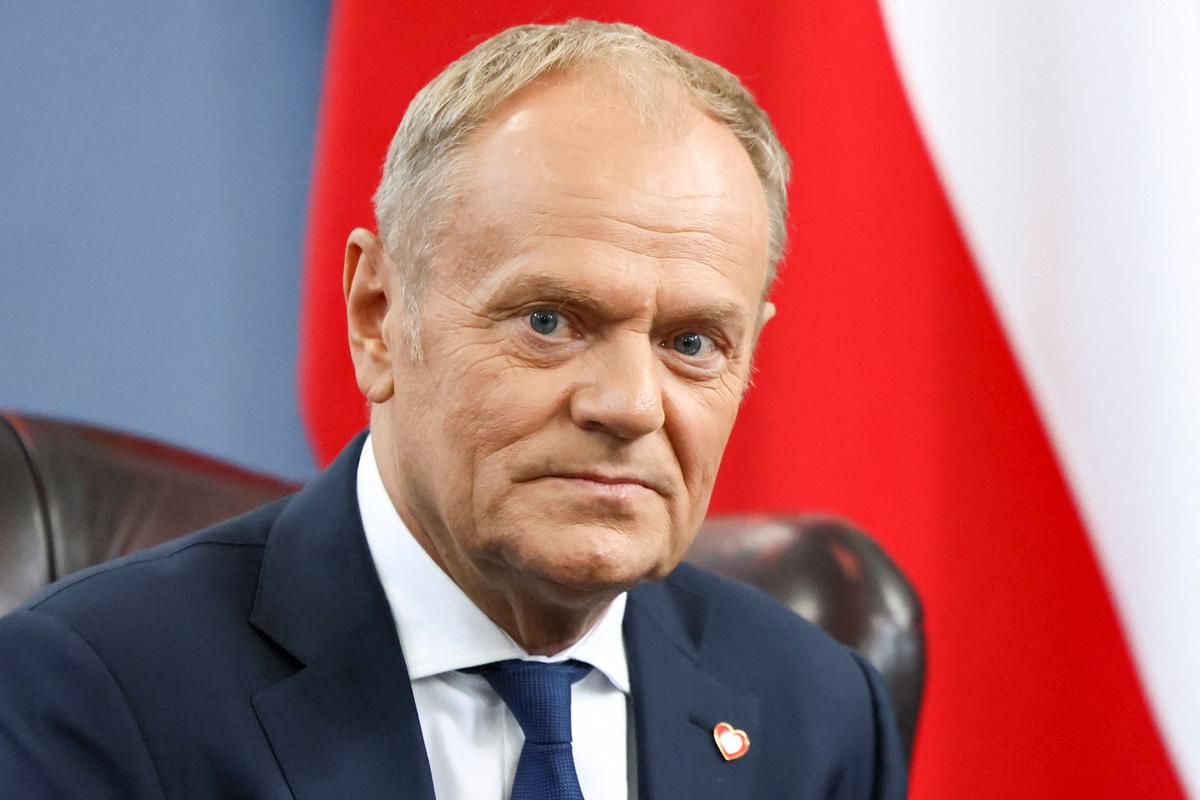
Polish Prime Minister Donald Tusk said on July 25 that “without exception,” the nations “share the view that the situation is highly unstable.”
“Various kinds of escalation can be expected in the coming weeks and months,” he added at a summit of NATO’s Eastern Flank nations in Gdansk, Poland. “As a group of countries directly exposed to this risk, because we border Russia, Belarus, and Ukraine, we will want to prepare ourselves.”
“This is another wave of fearmongering aimed at continuing to brainwash people and prepare the population for further militarization,” Kremlin spokesman Dmitry Peskov said on July 15, according to Russia’s state-run news agency TASS.
Peskov accused Lithuania, along with the other Baltic states, of using the fear of an alleged Russian threat to bring more NATO forces to the region.
“To do this, they need to create an image of an enemy in another country, in this case ours, and use this pretext, as we say, to continue deploying NATO military infrastructure in all its forms across the Baltic states,” he said.

The Epoch Times contacted the Russian Ministry of Foreign Affairs for comment but did not receive a response by the time of publication.