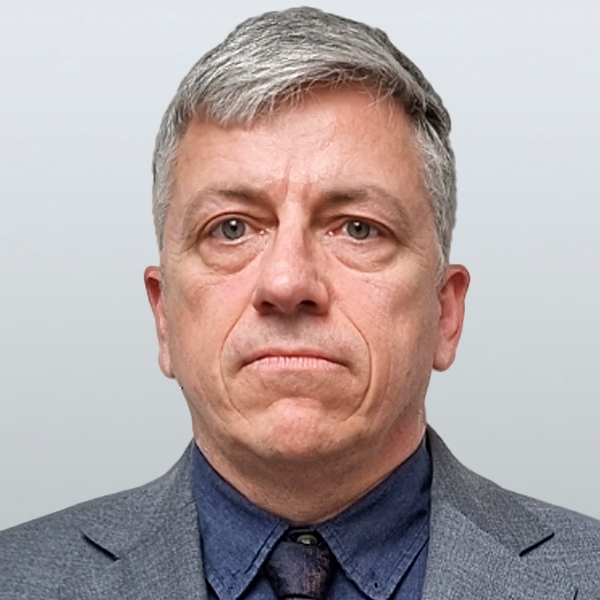
Albert Swidzinski, director of analysis at Warsaw-based think tank Strategy & Future, told The Epoch Times, “They’ve got a very general commitment to reach 3.5 percent of their GDP on strictly defense materiel, by 2035, and an extra 1.5 percent on infrastructure-related spending.”
However, he said that 2035 is 10 years away, and many people in Europe believe that there might be a “direct conflict between NATO states and Russia within three years.”
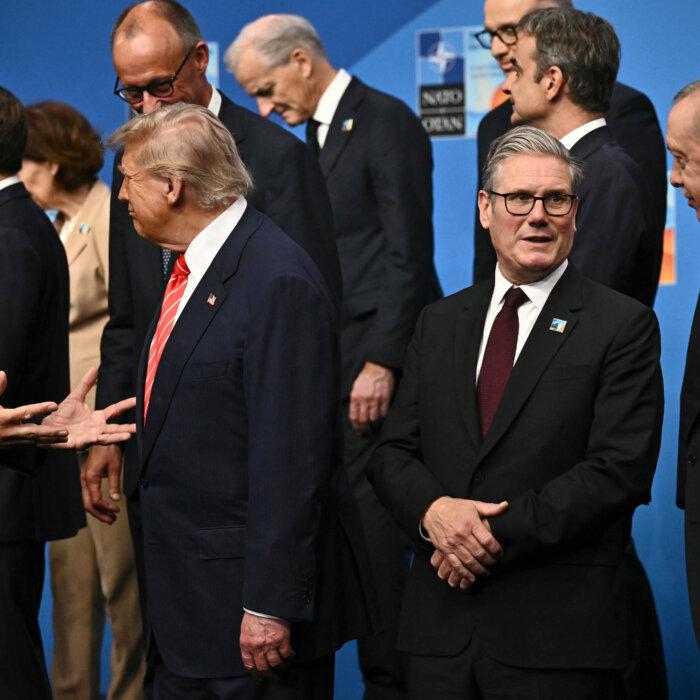
At the summit, several other NATO members, such as Belgium and Italy, signed on to the declaration reluctantly.
Tim Ripley, a defense analyst and author of “Little Green Men: The Inside Story of Russia’s New Military Power,” told The Epoch Times that rather than the agreement being a categorical end of the story, it is likely only the beginning of a long, bureaucratic saga.
Ripley said there was a danger that NATO countries might use different definitions of what is core or noncore defense spending to “massage their budgets and their contributions.”
How Much to Spend Versus How to Spend
Emmanuel Dupuy, president of the Institute for European Perspective and Security Studies, a Paris-based think tank, told The Epoch Times that he thought it was a “disappointing” summit because although there was a show of “artificial unity,” there remain questions about how the 5 percent target can be achieved.“There was a lot of promises, and almost everyone agreed, except Spain ... but it’s not reasonable. It’s not possible. Where do we find the money? Where do we have this capacity?” Dupuy said.
Swidzinski said he sees a different problem. He said the percentage of GDP figure is a “very synthetic marker.”
“Spending money doesn’t really make you a powerhouse. The Saudis spend tens of billions of dollars, and they are not a powerhouse. Israel spends under $20 billion a year, and they are,” Swidzinski said. “So, how you spend the money is far more important than the amount of money itself.”
He said an example of spending money badly was Poland’s recent purchase of 96 Apache helicopters from the United States for what he called an “absurd amount of money.”
Swidzinski said the Apaches were really made for a “different era of war fighting.”
“They won’t have the impact on the battlefield that they had in the 1980s or ‘90s,” he said.
Swidzinski said Elon Musk had it right when he recently said the future was in autonomous systems, such as drones.
What Counts as Defense Spending?
The Hague declaration also states that “allies will account for up to 1.5 percent of GDP annually to inter alia protect our critical infrastructure, defend our networks, ensure our civil preparedness and resilience, unleash innovation, and strengthen our defence industrial base.”Ripley said there was a danger that some NATO members would include items from their normal health or transport budgets.
“There is a grave danger that everybody tries to cook the books and throw in a load of stuff just to meet the target, just to make it look good,” he said.
Italy plans to invest 206 billion euros (about $241 billion) to upgrade its railways, and 162 billion euros (about $190 billion) on its roads and motorways, but some of these projects could come under the NATO definition of “resilience” projects.
In the Ukraine conflict, NATO had seen the damage that could be done by Russian infantry, and a combined attack with missiles, drones, cyberattacks, and sabotage by infiltrators, Ripley said.
“You need to make your society able to withstand the shock of that kind of thing and allow your armed forces to mobilize and move to the combat zones. That is perfectly valid, and that requires money,” he said.
Ripley said it was to be expected to see NATO countries spending money on strengthening or enlarging railways, highways, bridges, and tunnels to ensure that trains and heavy equipment could be quickly transported across the continent, or—in the case of the UK, Canada, and the United States—loaded onto ships to be sent by sea.
He said money might also be earmarked for building air raid shelters and air raid warning systems, and “even pandemic resilience vaccines, having a laboratory that can make a vaccine in case of a pandemic, or even a biological weapon attack.”
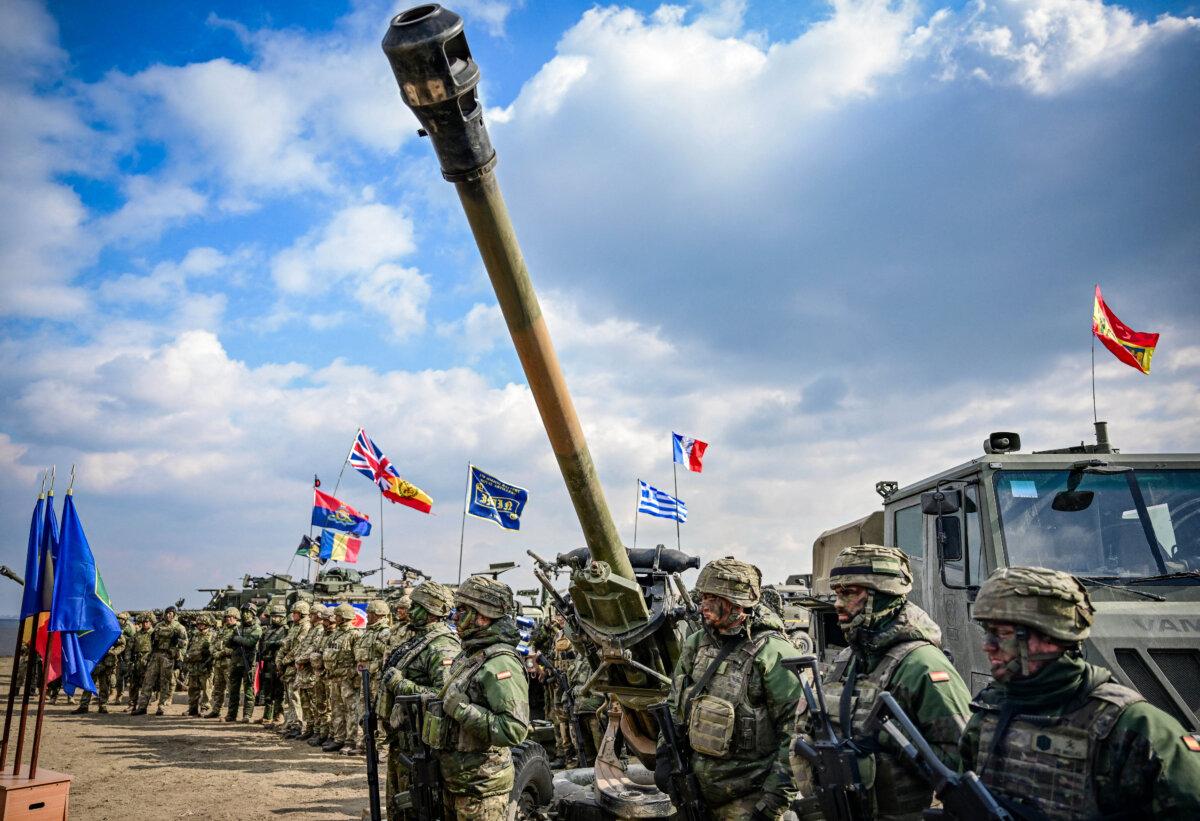
This sort of spending might be the easiest for European public opinion to accept, Dupuy said.
Hitting Spending Targets
So, how will NATO ensure that the money is spent and all 32 members hit their targets?However, Ripley said, “When you look at the NATO defense statistics, in the small print at the bottom, it says ‘as declared by all the alliance ministries of defense.’”
He said he did not expect that to change, and he did not expect any greater levels of auditing.
“I can’t see any nation agreeing to have NATO auditors arriving in their ministry of defense and counting up how much they spend on paper clips, or pensions, or whatever,” Ripley said.
“It would be such an infringement of their sovereignty. I can’t see anybody ever signing up for that.”