NATO has held its first formal meeting with the Australian Department of Defence on deepening cooperation across military supply chains.
Australia is a major nonmember partner of NATO, meaning that it contributes heavily to military campaigns and initiatives but is not a full member with obligations such as paying for the alliance.
NATO was set up decades ago to counteract the former Soviet Union, and includes North American nations along with European countries. It functions as a military alliance, and if one member is attacked, the others are obligated to defend it.
However, it has come under heavy criticism from the United States over European members’ insufficient contributions to funding the bloc and unwillingness to support the war in Iran.
On April 16, NATO Assistant Secretary-General for Defence Industry Tarja Jaakkola said the bloc’s recent meeting with Australia was the first of its kind to discuss defence industrial cooperation.
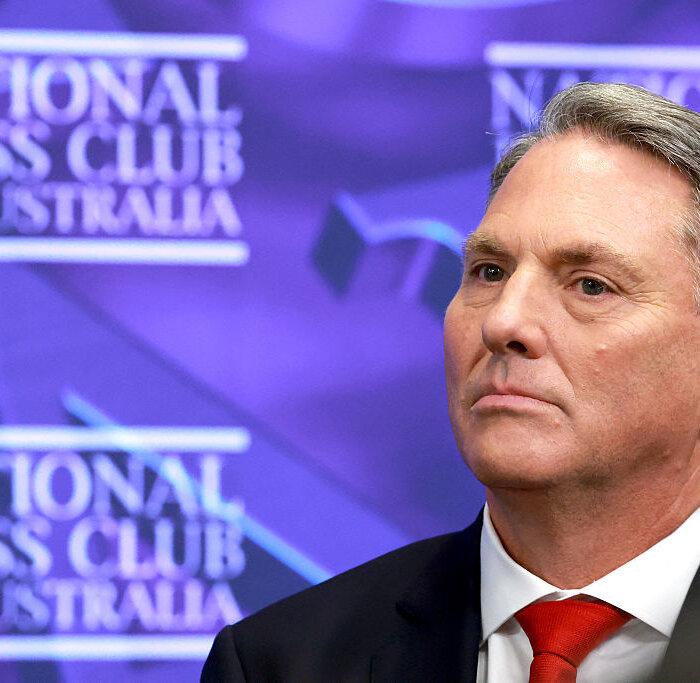
Jaakkola also earmarked further collaboration on “multinational projects and standardisation,” while discussing supply-chain security, stockpiling, space, and possible areas for codevelopment.
Last year, Australia signed a deal with NATO’s Support and Procurement Agency allowing the nation to participate in a wider array of NATO activities.
But it is not the first time ties between Australia and NATO have deepened under Australian Prime Minister Anthony Albanese, who has steadily ramped up cooperation since coming to power in 2022.
Why Is NATO Interested in Australia?
Regarding the latest meeting, Michael Shoebridge, cofounder of Strategic Analysis Australia, told The Epoch Times that the move was part of a broader campaign by Western democracies to “hedge” against what is perceived to be the Trump administration’s abandonment of previous ties.Graham Young, of the Australian Institute for Progress, said there are complementary areas in which NATO and Australia can work together.
“[German manufacturer] Rheinmetall has a base in Ipswich, Queensland and just signed a contract to supply armoured vehicles to Germany,” he told The Epoch Times. “NIOA is Australia’s largest privately-owned defence manufacturer with factories both here and in the United States and is expanding rapidly.”
Young also pointed to Boeing Australia’s development of the Ghost Bat drone, as well as DroneShield, which develops systems to counteract attack drones.
“So there is a clear ‘What’s in it for me?’ for NATO,” Young said. “But we shouldn’t allow a relationship with NATO to somehow replace our relationship with the United States, which has demonstrated once again that it has the leading defence technologies in the world.”
The Australian Department of Defence did not respond to a request for comment.