The 2010 New Strategic Arms Reduction Treaty, known as New START, is due to expire on Feb. 5.
Kremlin spokesman Dmitry Peskov said Moscow had yet to receive any formal reply from the United States to a proposal made by Putin, TASS reported on Jan. 15.
“We are awaiting a response to Putin’s initiative and consider this a very important issue,” Peskov said.
Russian officials have said in recent weeks that they hope Washington will issue a substantive response before the treaty expires, despite how little time remains.

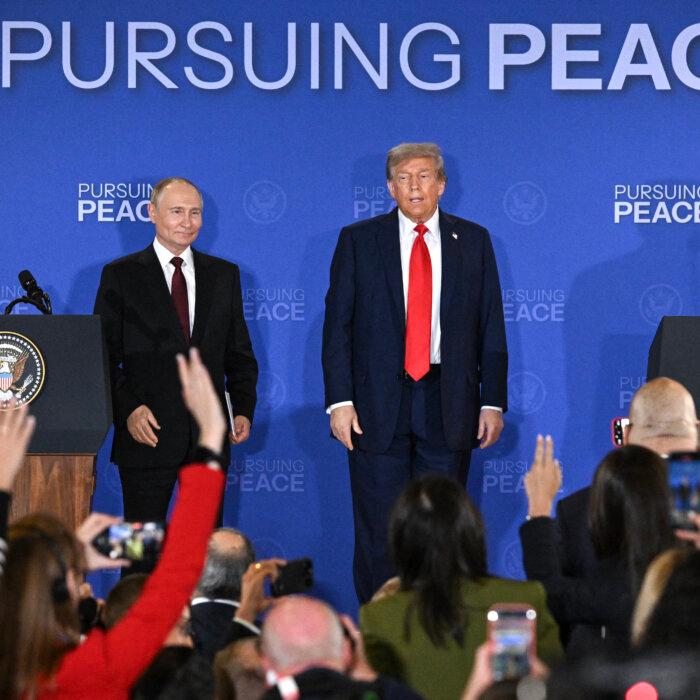
Putin himself has struck a more detached tone in public comments, suggesting Russia would not view a U.S. refusal as a critical problem.
He also said that Russia’s nuclear deterrence capabilities were more advanced than those of any other nuclear-armed state and were continuing to develop.
New START
New START limits both the United States and Russia to a set number of deployed long-range nuclear warheads and delivery systems.It caps deployed intercontinental ballistic missiles, submarine-launched ballistic missiles, and heavy bombers, while also placing overall limits on launchers, whether deployed or not.
The treaty also restricts Russia’s most powerful long-range weapons, including the Avangard hypersonic glide vehicle and the Sarmat intercontinental ballistic missile, which can reach the United States in roughly 30 minutes.
Verification has been central to the agreement. The treaty requires on-site inspections and regular exchanges of detailed data on nuclear forces, giving each side visibility into the other’s arsenal.
The accord was extended for five years in 2021, pushing its expiration date to February 2026.
In February 2023, Russia suspended its participation in New START, saying it would continue to observe the treaty’s numerical limits but would no longer allow inspections or share data.
The United States has said Russia’s suspension is legally invalid. Washington responded by withholding its own treaty data and blocking Russian inspections, while saying it could restore full cooperation if Moscow did the same.
The United States and Russia together possess nearly 90 percent of the world’s nuclear weapons.
Both Washington and Moscow have raised the issue of other nuclear-armed states.
Trump has said future talks should include China, whose nuclear arsenal is far smaller but growing. Russia has countered that the nuclear forces of U.S. allies Britain and France must eventually be part of any broader arms control framework.