More than 8,000 people have been evacuated from their homes due to wildfires in Saskatchewan, the government says.
Saskatchewan declared a state of emergency on May 29 as the province has seen 207 wildfires so far this year, compared to an average of 125, according to the Saskatchewan Public Safety Authority (SPSA).
There are 15 active fires currently in the province, and seven of those are deemed out of control, Provincial Fire Commissioner Marlo Pritchard said during a May 31 news conference.
Premier Scott Moe confirmed that there are more than 8,000 people that have been evacuated from their communities so far, with that number expected to climb.
“We’re over 8000 and climbing and climbing quickly, which leads to severity of the situation that we were having here,” he said at the news conference.
“The next four to seven days are absolutely critical, until we can find our way to changing weather patterns and ultimately a soaking rain throughout the North.”
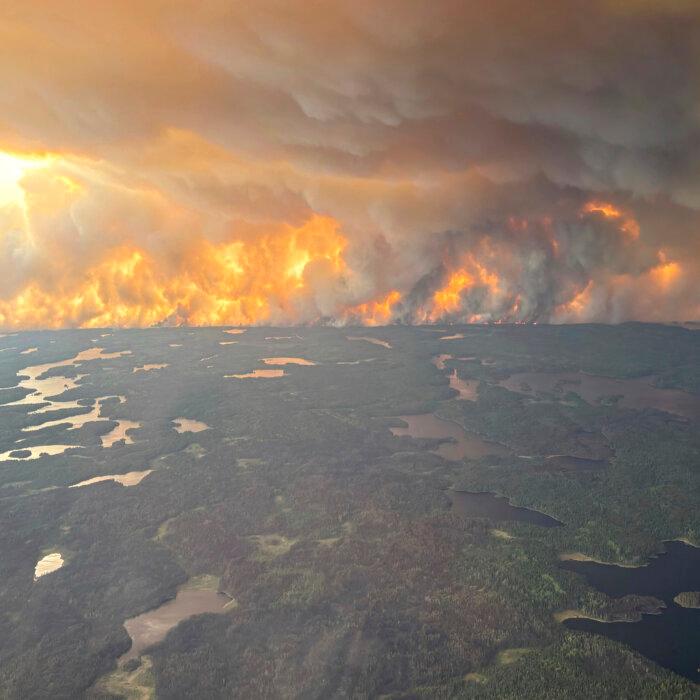
The premier also said the province’s resources to tackle wildfires are stretched thin
“We cannot manage and handle a single other fire,” he said. “We are using all the resources that we have, whether it be in supporting our front-line firefighters with the contractors, the air support, or additional people alongside them, or whether it be supporting the people that are living in the north.”
On May 30, SPSA vice president of operations Steve Roberts said that weather and human activities have been the major factors in the number of wildfires this year.
“Human-caused fires are the leading result before June,“ he said at a news conference. ”These are human-caused fires. They’re happening in very volatile conditions, and that’s why we’re seeing the impact that we’re seeing right now.”
Pritchard said that crews are working to protect buildings and prevent damage as much as possible. He said some structures have been lost, but due to conditions on the ground it has been difficult to get an exact number.
The commissioner also said that communities in south Saskatchewan can expect poor air quality for a couple of days.
“We do want to note that we are seeing a wind change, and that a lot of the smoke that has been sitting sitting last day or so will be moving south, and I can tell you that in the next 24 to 48 hours, the communities in the south of province will experience extreme smoke conditions,” he said.
Environment Canada has issued several air quality warnings for parts of Alberta, Saskatchewan, and Manitoba due to wildfire smoke.
SPSA also said there has been a ban on all-terrain vehicles and utility terrain vehicles in provincial parks and on Crown land to try and prevent further wildfires from starting.
Roberts said about 10 percent of fires are caused by these types of vehicles, or similar ones.
Saskatchewan has received help from other provinces, including aircraft from Quebec and Alaska and firefighters from Nova Scotia. Firefighters are also expected to come from New Brunswick.
Prime Minister Mark Carney’s office has said he has been in touch with Premier Scott Moe and has convened the Incident Response Group with ministers and senior officials to address the wildfire situation in many parts of the country, particularly Western Canada.
Carney said his government is “ready to mobilize additional federal support wherever needed and in all aspects.” He also said that Ottawa will partner with the Canadian Red Cross to match donations for those affected.