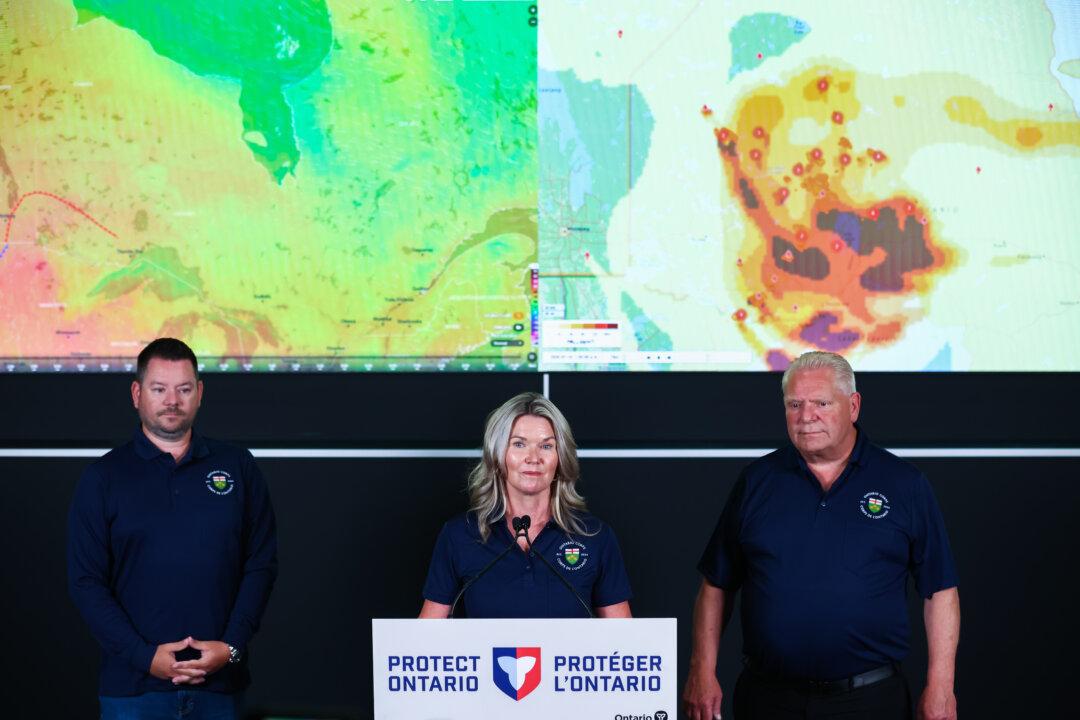
More than 1,800 people have been evacuated from their homes as wildfires continue to burn across large swathes of northern Ontario, according to Premier Doug Ford.
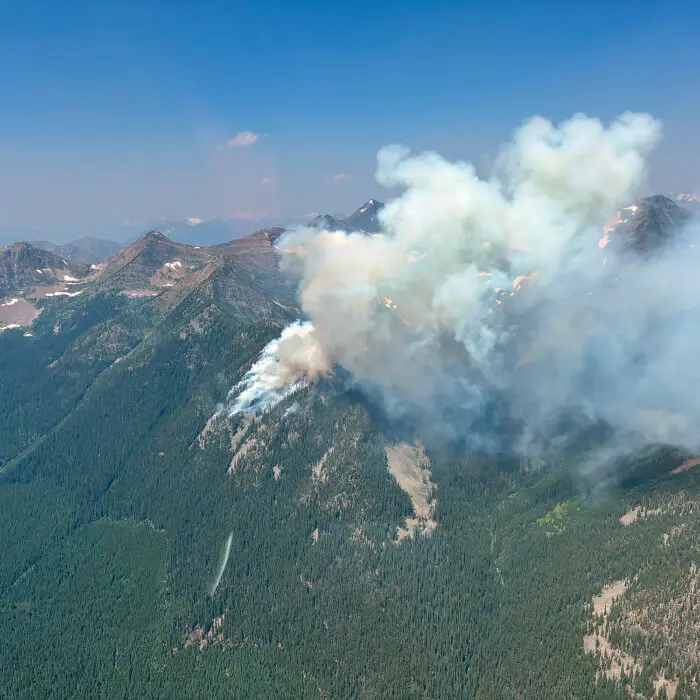
Ontario currently has 190 active wildland fires that have burned roughly 735,000 hectares of land, according to Ford, who noted that 56 of the fires were categorized as not under control, 112 were under observation, six were being held, and 16 were under control.
“As I’ve said from the beginning, we will not spare a penny fighting these fires and keeping people safe,” Ford said at a July 20 press conference in Toronto, alongside Emergency Preparedness Minister Jill Dunlop and Natural Resources Minister Mike Harris.
Evacuations
Thirteen communities have been evacuated or are in the process of being evacuated, according to Ford. He added that a decision on whether to evacuate one additional community is still pending.Dunlop said evacuees have been flown to hubs in Thunder Bay or Red Lake and are then generally transferred to host cities including Kapuskasing, Sudbury, Barrie, and Niagara Falls, where they are accommodated in hotels, evacuation centres, or with relatives.
The Canadian Red Cross has also set up an evacuation centre in Thunder Bay for residents from remote communities including Namaygoosisagagun First Nation, also known as Collins First Nation, and the community of Armstrong.

“We have to look at things such as the healthcare capacity in the areas, hotel capacity, and the wraparound services as well,” Dunlop said, noting some have also been hosted in Thunder Bay. “We’re working closely with the host communities to ensure that those services are provided.”
Destruction
Whitewater Lake First Nation said much of the community’s homes and infrastructure has been destroyed by the fire and that members have lost much of their personal belongings.Images posted on social media show residents of Namaygoosisagagun First Nation escaping by boat last week as fires approached.
Recent rain has slowed some fires, but Harris said on Saturday that sustained rainfall would be needed to bring the blazes under greater control, especially due to recent lightning strikes.
Restricted fire zones and bans on open-air burning remain in effect across northwestern Ontario.
The province has also been reminding municipalities and First Nations that they can ask to get emergency notifications through the province’s Alert Ready system.
Respose to Trump’s Wildfire Comments
Speaking July 20, Ford also criticized U.S. President Donald Trump, who has suggested he may raise tariffs on Canada due to smoke from the Ontario wildfires entering the United States.“It’s disappointing to say the least,” Ford said.
Ford noted that one of the large fires actually started in Minnesota and pointed out previous times that Ontario moved to help Americans affected by natural disasters, including during wildfires in California and a past hurricane in the southeastern United States.
“Rather than criticize and threaten Canada, your closest friends, maybe one day you’re going to need our help, like you did last year,” Ford said.
Trump said on July 17 that he is holding Canada responsible for not “properly maintaining” their forests.
“This is Willful Negligence, and becoming a yearly occurrence, costing the United States Billions of Dollars, which cost of this pollution must of necessity be added to the TARIFFS Canada is currently paying.”