Middle-income workers such as nurses, teachers, and first responders, are being “squeezed out” of the Greater Toronto and Hamilton area (GTHA) due to the region’s housing affordability crisis, a recent report suggests.
Households earning between $40,000 and $125,000 per year would need to use 45 to 63 percent of their incomes on housing in the region, the report notes, while financial experts consider 30 percent to be a “sustainable” threshold.
Roughly 920,000 workers in the GTHA that provide “essential services” to communities, earn between 60 to 120 percent of the area’s median income, and experience challenges with housing affordability, the report indicates, based on Statistics Canada data.
These workers are often in professions that “form the backbone” of communities, the report notes, such as nurses, personal support workers, teachers, firefighters, paramedics, electricians, plumbers, carpenters, transit operators, retail workers, food and hospitality staff, and municipal employees.
Widening Gap
The report says the gap between what workers earn and what housing costs in the GTHA has widened to an “unprecedented size” as an income of over $200,000 is now needed to purchase a home in the region.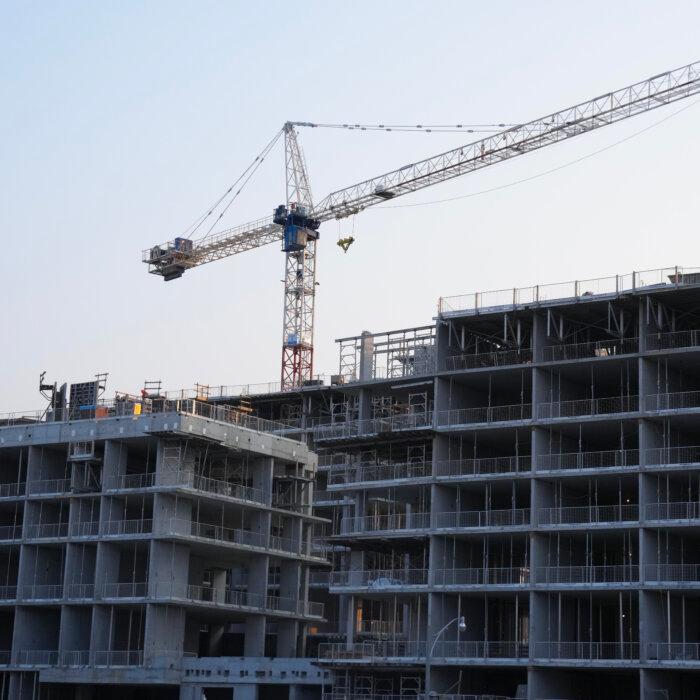

For example, the annual income required to purchase an average home in Toronto is $234,981, meanwhile the annual median household income is $100,401. Similarly, the annual income needed to buy a home in Hamilton is $214,025, while the reported annual median household income is $96,111.
Those looking to buy homes in Toronto specifically need to allot 76.9 percent of their income to mortgage payments as the city’s price-to-income ratio has climbed to 11.6 times the median household income, the report indicates.
The report says that middle-income workers are left with two choices—to move away from the GTHA to areas with more affordable housing, or to remain in the region in “unaffordable, unsuitable, and/or crowded housing.”
From 2014 to 2024, more than 500,000 GTHA residents moved to other regions in Ontario such as Simcoe, Niagara, Middlesex, Ottawa, and Wellington, the report says, according to StatCan data.
Impacts of Unaffordable Housing
The report cited 2023 data from the The Canadian Centre for Economic Analysis that identified 270,000 “essential workers” in the GTHA commute more than 90 minutes to work each way.This “commuting burden” puts a significant drain not only on quality of life but job performance and public safety, the report argues.
Time and energy for self care, family, interests outside of work, physical health, mental health, and overall quality of life were the most common areas the workers said were impacted by long commutes, while two-thirds considered changing jobs to work closer to home or moving to be closer to work.
“This isn’t just a housing affordability crisis,” Woo said. “It’s a threat to the social and economic fabric of Canada’s largest urban region.”
Employers’ ability to hire new staff is also impacted, the report said, leading to service delivery and business productivity losses, and regional competitiveness declines as talented workers look elsewhere for work, which decreases the region’s economic potential overall.
One in 10 Toronto residents used a food bank in 2024, which was a 38 percent increase from 2023 and a 283 percent increase compared to the before the pandemic, according to data from the annual Toronto Daily Bread Food Bank report.
Homelessness has become an increasing threat to low and middle-income workers in the GTHA due to housing costs, the report says. Nineteen percent of those who engaged in a survey from Toronto’s Shelter, Support and Housing Administration reported they were homeless because they “did not have enough income for housing,” while 11 percent said they were working full-time, part-time, casually, or informally.
The report says that the factors that have been influencing housing supply and driving up prices in the GTHA include population growth and demand outpacing supply, housing supply growth constrained by bureaucratic barriers and processes, wage growth and incomes lagging behind house prices, limited affordable rentals and low vacancy rates, and housing in general prioritized as an investment over affordability.