Mexico transferred 37 members of drug cartels to the United States Tuesday amid increasing pressure from President Donald Trump to crack down on drug smuggling.
The transfer, enabled by Mexico’s National Security Law and bilateral agreements, included assurances from the U.S. Justice Department that it would not seek the death penalty.
This marks the third prisoner handover in less than a year, with a total of 92 individuals, as Mexico tries to counter Trump’s aggressive posture on cartels.
Mexican authorities showed a procession of handcuffed prisoners, guarded by heavily armed and masked officers, boarding a military jet at an airport outside Mexico City.
The detainees come from the Sinaloa Cartel, Beltrán-Leyva Cartel, Jalisco New Generation Cartel, and the Northeast Cartel, an offshoot of the Zetas operating in Tamaulipas state, which borders Texas. All face pending U.S. indictments. One of the prisoners, María Del Rosario Navarro Sánchez, is accused of conspiring with a cartel to support a terrorist organization—the first such charge against a Mexican citizen in the United States.
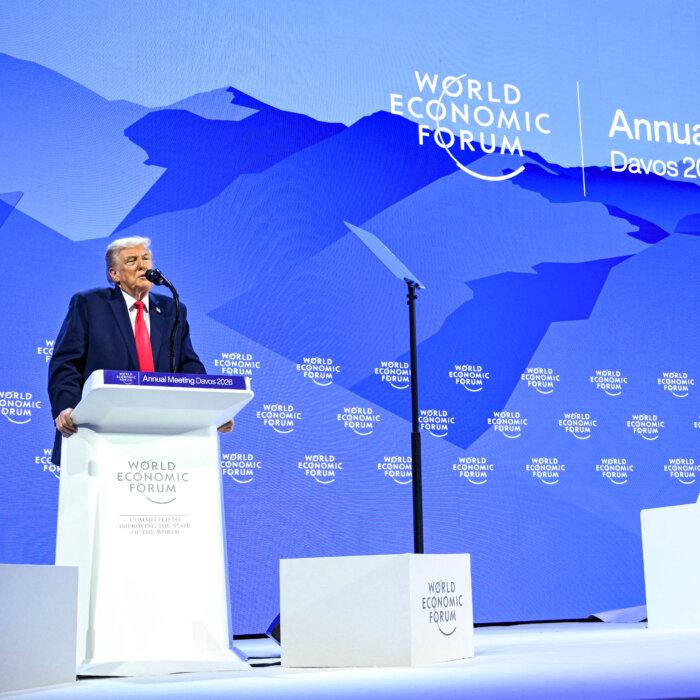
Trump has warned Mexico and other Latin American countries since the capture of Venezuelan leader Nicolás Maduro earlier this month.
Mexican President Claudia Sheinbaum, in a Jan. 12 phone call, told Trump that U.S. intervention was “not necessary,” underscoring ongoing collaboration while defending Mexico’s sovereignty.
“[Trump] asked me my opinion about what they had done in Venezuela and I told him very clearly that our constitution is very clear, that we do not agree with interventions and that was it,” she said. “We told him, so far it’s going very well, it’s not necessary, and furthermore there is Mexico’s sovereignty and territorial integrity and he understood.”
“For the Trump administration and the Trump base, what is going to matter in the end is some wins that Trump can actually bring back and say ‘Look, this is what I’m getting out of Mexico,” Mora said.