Australian Defence Minister Richard Marles will head to Washington this week for high-level talks with U.S. officials, as the Trump administration’s review of the $368 billion (US$238 billion) AUKUS submarine pact continues.
In Washington, Marles is scheduled to meet U.S. Defense Secretary Pete Hegseth and senior administration officials, while also engaging with key defence industry stakeholders.
He added that the trip would build on discussions with Hegseth at the Shangri-La Dialogue in May.
At the Dialogue, Marles raised concerns that the imbalance in the Indo-Pacific risks conflict, citing Beijing’s rapid and opaque military build-up.
He also welcomed Hegseth’s commitment to the region.
AUKUS Deal Under Review
The U.S. Department of Defense confirmed on July 29 that its review of the AUKUS submarine pact will not conclude until later this year.Pentagon officials described the process as “fact-based” and “rigorous,” assessing whether the deal aligns with President Donald Trump’s “America First” policy.
Bipartisan Push for Commitment
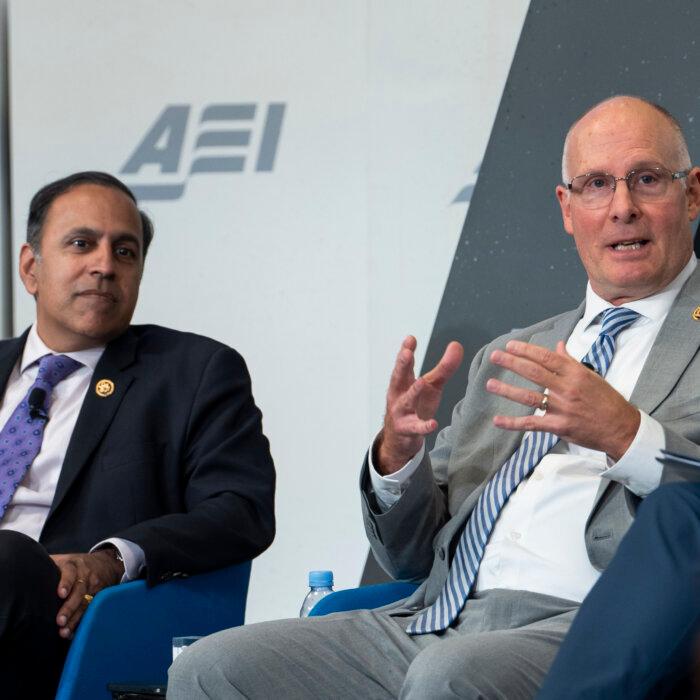
Despite the delay, a bipartisan U.S. congressional panel urged the Trump administration to show “unwavering commitment” to AUKUS.In a letter to Secretary Hegseth, House Select Committee on the Chinese Communist Party (CCP) Chair John Moolenaar (R-Mich.) and ranking member Raja Krishnamoorthi (D-Ill.) described the trilateral partnership with Australia and the UK as “vital” to counter Beijing’s expanding military reach.
They warned that the CCP’s nuclear, cyber, and naval build-up posed a “grave concern” to Indo-Pacific stability and directly targeted the forces of the United States and its allies.
The committee said both pillars of AUKUS—the nuclear-powered submarine program and advanced technology cooperation—are essential to maintaining deterrence in the region.
“The CCP’s rapid military expansion threatens to embolden illegitimate territorial claims,” the lawmakers cautioned.
Marles is expected to use his Washington visit to reaffirm Australia’s support for the alliance and reinforce the importance of moving AUKUS forward despite the uncertainty.