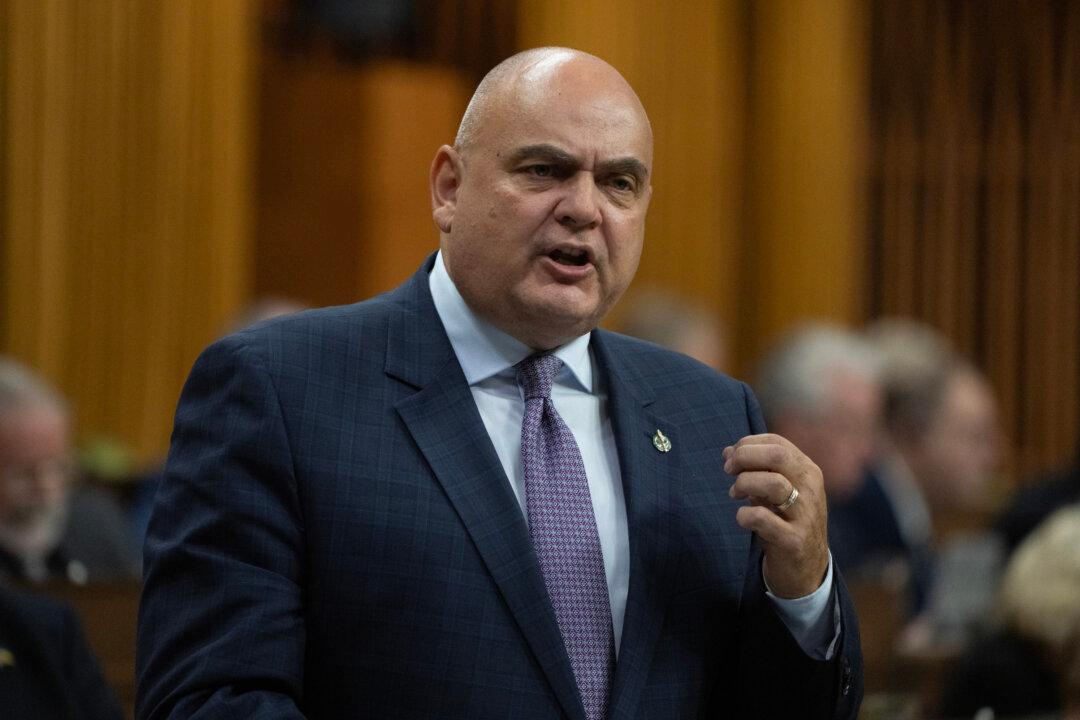
Manitoba Premier Wab Kinew is pushing back against two U.S. Congressmen after they wrote a letter requesting Canada improve its forest fire management to prevent smoke from reaching the United States.
“I’ve shaken the hands of American firefighters in northern Manitoba who are helping us out, and I would challenge these ambulance chasers in the U.S. Congress to go and do the same,” Kinew said during a July 10 press conference.
Kinew accused the lawmakers of trying to “trivialize and make hay” out of Canada’s wildfire season, which has already claimed several lives.
“If you can’t get likes on Instagram from your own skills as a politician, don’t bother trying to throw other people under the bus during a state of emergency,” he said.
Wisconsin Representative Tom Tiffany and Minnesota Representative Brad Finstad questioned how Ottawa plans to mitigate wildfires and stop smoke from drifting south into their states. They also said a “key driver” of forest fires has been a lack of active forest management in Canada.
“With all the technology that we have at our disposal, both in preventing and fighting wildfires, this worrisome trend can be reversed if proper action is taken,” the letter said.
The United States and Canada have a “long history” of working together on fighting wildfires, including by exchanging resources and personnel, Natural Resources Canada said in a statement to The Epoch Times. The agency said wildfires are a “global problem, directly attributed to the impacts of climate change, including prolonged drought.”
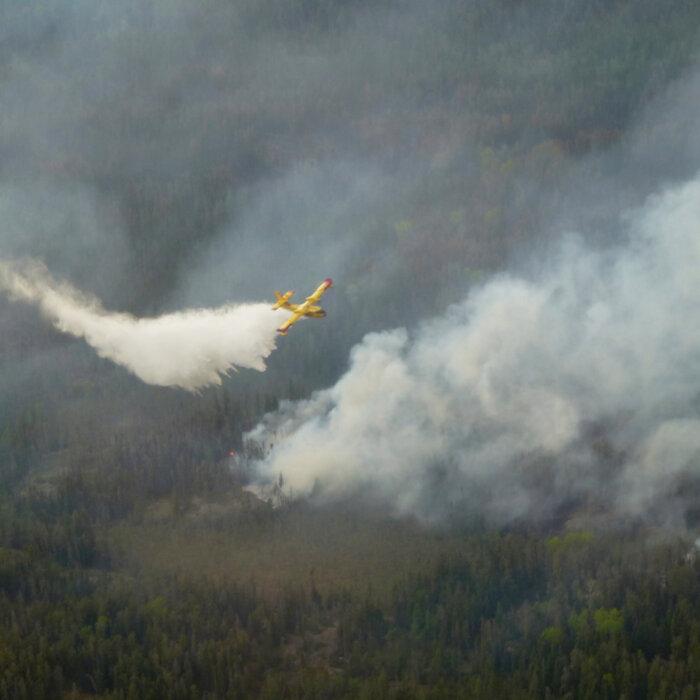
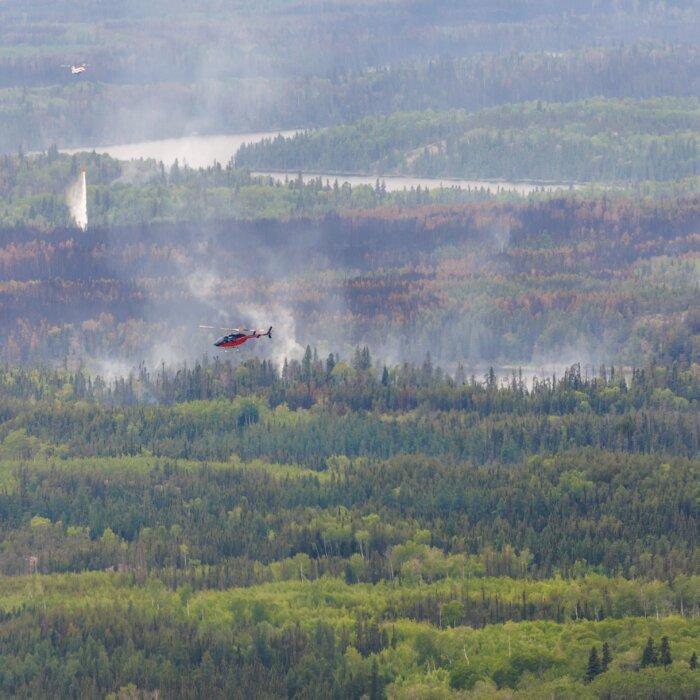
Manitoba’s Assistant Deputy Minister Kristin Hayward said there are currently 145 personnel assisting with the province’s wildfires, including 100 firefighters from Mexico, 25 from Minnesota, an 11-person incident management team from Parks Canada, and a seven-person incident management team from New Zealand.
The most destructive wildfire season in Canada’s history occurred in 2023 when 18.4 million hectares were consumed by flames, significantly exceeding the 10-year average of 2.5 million hectares.
The smoke generated by these wildfires resulted in dangerous air quality across Canadian provinces and numerous American states, prompting school closures, the cancellation of various events, and a rise in hospitalizations related to cardiopulmonary issues.
The 2024 wildfire season saw a reduced footprint of 5.3 million hectares burned while the 2025 season has recorded 5.1 million hectares burned as of July 11, leading to continued poor air quality in certain regions of Canada and the United States.