A man has died in floodwaters in Australia’s far north, as a cyclone has slammed into the other side of the country.
The eye of Tropical Cyclone Hayley crossed the coast of the northern Dampier Peninsula as a category three storm, strong enough to cause severe damage, about 5 p.m. on Dec. 30.
The warning zone in Western Australia covers north of Broome to Kuri Bay, including central and northern parts of the Dampier Peninsula and Derby, with residents in Beagle Bay, Cockatoo Island, and Derby warned earlier that it was too late to leave.
Sustained winds of 120km/h are swirling near the centre of the cyclone along with gusts of up to 165 km/h, according to the Bureau of Meteorology, and the region faces heavy rain with the potential for flash flooding.
The cyclone is forecast to weaken as it moves east overnight.
An evacuation centre was open at the Broome Recreation and Aquatic Centre for those in the warning area.
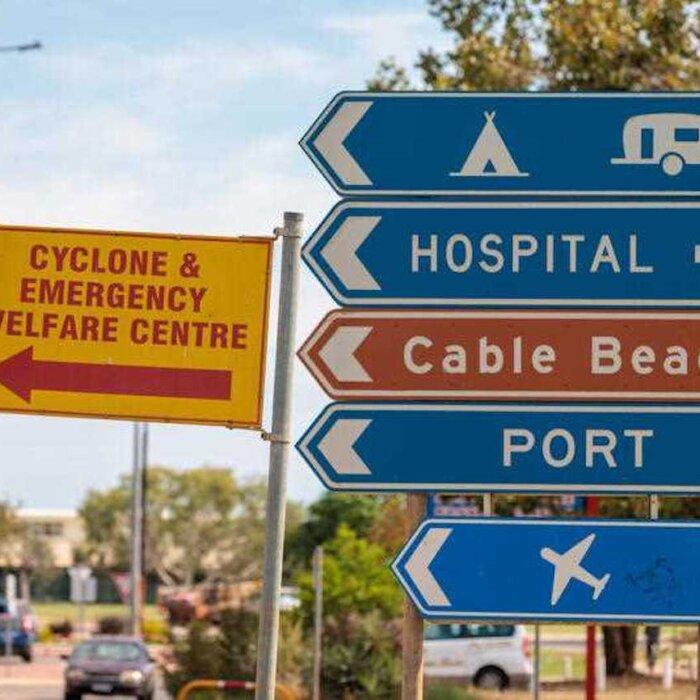

The storm comes on the heels of Tropical Cyclone Fina, a category-three system that hit Darwin in late November.
The cyclone alert in WA came as police were called to a man’s submerged vehicle in the northern Queensland town of Normanton on Tuesday afternoon.
The man, aged in his 70s, was found dead inside his car.
Disaster relief has been activated for five north Queensland councils following the widespread flooding caused by monsoonal rainfall over the Christmas period.
Carpentaria, Cloncurry, Flinders, McKinlay and Richmond shire councils have been approved for financial assistance by the joint Commonwealth-state Disaster Recovery Funding Arrangements scheme.
The extra funding will support councils’ response, clean-up and recovery, including emergency roadworks and repairs to public assets.
Heavy rain, life-threatening flash flooding and widespread riverine flooding are continuing across far north Queensland, with dozens of roads cut.
“Google Maps doesn’t know where the local impacts are; they’re headquartered a long, long way away,” he said.
Crisafulli said the Bruce Highway had reopened after being briefly cut by the Seymour River between Ingham and Tully, but would likely be closed again if heavy rainfall persisted, given the tidal nature of the river.