Most B.C. drivers admit to tailgating occasionally, but report a range of negative reactions when other people tailgate them, a new survey indicates.
Tailgating, which refers to driving too closely behind another vehicle, is often a factor in rear-end crashes, which are one of the most common types of collisions, ICBC says. The organization received more than 57,000 reports of rear-end collisions last year.
Drivers indicated their reasons for tailgating are due to “frustrations” with other drivers on the road. Half (50 percent) of drivers say they tailgate because the driver ahead is “not driving fast enough,” while 30 percent say it’s because of “slower drivers in the fast lane.”
‘It’s Dangerous’
The majority (84 percent) of B.C. drivers said tailgating occurs on city streets and 82 percent said it occurs on highways. As for where tailgating occurs more specifically, 75 percent of drivers said in the fast lanes or High Occupancy Vehicle (HOV) lanes, 73 percent said in construction zones, and 69 percent said in playground and school zones, where reduced speed is expected.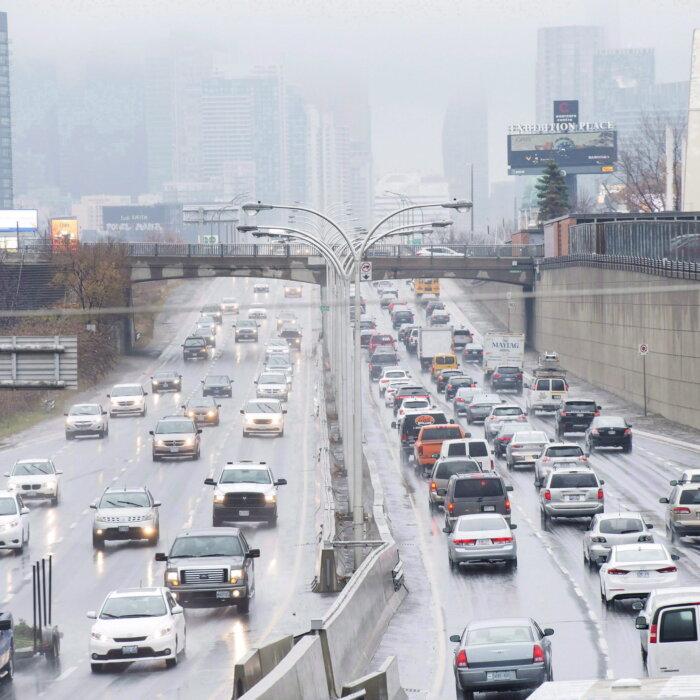
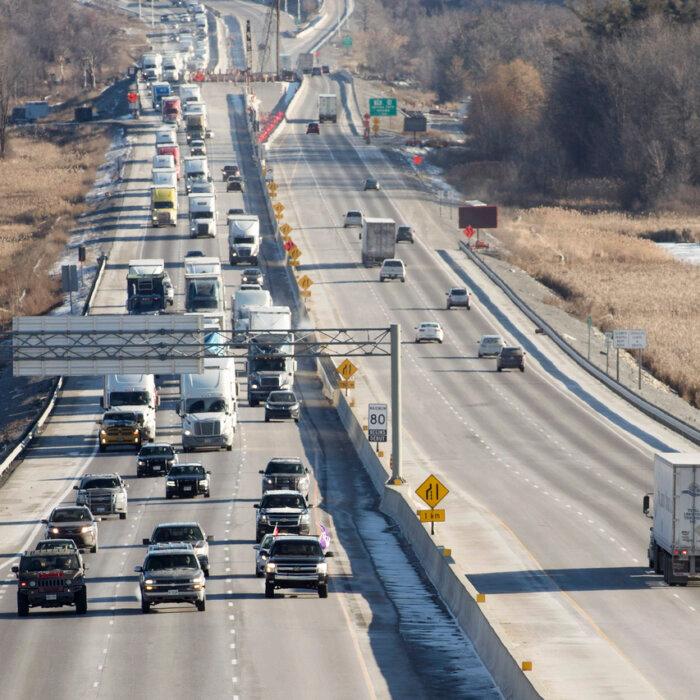
“Tailgating isn’t just aggressive, it’s dangerous,” ICBC’s road safety program manager, Kathleen Nadalin, said in the statement. “It cuts your reaction time, increases your risk of a crash, and puts pressure on the driver ahead. A safe following distance isn’t just a courtesy, it’s a critical part of keeping everyone safe.”
When drivers are being tailgated, 31 percent said it makes them feel frustrated, 23 percent said they feel scared, 21 percent feel angry, and 11 percent feel intimidated. Meanwhile, 12 percent said they are not bothered when another driver tailgates them.
B.C drivers said they deal with being tailgated in various ways, including 41 percent saying they move to another lane when safe to do so, 11 percent pull over to let the tailgating vehicle pass, and 9 percent slow down to “make a point” to the tailgating driver.
Additionally, 7 percent speed up to gain distance from the tailgating vehicle, 2 percent speed up even if it means that they end up following another vehicle too closely themselves, and 1 percent tap their brakes or “brake check” to retaliate against the other driver.
Twelve percent of B.C. drivers report trying to ignore the tailgating behaviour and staying in their lane while travelling at the speed limit.
Nearly every driver surveyed (95 percent) reported usually maintaining a following distance of at least two seconds when driving at 50 kilometres per hour on city streets, and 92 percent report keeping at least a gap of at least three seconds when travelling on highways at 80 kilometres per hour or more in optimal weather conditions.
Drivers reported changing their driving behaviour accordingly in poor weather conditions that bring reduced visibility and slippery roads, with 86 percent saying they increase following distance on city streets and 87 percent saying they do so on highways.
ICBC offers suggestions for avoiding and handling tailgating, including remaining calm when being tailgated, leaving extra time to travel safely without rushing in order to avoid feeling the need to tailgate others, considering others when driving on roadways, and managing speed and following distance.
The Ipsos online survey was conducted from March 21 to 25 and surveyed 800 licensed B.C. drivers who reported having driven since obtaining their licence. The survey data was weighted using the province’s census data to reflect B.C. residents as a whole.