Wildfires have shut down two major highways from Metro Vancouver into the British Columbia Interior after a significant new blaze in the Fraser Canyon triggered an urgent plea for residents to flee the area around Boston Bar.
Highway 1 is shut in both directions south of community, forcing evacuees to head north, while Highway 3 is shut at E.C. Manning Park.
The 10-square-kilometre Anderson Creek wildfire ignited and spread quickly on Tuesday south of Boston Bar, about 200 kilometres northeast of Vancouver, and while the township was already under evacuation order, the new fire prompted the Fraser Valley Regional District to tell remaining residents to get out immediately.
The community is now surrounded by fire to the south, west and northeast.
The evacuation order was expanded late Tuesday to the Hells Gate area south of Boston Bar, as well as properties along Scuzzy Creek Forest Service Road, on the west side of the Fraser River.
Officials say they have set up an evacuee reception centre for those displaced by the Brunswick Complex of fires at McArthur Island Sports Centre in Kamloops.
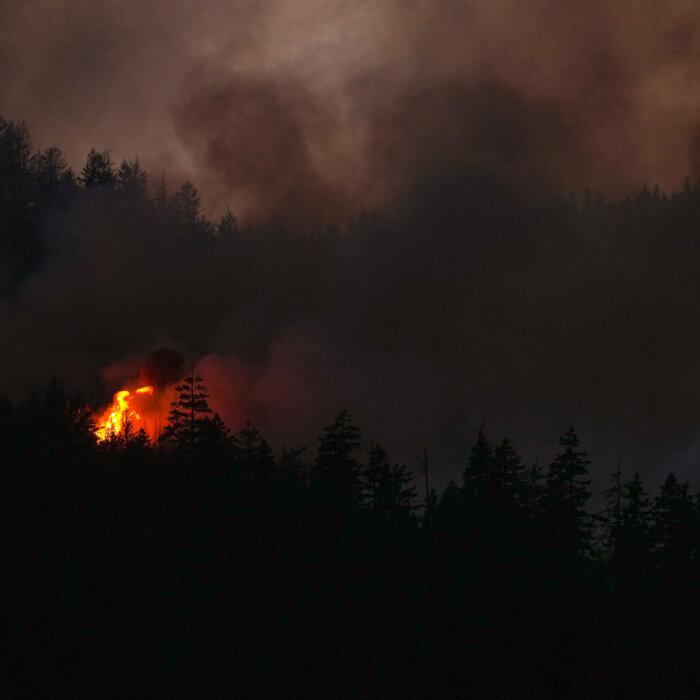
The eruption of new fire activity came as about 40 heat warnings blanketed B.C., where temperatures reached 40.5 degrees in the Fraser Canyon at Lytton.
Further east, an incident commander for a complex of fires burning near Kimberley, B.C., said more resources were on the way to help firefighters as heat peaks this week.
Hugh Murdoch said Tuesday that crews were expecting what he called a “significant weather day” on Thursday due to dry and warm conditions.
Environment Canada said temperatures in the region may reach well into the 30s for the next two days as a ridge of high pressure moved across the province.
Murdoch said there were seven fires in the so-called Bootleg Complex in the Kootenay region near Kimberley, including two wildfires of note that have prompted evacuation alerts in the city.
He said there had been minimal growth on the fires in the previous few days, crediting the work from the crews with “assistance from Mother Nature.”
But Murdoch said crews were looking to develop what he called a “large water delivery system” using helicopters in light of the weather forecast, noting that low streamflows were also posing a challenge.
Environment Canada issued air quality advisories covering much of the province due to smoke from about 90 wildfires burning across the province.
The BC Wildfire Service said in its situational report that smoky skies were expected to continue, and may worsen in the northeastern and central regions.
It also warned that “warming and drying conditions” were expected to persist throughout this week.
“Increasing temperatures and limited precipitation will continue to reduce fuel moisture levels, elevating the potential for new wildfire starts,” it says.