The conflict in the Middle East has driven a massive spike in earnings for Australia’s biggest fuel company, which owns one of the nation’s two remaining oil refineries.
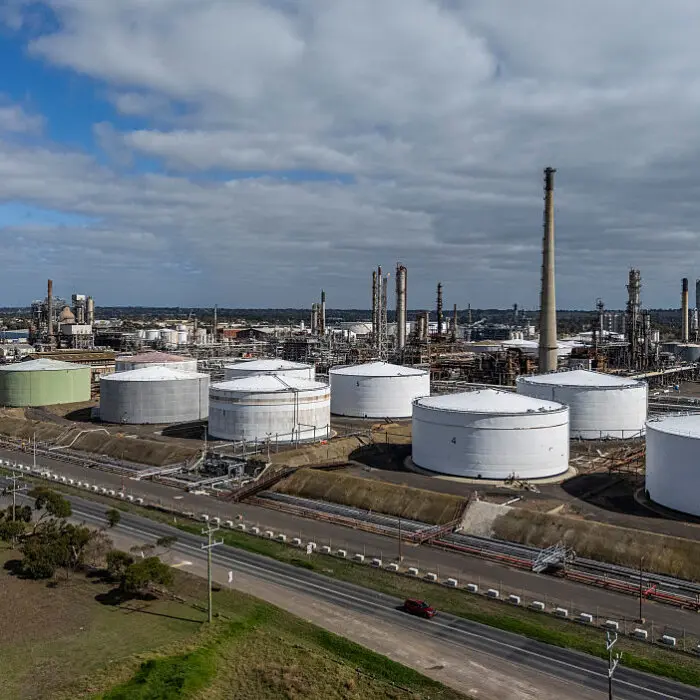
Ampol owns the Lytton refinery in Brisbane, complementing the only other operation owned by Viva Energy in Geelong, Victoria.
Both ramped up when global supply issues linked to the war, which started in February, began pushing up petrol and diesel prices and limiting Australia’s access to crude oil.
The price of crude soared above US$100 a barrel, from around $US60 before the US attacked Iran in late February.
“The conflict in the Middle East has created unprecedented disruption across global energy markets,” CEO Matt Halliday said on Thursday.
The crisis underlined just how crucial the supply of liquid fuels to Australia and the preservation of a domestic refining capability were to the economy, he added.
“Throughout the disruption, our focus has been on keeping Australia and New Zealand moving,” Halliday said.
“As demand surged and supply tightened, our integrated supply chain came under enormous pressure but remained resilient.”
Ampol now expects to report a 150 percent lift in first-half underlying earnings to about $1.6 billion, up from $649 million a year earlier, when it releases its final results next month.
The result is on a replacement cost operating earnings basis, before interest, tax, depreciation, and amortisation, which adjusts for volatility and other factors.
Ampol noted that the fuel supply issues caused by restrictions in the flow of oil tankers in the Strait of Hormuz tightened the availability of refined product onshore.
That widened its refiner margin to an average of US$28.26 a barrel for the half year, from $US7.44 a year earlier.
Refinery production rose 8.7 percent to 2.945 billion litres, while Australian fuel sales rose by 2.8 percent.
During the fuel crisis, the average price of petrol peaked at $2.42 per litre, prompting the federal government to offer fuel excise relief as it worked with Australia’s regional neighbours to ensure there was enough supply to reach the refineries and stakeholders.
The fuel excise relief, which is currently worth 16 cents per litre after being cut from 32 cents, will end on Sunday.
Looking ahead, Halliday noted that geopolitical tensions are escalating again as the United States and Iran go back and forth on reaching a sustainable ceasefire.
“Ampol remains well placed to navigate this next phase of the conflict, should it persist,” he said.
The group, which also operates petrol pumps across the nation, has physical supply arrangements in place for most of the third quarter.
Meanwhile, the Lytton refinery will undergo a major maintenance program from next month, ahead of a planned completion in October.
While this is expected to cut production volumes by about 300 million litres, Ampol said it has enough capacity to manage.
Ampol shares rose by almost one per cent in morning trading to $39.77.