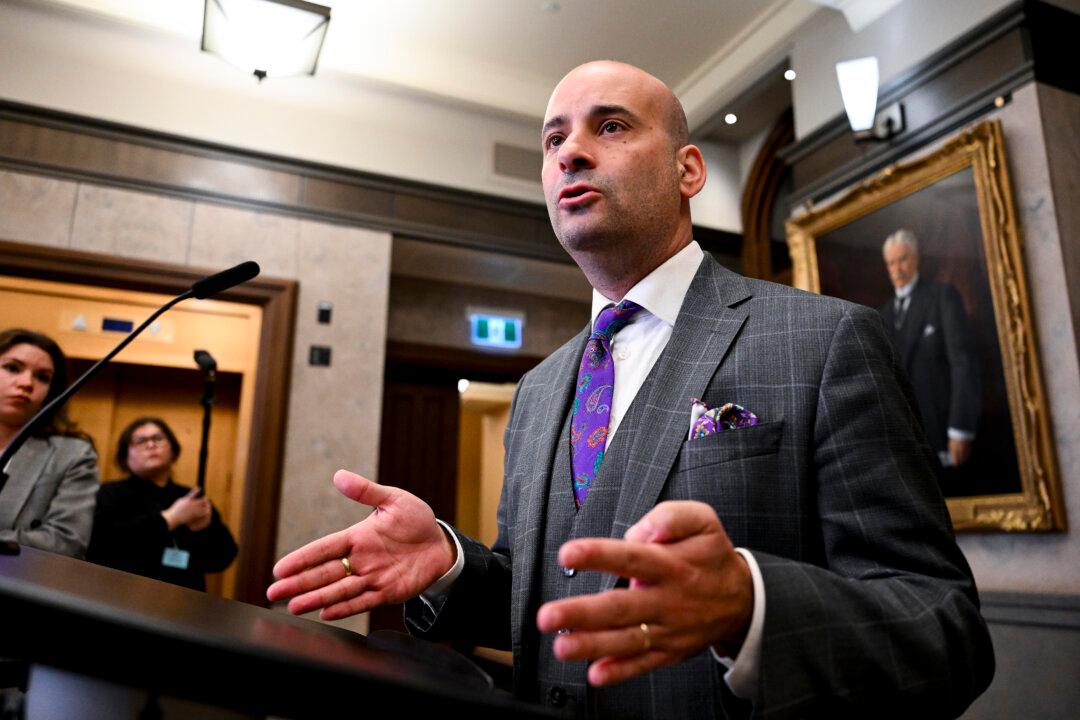
Immigration Minister Lena Diab says Canada is expanding its Express Entry immigration program to allow more skilled foreign workers to qualify for fast-tracked permanent residency.
Diab made the announcement Feb. 18 at Canadian Club Toronto, saying the new Express Entry categories will “drive innovation and growth” by prioritizing applicants who are skilled military recruits, research professionals, upper-level managers, as well as aircraft pilots, mechanics, and inspectors.
“Our Express Entry system is ... at the core of our approach for attracting and retaining the skilled workers Canada needs,” Diab said, adding that the move “grows our economy and ... fills key labor shortages.”
Express Entry refers to applications on permanent residency where a decision is usually reached in six months or less, according to Immigration Refugees and Citizenship Canada (IRCC). Wait times for permanent residency applications not under Express Entry categories vary but can range as high as a number of years.
Diab noted that in order for military recruits to qualify under the expanded Express Entry categories, they must already have received a job offer from the Canadian Armed Forces (CAF), and meet all existing Express Entry eligibility criteria and military security standards.
“They will be subject to the same security and all military requirements,” Diab said. “This new category will support our government’s commitment to strengthen our armed forces, to defend our sovereignty, and to keep Canadians safe.”
Diab noted that workers being sought for the CAF include doctors, pilots, and nurses and will help meet Prime Minister Mark Carney’s objectives for strengthening Canada’s military and defence posture, which he announced Feb. 17 in unveiling a new defence industrial strategy.
Last fall’s Liberal budget announced an International Talent Attraction Strategy, which it said will grow Canada’s economy and address issues that had occurred in the country’s immigration system. The budget passed the House of Commons Nov. 17 and is still awaiting Royal Assent.
In addition to her Feb. 18 remarks, two months ago Diab also announced that Canada would fast-track permanent residency for up to 5,000 doctors exceeding current levels of immigration. Applicants who qualify have at least one year of experience working in Canada in the previous three years and have a received a job offer in Canada.The expanded categories for Express Entry are in addition to current streams for qualified foreign workers who are fluent in French, as well as a number of health care-related professions such as psychologists, chiropractors, pharmacists, psychologists, dentists, and nurse-practitioners.
Express Entry categories are also available for machinists, welders, plumbers, carpenters, and other high-skill manual labour jobs, as well as foreign individuals with experience in mathematics, science, technology, engineering, or related disciplines.
Diab commented Feb. 18 on past high levels of immigration, which she said were necessitated by empty positions during the pandemic that needed to be filled.“Unfortunately, it also grew our population faster than many Canadian communities could absorb, also putting pressure on housing, on infrastructure, and on social services,” Diab said.
She added that the Carney government has since brought down the number of new permanent residents to under 1 percent of Canada’s population and said that Canada expects to reach its goal of having non-permanent residents, foreign students, and temporary foreign workers comprise less than 5 percent of the population by 2027.
New foreign students arriving into Canada fell below 10,000 in December of last year, according to numbers from IRCC. This was down dramatically from more than 90,000 new foreign students who arrived in the country in December 2023. Temporary foreign workers in the same time period also fell to under 10,000, compared to around 30,000 in December 2023.
Conservatives say the government needs to take key actions to make immigration sustainable. Tory MP and immigration critic Michelle Rempel Garner says these actions include abolishing the Temporary Foreign Worker Program, removing “millions on expired or expiring foreign work permits,” and encouraging employers to “use labour mobility and skills training strategies” so that more Canadian youth can be employed.
“We must reduce immigration numbers so health care, housing, and job creation can catch up,” the Conservatives say.