Labour has lost a parliamentary seat in Caerphilly, Wales, for the first time in more than a century, a result some locals say reflects a collapse in the party’s traditional working-class support.
The by-election was triggered by the death of long-serving Labour MP Hefin David in August.
“The fundamental question we are facing in British politics is, are we witnessing the end of the dominance of our politics by Conservative and Labour? And the by-election in which the two of them combined only get 13 percent of the vote has done nothing to undermine the urgency of that question,” polling expert Sir John Curtice told The Epoch Times.
Today, the town in what is known as the Valleys faces significant economic hardship. According to the 2019 Welsh Index of Multiple Deprivation (WIMD), 77.3 percent of Caerphilly’s areas fall within the most deprived half of Wales.
‘Caerphilly Is in a Death Rattle’
Reform UK was originally founded as the Brexit Party before the UK left the European Union. It has since positioned itself as a rising populist, anti-establishment party focused on immigration and economic reform.

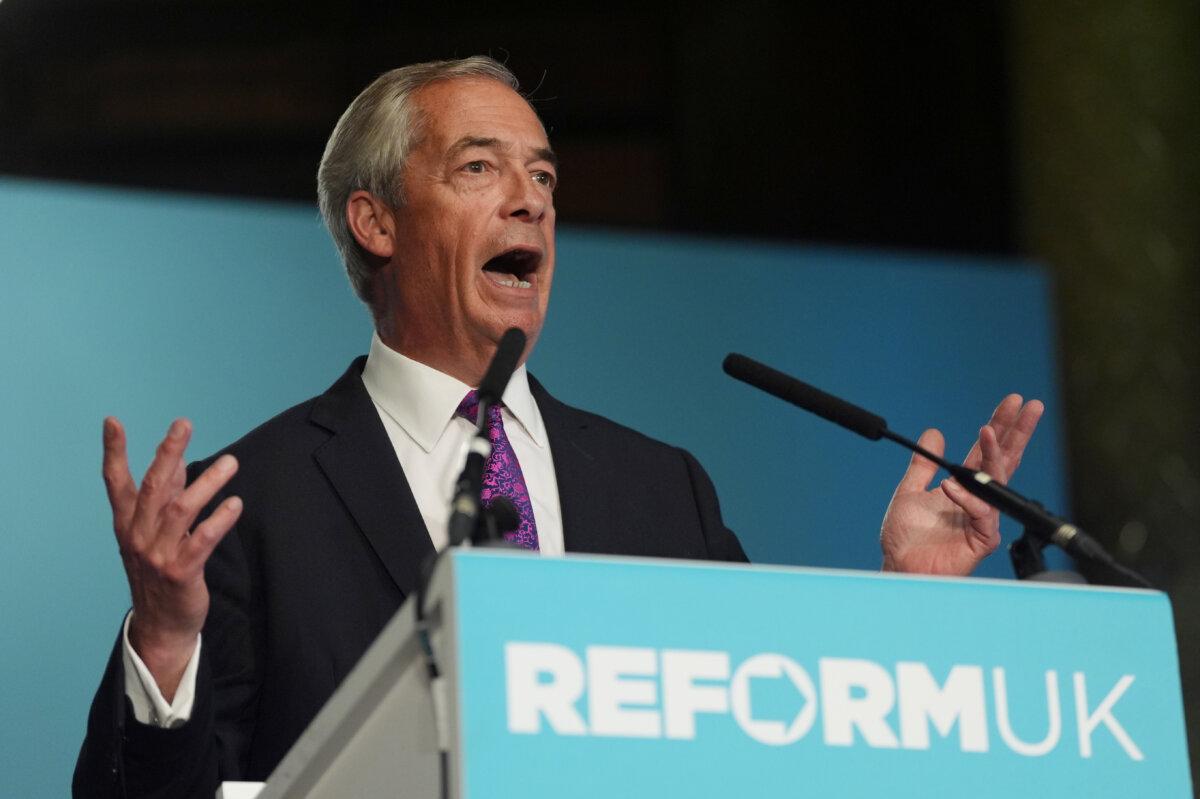
Party leader Nigel Farage was seen canvassing at polling stations in Caerphilly on election day to drum up support for his candidate.
Plaid Cymru, or the Party of Wales, is a center-left nationalist movement that campaigns for Welsh independence.
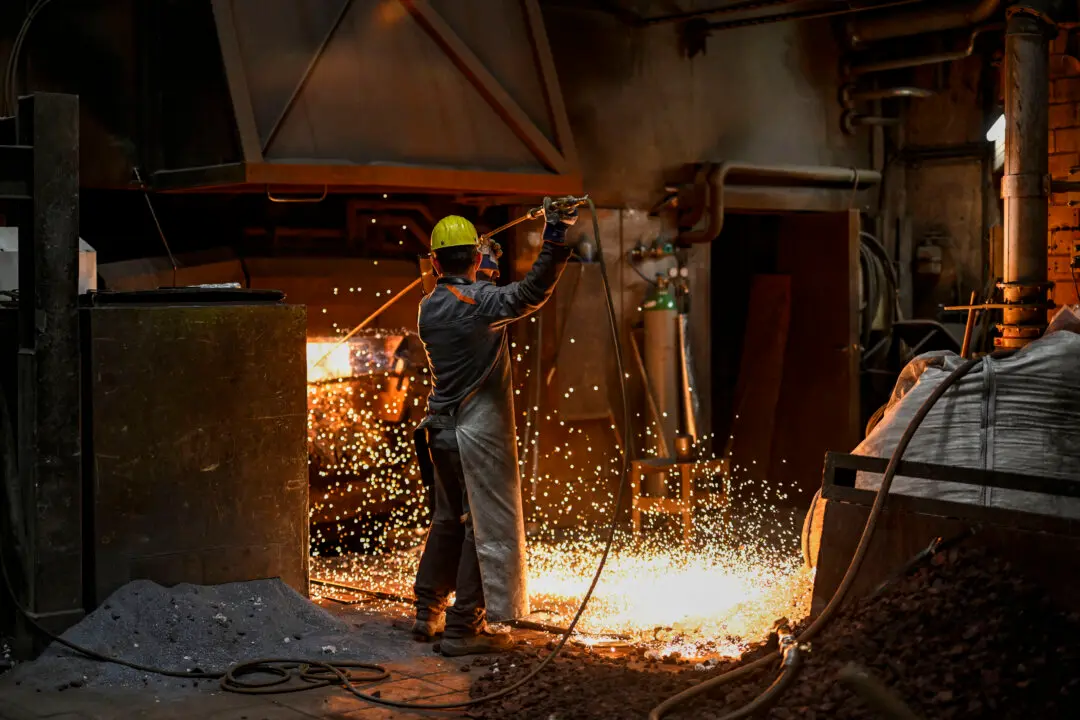
“You’ve had steel taken away. Tin plate will be going, mark my words, that’s Llanelli finished,” Robinson said.
“You’ve got anthracite coal, the best coal in the world, literally within kilometres of Port Talbot. So they could have actually had conveyor belts from the mine to Port Talbot to burn cheap anthracite coal. Instead, we were buying it from Russia, India, anywhere else except here.”

‘Litmus Test for What’s to Come’
Bernard Holton, Reform UK’s deputy chair for Carmarthenshire, told The Epoch Times that now the mines have gone, Labour has “moved away from where they were.”“They were the unions,” he said.
The Epoch Times discussed the election with about a dozen locals. Most of them preferred to only provide their first name.

In a pub in the town center, Tony, who was in his late 60s, said that Caerphilly had seen better days.
“No one works in the pit anymore,” he said.
When asked what it’s like for young families in the town, he said that it’s difficult to buy a house now.
He was skeptical about Farage and said he believed “he’s not for the people.”
“Young people do not have a choice nowadays,” he added.
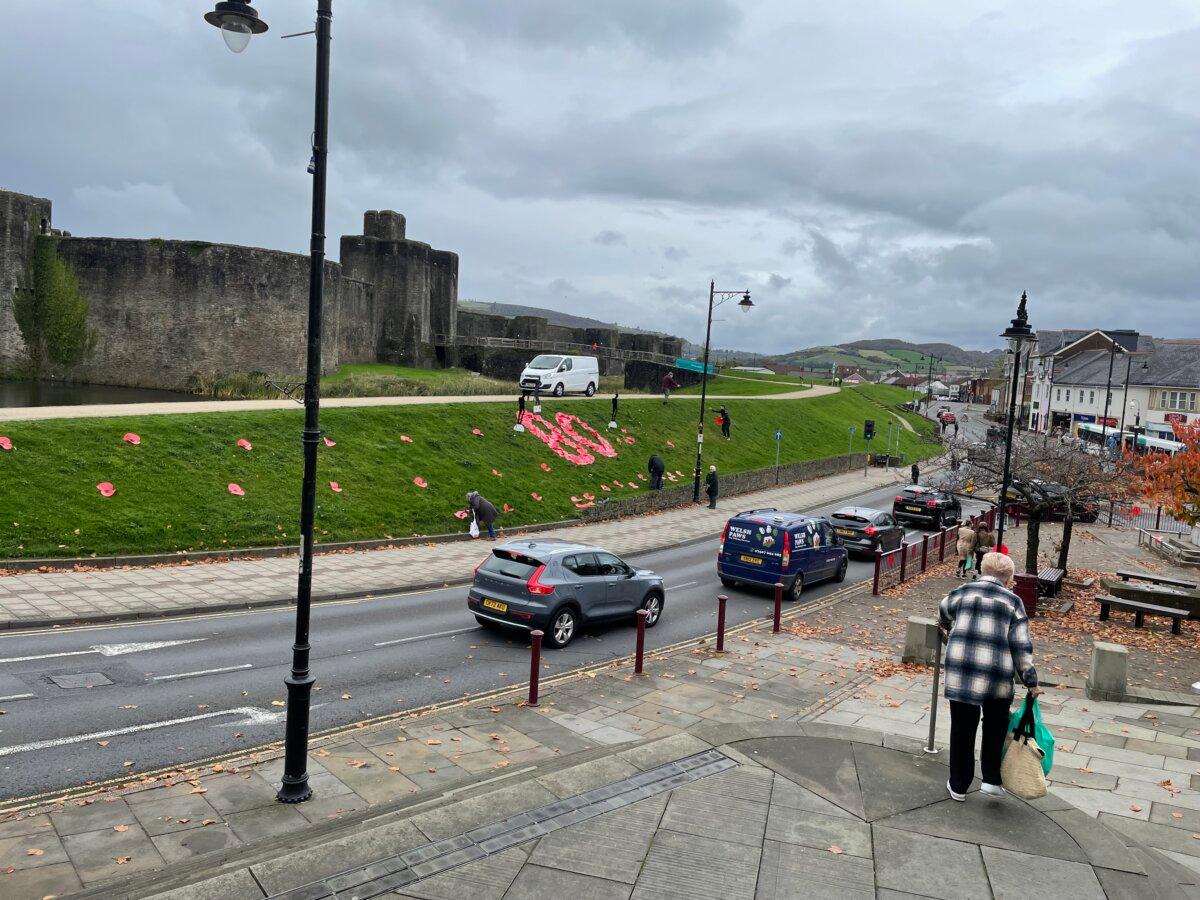
Karl, who had come down from Merthyr Tydfil, the South Wales town that played a pivotal role in Labour’s early history and where Keir Hardie, one of the party’s founders, was elected in 1900, told The Epoch Times that the election feels like a “litmus test for what’s to come.”
He said that people are not voting for Reform or Plaid, “rather they are voting against Labour.”
Andy, a 63-year-old builder, former member of the military, and a Reform supporter, said that illegal immigration was a major concern, along with the proliferation of Turkish barbershops.
“You can’t get your hair done in Turkey as they are all here,” he said.
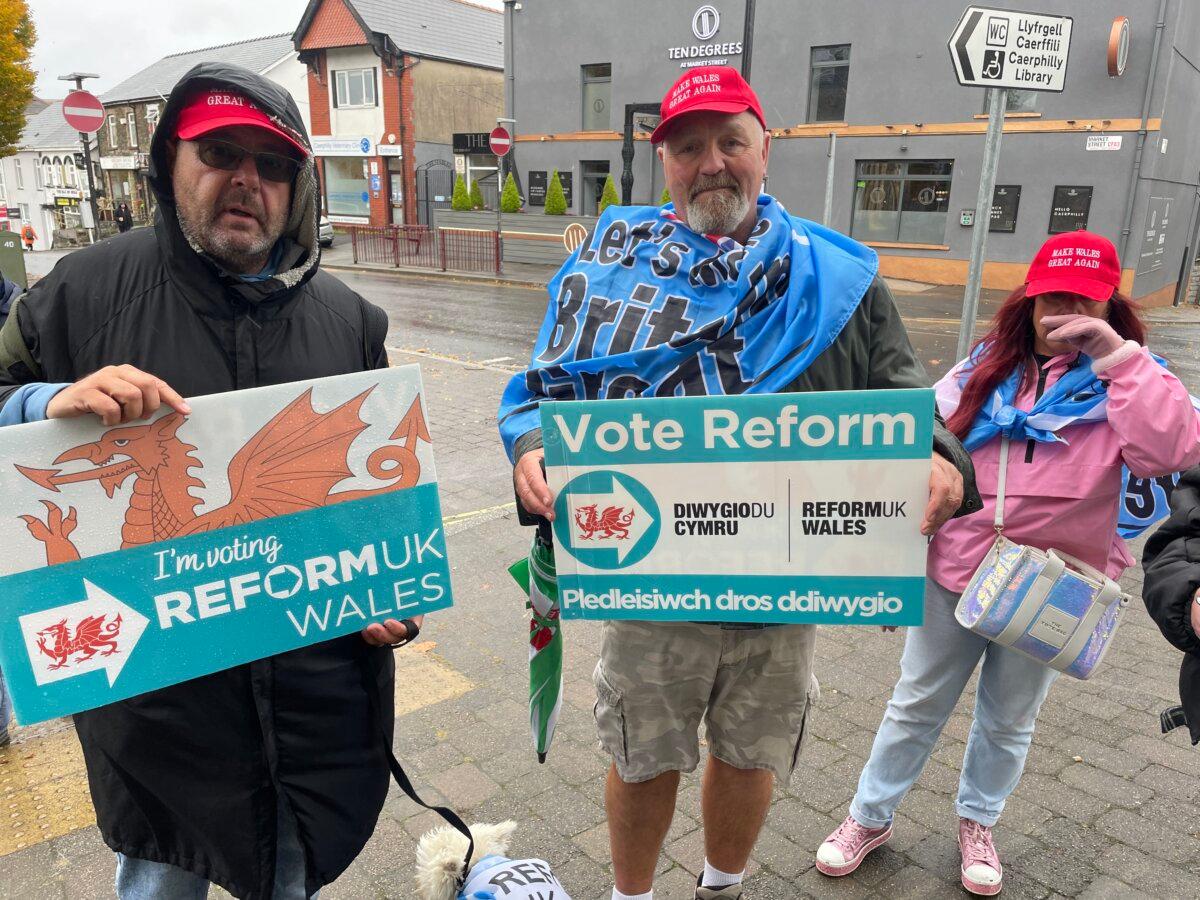
Former soldier Peter May, 59, draped in Reform paraphernalia and wearing a “Make Wales Great Again” cap, came from Swansea to rally up support.
“I’m going to get nothing but negativity off people, and hate. A lot of hate. Trust me, already this morning, a lot of hate,” he told The Epoch Times.
His major concern was immigration, which he said had increased since the lockdown during the COVID-19 pandemic.
‘Issue Is With the Billionaires’
Jack Wynne-Williams, a Plaid Cymru member and chair of YesCymru Caerdydd, a pro-independence organization, said he was firmly against Reform and told The Epoch Times that he was “concerned about right-wing extremism.”“Well, the worst immigration I’ve had to experience in North Wales in the 1970s is when the English came into North Wales and bought second homes,” he said.
He said that he had spoken to Reform voters and found common ground.
“The problem ... is the inequality, which has come from extreme wealth. I said, if you want to say there’s an enemy, and none of us should be seen as enemies, I said, but where the issue is ... is with the billionaires,” he said.
Preaching the gospel in the rain in front of the town’s Iceland supermarket, Carolyn told The Epoch Times that “people have turned away from God.”
“Even unbelievers are sensing something is wrong,” she said.
‘Worst-Ever Tory Result’
Curtice, known for his expert research and polling methods in electoral behaviour, told The Epoch Times that Lindsay Whittle was able to garner a lot of support as he was “an unusually, remarkably well-embedded local candidate.”“He’s been trying to win this seat for 40 years, local councilor for 50, very unusual,” he said. “The Reform candidate, I thought, handed himself very well, but clearly did not have that same kind of connection,” he said.
He said that Reform has been “barely able to get 30 percent of the vote” in the UK, and Wales in particular.
He said that a third of the vote in a fragmented political environment is “potentially a winning number if you’re facing a single strong alternative.”
“Which is how things panned out in Caerphilly basically, although Reform were picking up some of the support, their support from Labour, they were as everywhere, disproportionately picking up support of the Tories,” he said.
In 2021, Labour won with a majority of 5,000 over Plaid Cymru, who were just ahead of the Conservatives. This time, the Conservative Party got two percent of the vote.
‘Race Between Reform, Plaid’
Academic, writer, and pollster Matthew Goodwin told The Epoch Times by email that “Wales is not England.”“I think Reform will find it a lot easier in England to be honest, although it is clear Wales is now a race between Reform and Plaid,” he said.

“Take that result in Caerphilly on the chin, take it to heart and show the same level of ambition and drive and the scale of change within government that the public are crying out for.”