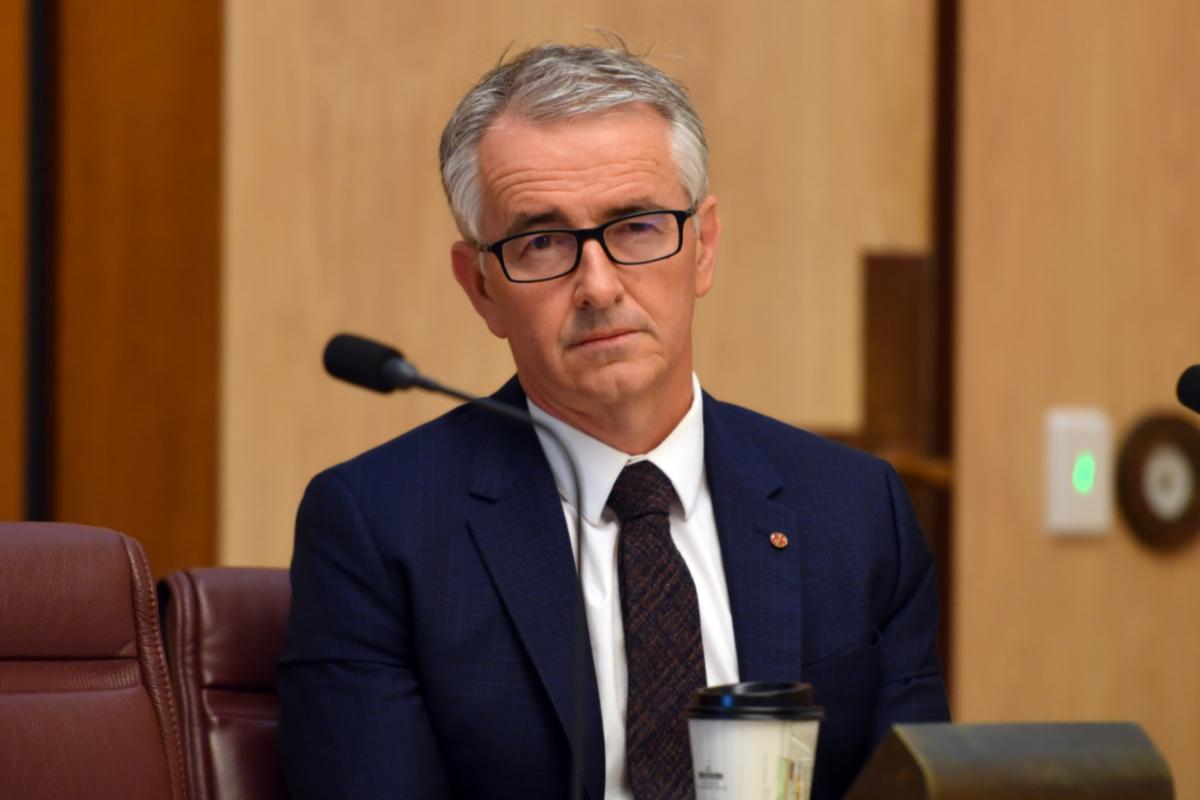
Former senator and accountant, Gerard Rennick, says the Labor government’s proposed superannuation tax will impose a heavier compliance burden on self-managed super funds.
This in turn, will discourage people from handling their own retirement funds, and to instead, rely on major industry super funds instead.
Rennick’s comments come in response to Labor’s push to pass its super tax bill through the Senate after it was approved by the House of Representatives in October 2024.
If passed, the bill would lift the tax rate on earnings in super balances above $3 million (US$1.95 million), rising from 15 to 30 percent from July 1, 2025—the party has maintained the move will impact 0.5 percent of Australians with super accounts.
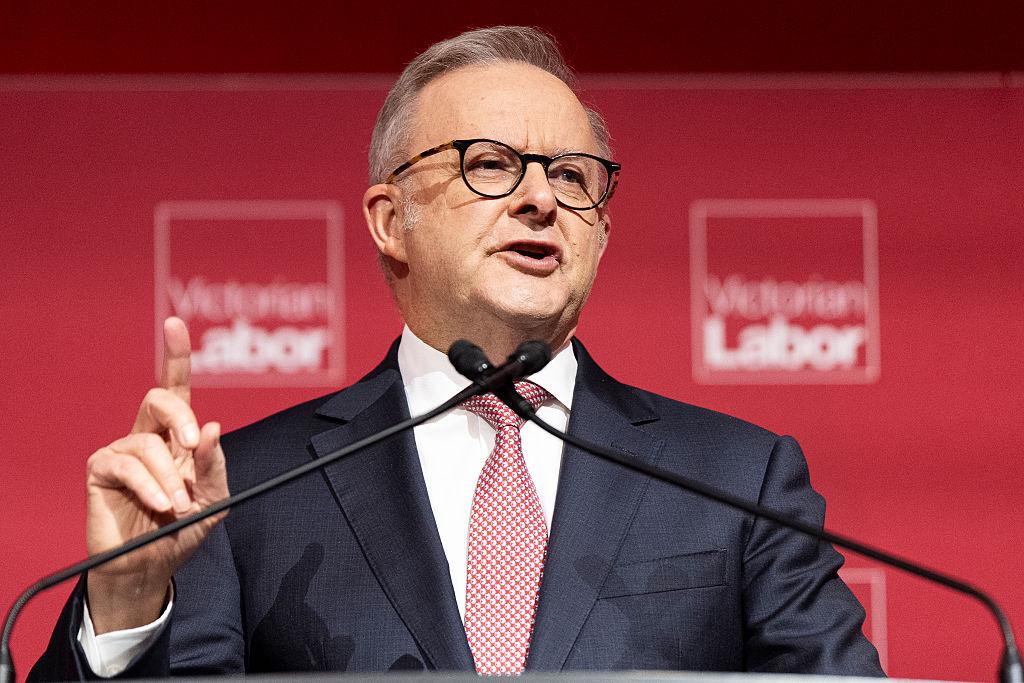
During the 2022 federal election campaign, Labor leaders, including Prime Minister Anthony Albanese, who was then-opposition leader, stated that the party had “no intention of making any super changes.”
However, after Labor won the election, the party went back on its promise by introducing the proposed tax in 2023.

A controversial aspect of the bill is that it now targets “unrealised capital gains” in super portfolios.
This means superannuation members and those managing their self-managed super funds (SMSFs) will be required to pay an annual tax on increases in the value of their portfolio assets—even if those assets have not been sold.
Group Estimates $100 Billion in Lost Economic Activity
In a recent discussion paper (pdf), Geoff Wilson, chairman of the Wilson Asset Management Group and founder and director of the investment company Future Generation, warned that the proposal could significantly distort Australians’ savings and investment decisions.“Superannuants may be incentivised to realise gains more frequently to avoid accumulating large unrealised gains subject to taxation, even if it is not optimal from a long-term investment perspective,” he wrote.
“This could lead to higher portfolio turnover, increased transaction costs, and potentially lower overall returns for superannuation account holders.”
Other distorted investment decisions included increasing liquidity in super funds to pay unrealised gains, and shifting to other assets to avoid higher taxes, like property.
Wilson Asset estimated that Labor’ super tax scheme would result in economic efficiency losses of $94.5 billion.

Self-Managed Super Fund Holders to Face More Red Tape
Rennick, who has 25 years of experience in the finance sector, pointed out another potential consequence of Labor’s super tax—a significant increase in compliance costs for those who run SMSFs.As the new tax will apply to unrealised capital gains, super funds and SMSF trustees may need to regularly value their non-liquid assets, such as properties and shares.
However, Rennick noted that SMSF trustees would face higher costs than larger super funds.
“If you’re an industry fund and there’s a million people [in it], then that cost of doing it over a million people is shared,” he told The Epoch Times.
“[You can have] a billion dollars inside an industry fund that needs one valuation. Or you can have 1,000 people with a million-dollar property each.”
“So the cost of compliance [for 1,000 people] is higher because you don’t get the economies of scale. The cost of running a self-managed super fund is going to increase significantly.”
Furthermore, the senator stated that there were risks associated with the valuation process of unlisted assets, as it could be very subjective.
“[You will need to appoint] an auditor, an accountant, or a valuer. It is going to be very painful,” he said.
Not an Effective Tax Either
Rennick questioned Labor’s idea of taxing unrealised capital gains instead of opting for a more effective tax measure.“If they want to raise more money, [they can] raise more money by taxing incomes in the retirement phase above a certain level,” he said.
“[Currently], there’s no tax on your income in superannuation once you’ve retired, regardless of what your income is. Why wouldn’t you bring a tax in on that?”
The senator gave an example: a person earning $100,000 annually from their superannuation in retirement could have the first $50,000 tax-free, with the remaining $50,000 subject to tax.
According to data from the Australian Taxation Office, there are 646,168 SMSFs with 1,197,293 members as of March 2025.
The total estimated value of assets held by these funds is around $1.01 trillion.
However, Wilson discouraged Australia from going down the path of expanding its taxation.
“The federal government already collects $700 billion in taxation revenue and is the fourth highest in the developed world for income tax to GDP [ratio],” he said.
“We do not have a revenue problem in Australia, we have a well-documented expenditure problem.
“Expenditure reform should be the focus to restore budget confidence, not the taxing of unrealised gains on superannuation.”