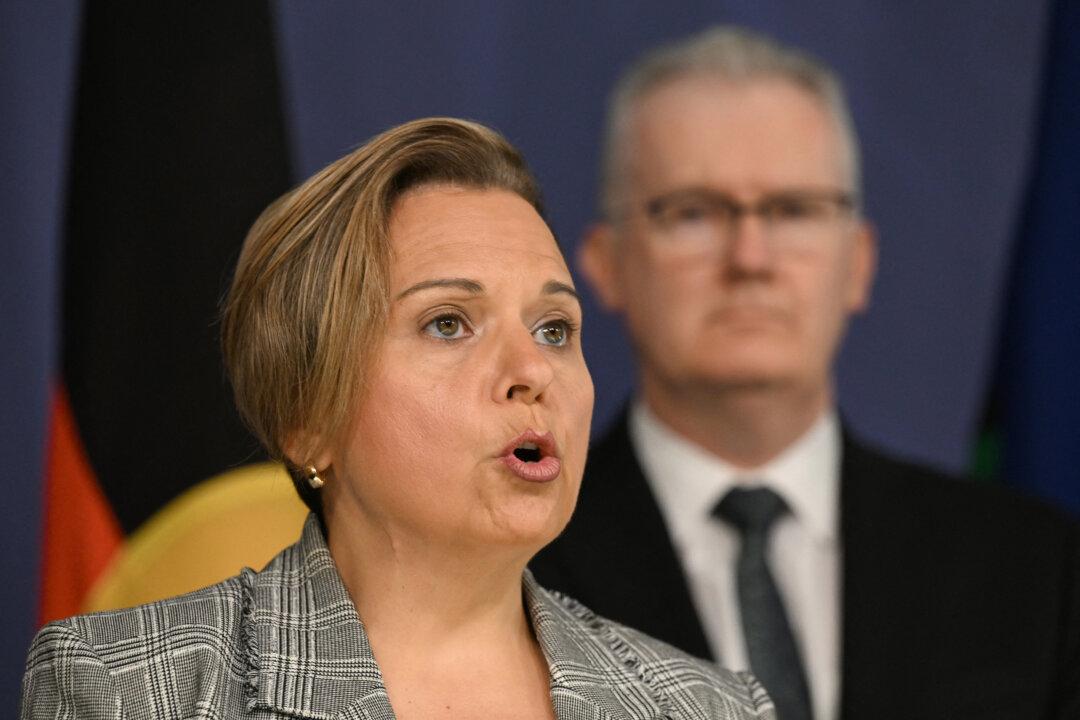
The Albanese Labor government’s latest attempt to overhaul Australia’s environmental laws has run into turbulence before even reaching Parliament.
The proposed rewrite of the Environment Protection and Biodiversity Conservation (EPBC) Act), championed by Environment Minister Murray Watt, has drawn criticism from both the Coalition and the Greens—for entirely different reasons.
Facing an uphill battle in the Senate, Senator Watt has turned to social media, urging Australians to pressure their representatives to support the changes.
In his campaign message, Watt said the establishment of a federal Environmental Protection Agency (EPA) would change environmental accountability by ensuring that laws are enforced independently of political pressure.
Projects Will Not be Blocked Based on Emission Rates
With an eye on businesses and industries, Watt said the proposed legislation will not empower the government to block high-emission projects based solely on their carbon output.Instead, the new rules will compel large-scale developers to publicly disclose their projected emissions and outline plans to reach net zero by 2050.


“This is an important step forward to provide the community with confidence that proponents are taking their greenhouse gas emissions seriously,” Senator Watt told the ABC.
“This officially rules out blocking projects on emissions alone, but at the same time requires proponents to do something they haven’t had to do before.”
Projects expected to produce more than 100,000 tonnes of carbon dioxide annually would be required to submit both emissions forecasts and mitigation strategies.
Coalition Warns of Economic Consequences
Opposition Leader Sussan Ley has condemned the draft proposal, warning it could jeopardise Australia’s competitiveness and hinder job creation in key industries.“The industry is genuinely concerned that under Anthony Albanese’s environment laws, these new critical mineral projects wouldn’t even get a start,” Ley said.
“What is clear is that these laws are a gift to our overseas competitors. They’re a red light to jobs, and they’re a handbrake to investment and development—the sort of investment this country has always needed and relied on.”
She added that unless the government gives businesses confidence in its approval system, projects like the critical minerals deal signed with the Trump administration could stall.
“It’s certainly not going to bring forward the development that is expected, needed and deserved for jobs, for our national security and for our future,” she said.
Nationals MP Kevin Hogan echoed those concerns, warning the law would make it harder for industries to employ Australians.
“We think this will make it harder for industry to produce economic income for this country,” he told Sky News.
He also criticised environmental restrictions in his home state, saying, “They just recently shut down 40 percent of the hardwood resource in New South Wales. Forestry is a renewable, sustainable industry—but now we’ll import hardwood from overseas that doesn’t follow the same environmental practices.”
Hogan was also concerned about safe environmental practices.
Greens Say Law Favours Big Business
Meanwhile, the Greens have accused the government of not going far enough.Senator Sarah Hanson-Young claimed the proposed law caters to corporate interests rather than protecting nature.
“It’s got business and industry’s fingerprints all over it,” she told Sky News Australia
“It delivers them pretty much everything they want. And rather than protecting nature and the environment, we’ve got carve-outs for industry and fast-tracking for big projects so that companies can get their approvals faster, easier and cheaper.”