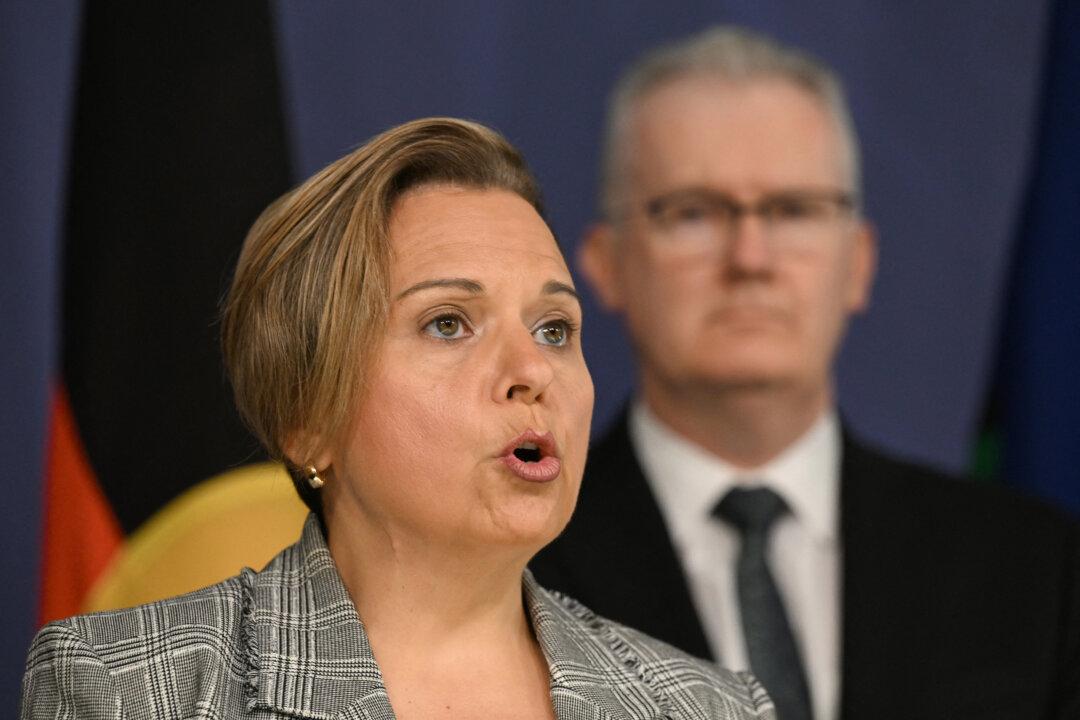
Australians are about to pass trillions of dollars to their children and grandchildren in coming decades, and Charities Minister Andrew Leigh wants more of that money to go somewhere else.
In his speech at the National Press Club on June 10, Leigh outlined what he called a new “trust agenda,” urging Australians to donate more, volunteer more and leave a greater share of their estates to charities and community organisations.
The minister said Australia was on the verge of one of the biggest intergenerational wealth transfers in its history, with an estimated $5.4 trillion (US$3.8 trillion) expected to change hands over the next 20 years.
Yet only a small proportion currently ends up in the charity sector.
“A very large river of wealth is flowing across generations. Only a thin stream reaches the community sector,” Leigh said.
According to figures cited by Leigh, only about 1 percent of Australian bequests go to charities. In Britain and the United States, the figure is around 4 percent.
A More Disconnected Community Life
Leigh also shared a recent survey data that suggests Australians are becoming less connected to community life.According to the General Social Survey, the proportion of Australians who said most people can be trusted fell from 55 percent to 50 percent between 2019 and 2025.
Formal volunteering dropped from 30 percent to 23 percent, while participation in social groups declined from 51 percent to 45 percent.
Involvement in community support groups fell from 25 percent to 21 percent, and participation in civic and political organisations slipped from 9 percent to 7 percent.
Leigh said the figures pointed to a broader weakening of civic engagement across the country.
“Australia remains, by global standards, a generous and cohesive country. Yet the broad pattern is plain. Civic life has thinned. Fewer volunteers. Fewer joiners. Less trust,” he said.
“If civic life were a cricket team, our nation would be standing at long-on wondering why only seven people had turned up.”
To change the situation, the minister outlined reforms aimed at boosting charitable giving, including expanding community foundations, easing tax deductibility rules, encouraging charitable bequests in wills, and increasing the amount philanthropic funds are required to distribute each year.
Leigh said community foundations should become a permanent feature of Australian life, allowing people to leave money to causes in their local area.
Push Comes as Labor Reshapes Wealth Rules
Leigh’s call for Australians to donate more, leave more in their wills and direct more family wealth into charitable causes comes as the Labor government advances a suite of measures targeting capital gains, negative gearing and family trusts, which are commonly used by Australians to accumulate wealth.The government’s proposed tax package, currently before the Senate, is expected to replace the long-standing 50 percent capital gains tax discount with a new inflation-indexed system, restrict negative gearing to newly built homes, and impose a minimum 30 percent tax on earnings retained within discretionary trusts.
For supporters, the changes are about making the tax system fairer and reducing concessions that disproportionately benefit wealthier Australians.
Critics, however, argue the government is increasingly intervening at every stage of the wealth cycle—from how wealth is built and invested, to how it is transferred between generations, and now how much of it should be directed to charities.
Questions are already emerging about how Labor’s trust reforms could affect the very organisations Leigh is urging Australians to support.
During Senate Estimates last week, Shadow Assistant Minister for Charities Dean Smith asked Treasury officials whether the government had modelled the impact of its proposed trust changes on charities, community organisations, sporting clubs and other not-for-profit organisations.
Officials defended the proposal as a measure designed to bring the taxation of discretionary trust income closer to the treatment applied to ordinary wage and salary earners.
But when pressed on whether any specific modelling had been conducted on the impact on charities and community groups, they were unable to provide an answer and instead took the question on notice.
The trust changes are expected to raise $4.5 billion over five years, making them one of the government’s significant revenue measures in the 2026–27 budget.