The Albanese government has committed $100 million (US$70.2 million) to “small and medium-sized” renewable energy projects.
Announced on Aug. 3, the investment will be delivered by the government-owned Clean Energy Finance Corporation (CEFC) through a new financing initiative known as the Distribution Connected Accelerator Program.
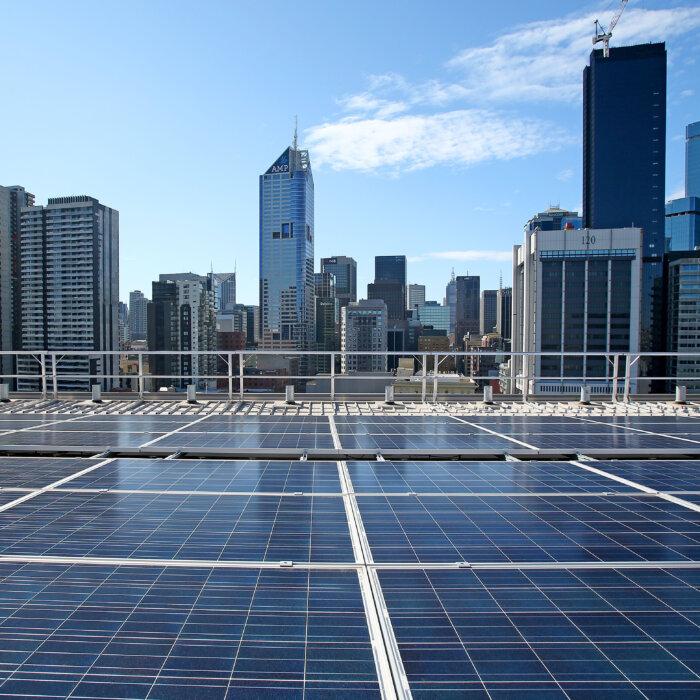
The program is expected to support up to 16 hybrid solar, battery-storage, and battery-retrofit projects, with selected developments targeted to begin construction in 2027.
The initiative aims to help technically viable project that are unable to proceed due to troubles with getting a loan.
Project selection will be managed by infrastructure debt manager Infradebt.
The program will primarily target projects with a capacity under five megawatts, but allow for larger projects where suitable.
This type of project sits between household rooftop solar installations to large utility-scale solar and wind farms, a landscape that is being called the “missing middle” of Australia’s transition towards net zero.
“This investment backs the missing middle–projects that can be built faster, connect to local networks and help deliver cheaper, cleaner electricity,” Bowen said.
Unlike large renewable developments that generally require access to new high-voltage transmission infrastructure, the projects are intended to connect to local distribution networks and existing poles and wires.
The Labor government has legislated to reach net zero by 2050 with interim targets requiring emissions be cut by 43 percent by 2030, and 62 to 70 percent by 2035.
Cost estimates for the total transition away from coal-fired power to renewables and electrification vary, including grants, incentives, and construction of new infrastructure.