As federal parliament resumed for the first time since the election, Labor introduced its top legislative priority, the Student Debt Cut Bill.
Roughly three million Australians stand to benefit from an automatic loan adjustment later this year, alongside a revamped repayment model.
“These are the Australians who will build Australia’s future, who are already building it, and this will take a weight off their back,” Education Minister Jason Clare said while introducing the bill.
The bill is expected to pass the House of Representatives swiftly, with Labor holding a comfortable majority.
In the Senate, it will require support from either the Coalition or the Greens.
How the 20 Percent Cut Will Be Applied
The 20 percent reduction will apply across all student loan types available under the Commonwealth’s Higher Education Loan Program (HELP). This includes HECS-HELP for undergraduate degrees, as well as FEE-HELP, VET student loans, and apprenticeship loan schemes.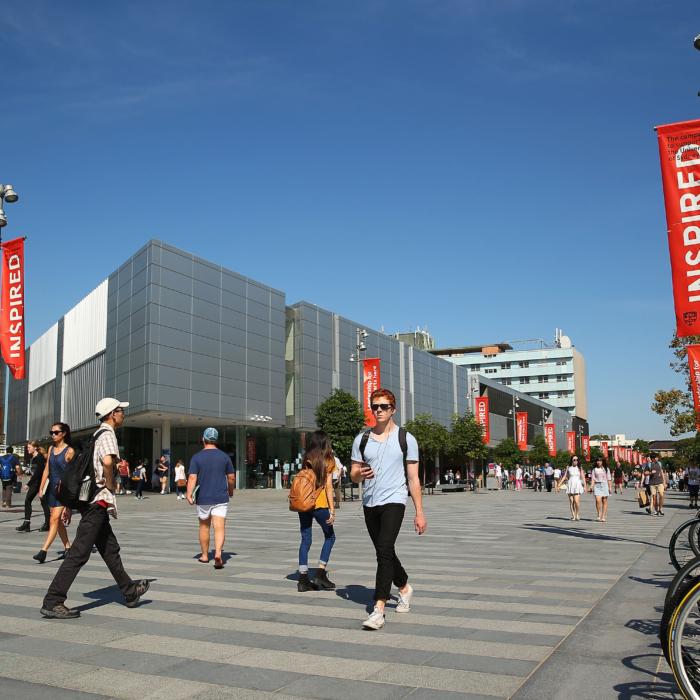
HELP debts are “income-contingent,” meaning repayments begin only once an individual’s income exceeds a certain threshold.
While no interest is charged, loan balances are indexed annually. A recent change means indexation now uses whichever is lower—inflation or wage growth.
If the legislation is approved, the Australian Taxation Office (ATO) will apply the cut automatically to loan balances as of June 1, 2025.
This year’s indexation rate of 3.2 percent will be recalculated based on the reduced balance.
The cut will also apply to loans for units or courses with a census date before 1 June, even if those debts haven’t yet appeared in a borrower’s ATO account.
Changes to Repayment Thresholds and Structure
Labor also plans to overhaul the income threshold and repayment method for HELP debts.The minimum income required to trigger repayments will increase from $54,435 to $67,000.
More significantly, repayments will no longer apply to the borrower’s entire income once the threshold is crossed. Instead, only the portion of income above the threshold will be subject to repayment at a higher rate.
Preliminary guidance suggests the new rate will be a flat 15 percent rate for income between $67,000 and $125,000, with modest increases beyond that. High-income earners (above $180,000) would continue paying at rates similar to the current system.
For example, under the current system, someone earning $70,000 would repay 2.5 percent of their full income—$1,750.
Under the new approach, only the $3,000 above the $67,000 threshold would be subject to repayment—just $450 at 15 percent.
These changes are proposed to apply from the 2025–26 financial year.