Former Canadian diplomat Michael Kovrig told MPs that Ottawa’s agreement with Beijing to open its markets to Chinese electric vehicles puts Canada at risk of “deeper economic entanglement” with China and dependency that could erode Canada’s sovereignty.
Kovrig, a China scholar, was detained in China for more than 1,000 days, along with fellow Canadian Michael Spavor, in apparent retaliation by Beijing after Canada executed a U.S. extradition warrant in late 2018 for Huawei executive Meng Wanzhou and arrested her in Vancouver.
“Opening Canada’s market to electric vehicles from the People’s Republic of China should be assessed not as a normal trade agreement, but rather as a tactical gamble that risks deep entanglement with an increasingly totalitarian one-party state,” Kovrig told MPs.
The deal was made with the expectation it would drive new Chinese investment in Canada’s auto industry, and in an effort to diversify trade away from the United States amid strained trading relations.
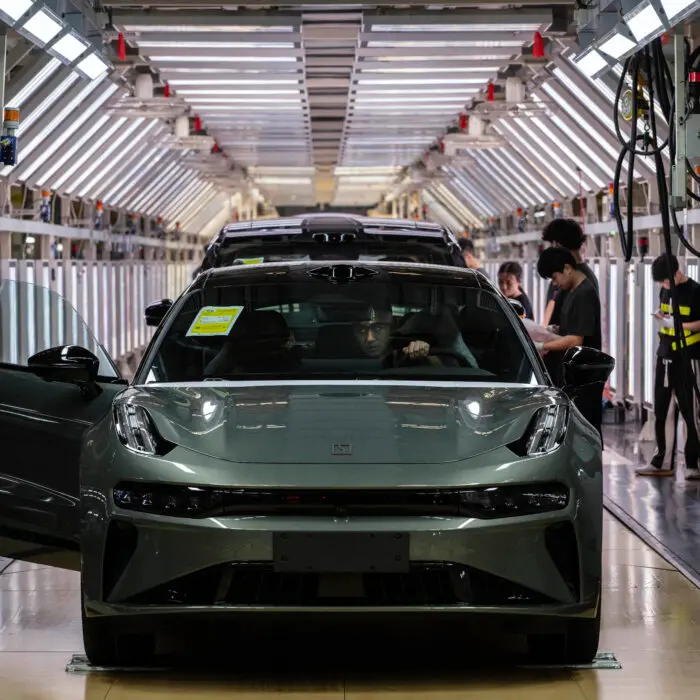
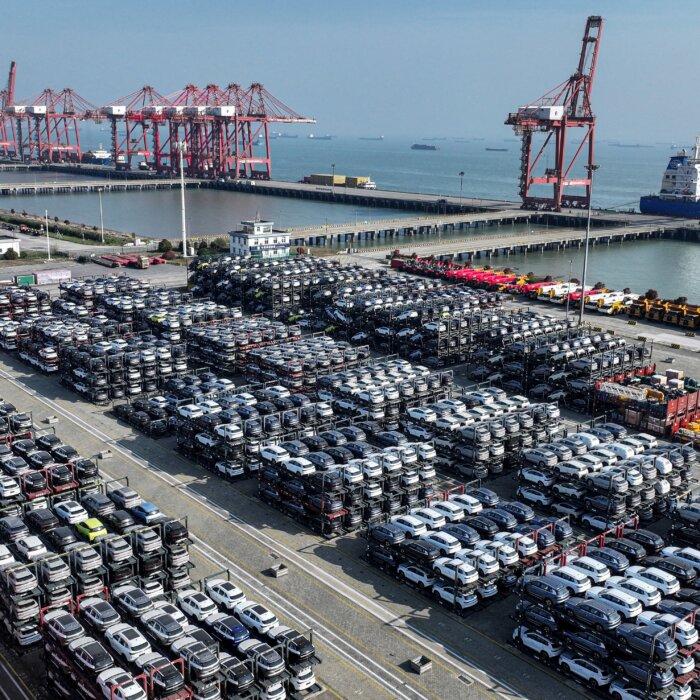
Kovrig said deeper economic entanglement with China is “not a long-term route” to achieving Ottawa’s goals of accelerating the green transition, lowering consumer prices, acquiring technology, and diversifying trade away from the United States.
Instead, he said, forming closer trade relations with China is “a dead end,” because such trade is “inseparable from expanding the attack surface for the CCP’s [Chinese Communist Party’s] coercive economic statecraft.”
“Hedging uncertainty with the United States by tilting toward China is a risky bet that is likely to carry more negative costs for Canada than the positive benefits that it could potentially bring,” he added.
Kovrig said the federal government should keep China’s access to Canadian markets “limited, conditional, and reversible” to mitigate such risks and keep its options open.
The government should also conduct anti-subsidy investigations, count any imports of kits for assembled vehicles toward quotas, protect and develop domestic capacity, and align with reliable partners on trade measures, forced labour bans, investment screening criteria, cybersecurity regulations, and technology standards, he said.
Unless trade with China is “tightly constrained,” Kovrig said it will likely undermine Canada’s industrial base, technological development, national security, and policy-making autonomy.
Effects on Canada’s Auto Sector
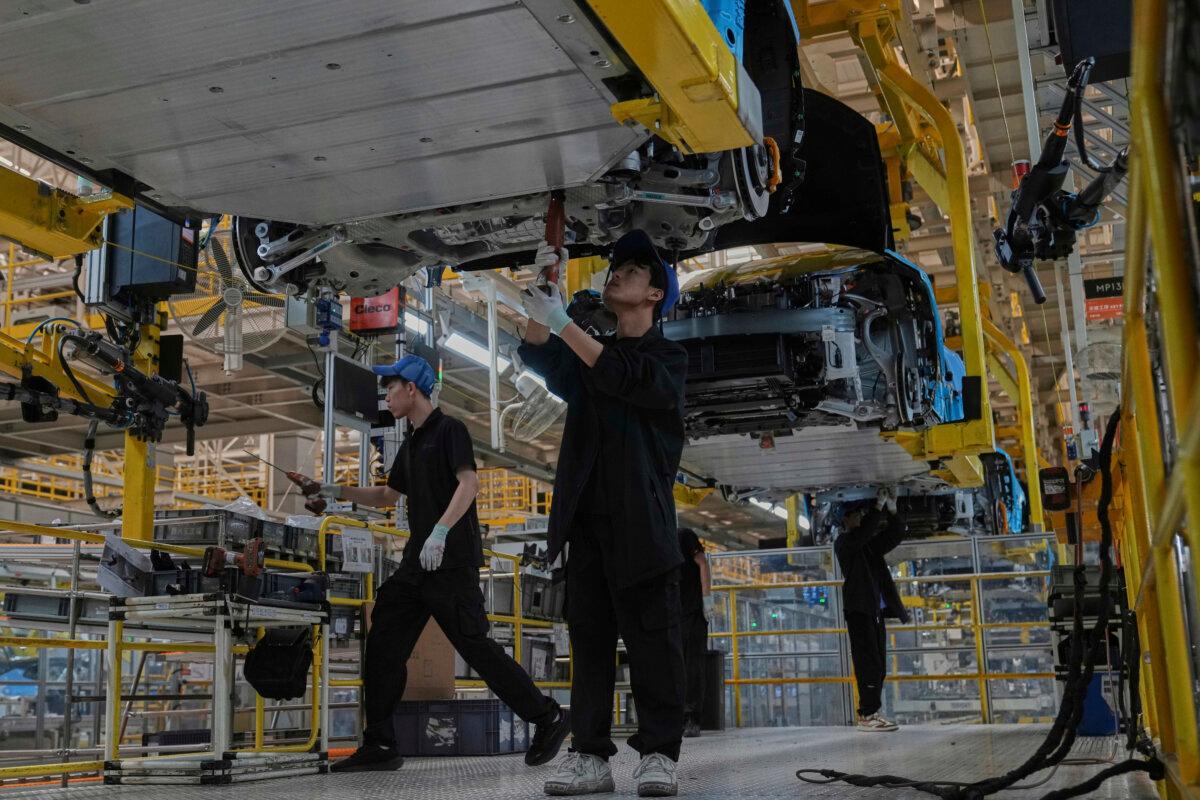
Kovrig said he doesn’t think Ottawa’s EV deal with Beijing will drive much investment in Canada’s auto sector either because it could deter companies from other countries from entering Canada.He noted that China usually sets up knock-down kits to ship to other countries—in which the vehicles are largely built in China and then shipped overseas for final assembly.
Kovrig also said he doubts Beijing is “seriously interested” in building full auto plants in Canada to bolster the Canadian supply chain.
“The Chinese government is on record as wanting to restrict its EV companies from transferring technology and process knowledge,” he said, adding that China usually sets up knock-down plants or imports its own workers to other countries and does not transfer technology.
Kovrig also warned that Chinese firms flood markets, out-scale competitors, and collapse profit margins, while controlling supply chains and pricing power for geopolitical leverage. He said this pattern has been seen in other sectors China has dominated, including for solar panels and the steel industry, where China’s oversupply has collapsed industries in other countries.
Forced Labour
Ottawa’s arrangement with Beijing on Chinese-made EVs has raised numerous concerns among opposition MPs, China experts, and human rights organizations, who have noted China’s history of human rights abuses, besides the security and privacy risks the vehicles pose.Asked by Conservative MP Jagsharan Singh Mahal whether it is “responsible” for elected officials to minimize ongoing human rights issues in China, Kovrig said when Liberal MPs downplay forced labour concerns they are “weakening Canada’s ability to scrutinize these supply chains properly.”
Privacy Concerns
Ottawa’s agreement to accept Chinese EVs into Canada at low tariffs has raised concerns about data privacy and surveillance in connected vehicles.Privacy Commissioner of Canada Philippe Dufresne also testified before the committee on April 16 and told MPs the federal government has not consulted his office on privacy issues related to Chinese EVs. He said Canada needs stronger laws around data sharing in the private sector as it opens its markets to Chinese EVs.
“I am hoping that government and Parliament will modernize private sector privacy law on a number of fronts,” Dufresne said. “We need stronger enforcement rules. It’s quite a notable gap that Canada, almost alone, we lack the ability for my office to issue orders or to issue fines.”
He also said Canada lacks a cross-border data transfer rule regime that is as rigorous as that in Europe, Quebec, or other jurisdictions.
Dufresne said that while such vehicles are convenient for drivers, they raise “important privacy considerations” as they can collect and transmit large volumes of personal data, such as location history, driving behaviour, and personal preferences. It also raises the issue of how this information is stored, shared, and protected, he noted.
“In some cases, the data may potentially be transferred or stored in foreign jurisdictions where different legal frameworks and data protection standards can increase the risk of access or use of personal information, including access by foreign courts, law enforcement, and national security authorities,” he said.
Dufresne said the government needs to do more to ensure Canadians are aware of the data used by cars and the cross-border nature of data sharing.