
Kellogg’s decision to remove artificial dyes from its products including popular cereals also applies to items sold in Canada, the company has confirmed.
The company made the announcement in response to moves by the U.S. administration to remove synthetic food dyes from products.
Kellogg’s confirmed to The Epoch Times that the artificial dye removal would apply to all of its products, including those sold in Canada.
Kellogg’s also said it would not launch any new products with FD&C colours starting in January 2026.

It added it would remove the colours from the “small percentage of our foods in retail that contain them today, by the end of 2027.”
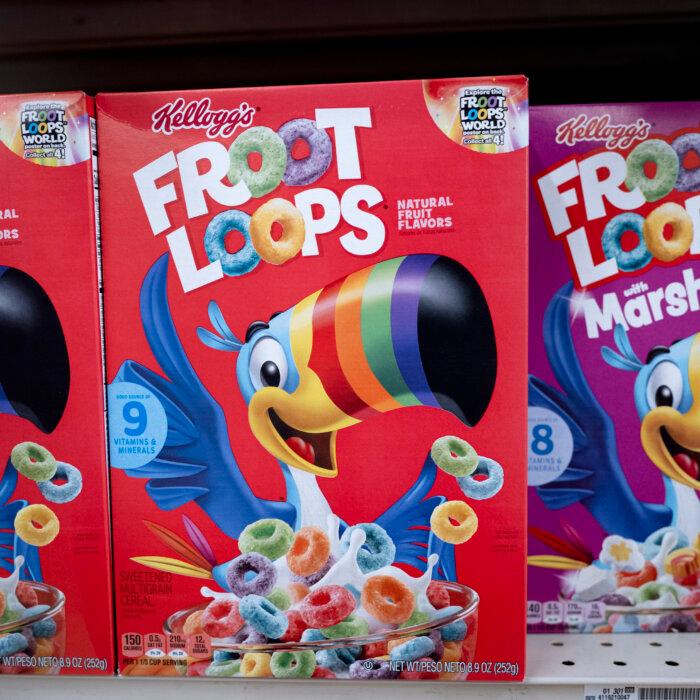
The company’s Fruit Loops cereal uses synthetic dyes for colouring in the United States but uses fruit juice for colouring in Canada.
Health Canada told The Epoch Times in an email that it “uses a risk-based approach” to managing food additives similar to “like-minded regulators internationally.”
“Health Canada will restrict or no longer allow the permitted use of a food additive if there is a safety reason to take such action,” the federal department said in an email.
Some of the artificial dyes that the FDA warns about are permitted for use in Canada, according to Health Canada. They include Yellow No. 6, Yellow No. 5, Red No. 40, and Blue No. 1.
Kellogg’s said consumers have been seeking “simpler foods” and noted that its products also include nutrients like iron, vitamin D, and folate.
Kellogg’s said it is “committed to continue working” with the U.S. Food and Drug Administration and the U.S. Department of Health and Human Services to find “effective solutions” to remove FD&C colours from foods.
In April, Health Secretary Kennedy and FDA Commissioner Marty Makary said they planned to see synthetic food dyes removed from the U.S. food supply, over concerns of a link between the dyes and health conditions like attention-deficit/hyperactivity disorder (ADHD), obesity, and diabetes.