The Italian government has opened an investigation into cosmetics retailer Sephora for promoting adult skincare products to minors via social media influencers, a practice that regulators say may be fueling an unhealthy fixation on skincare among girls as young as age 10.
The Italian Competition Authority (AGCM) said on March 27 that it has launched two probes—one involving Sephora Italia and another involving Benefit Cosmetics—both owned by French luxury group LVMH. The agency said it suspects that the companies used what it called a “particularly insidious” strategy involving “very young micro-influencers” who encourage compulsive purchases among minors.
Sephora, which has more than 20 million followers on Instagram and 2.1 million on TikTok, has been closely associated with a social media trend of children sharing skincare routines, posting “haul” videos, and mixing products into “smoothies.”
Young shoppers using products formulated for older consumers have been dubbed “Sephora kids,” a label that has gained traction alongside reports of a surge in tweens shopping for skincare in Sephora stores.
The probes, AGCM said, will focus on marketing practices that promote the premature use of adult cosmetics—such as face masks, serums, and anti-aging creams—by children and adolescents, including those younger than ages 10 to 12. They will also examine whether warnings and precautions for products not intended for minors have been omitted or presented in a misleading way.
Officials said the alleged practices are tied to the broader issue of “cosmeticorexia,” an obsession with skincare among minors.
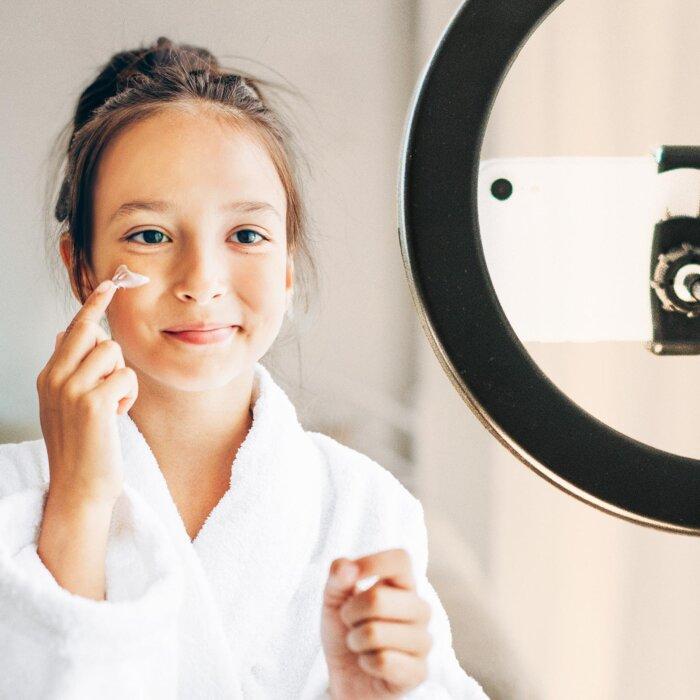

While it is not illegal in Italy to sell adult cosmetics to underage customers, AGCM warned that the “frequent and combined” use of multiple products by minors without proper awareness “may be harmful” to their health.
AGCM officials, assisted by Italy’s financial police, carried out inspections at Sephora and LVMH premises in Italy, the authority said.
Sephora, Benefit, and LVMH Italia said in a statement that they “operate in strict compliance with the applicable regulations” and will fully cooperate with investigators.
A widely cited study published in June 2025 in Pediatrics reviewed TikTok skincare videos made by girls ages 7 to 18 and found that routines featured an average of about six products, costing an average of $168 per regimen. The top 25 most-viewed videos, according to researchers, contained an average of 11 and a maximum of 21 potentially irritating active ingredients.
Experts have also warned about potential negative effect on self-worth. They highlight the irony that tweens may turn to skincare to feel better about themselves only for it to backfire, both because the products might harm their skin and because by chasing the routines, they place themselves under the pressure of unrealistic beauty standards and consumerism at an early age.
Dermatologists generally emphasize that younger skin often does best with a simple routine—gentle cleansing, moisturizing when needed, and daily sunscreen—rather than layered regimens built around anti-aging ingredients. The American Academy of Dermatology, for instance, describes the 20s as the “ideal time” to begin a consistent routine focused on basics such as cleanser and sun protection.