Israel stated on July 27 that it would pause military operations for 10 hours each day in a few select areas of the Gaza Strip where the Israeli military is not operating in order to allow the entry of humanitarian assistance, over international concern of hunger in the enclave.
“Combat operations have not ceased.”
Military operations will cease in specified areas from 10 a.m. to 8 p.m. local time until further notice in Al-Mawasi in central Deir al-Balah, a designated humanitarian area along the coast, and in Gaza City.
The Israeli military noted that assigned secure routes for convoys carrying food and medicine would be established from 6 a.m. to 11 p.m. local time, starting on July 27.
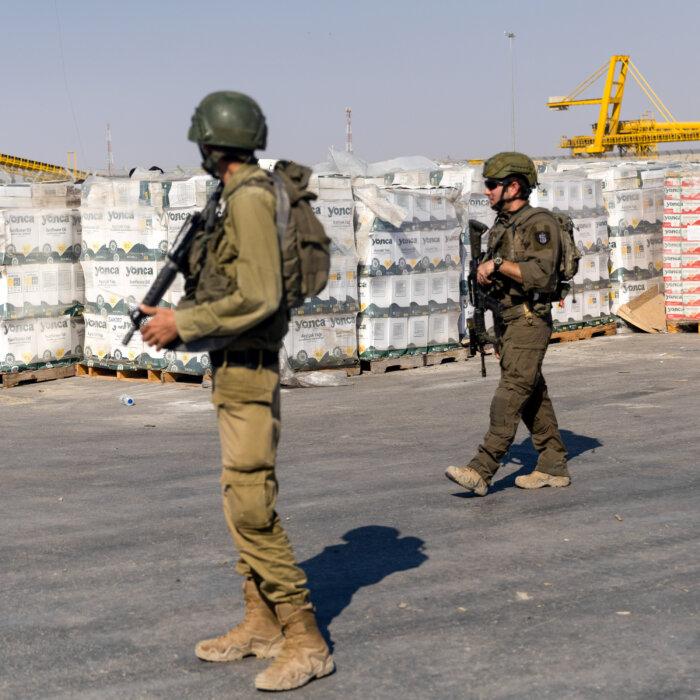
Staff will increase efforts to feed the hungry during the military pauses in the designated areas, said Tom Fletcher, U.N. aid chief.
The Egyptian Red Crescent stated that it was sending more than 100 trucks with more than 1,200 metric tons of food aid to southern Gaza over the Kerem Shalom crossing on July 27.
The aid organizations urged Israel and Hamas to implement an immediate cease-fire and for all land crossings into the Gaza Strip to remain open so the full flow of humanitarian supplies can reach the territory.
On July 21, a group of 25 states, including France, Britain, and Canada, criticized what they called the “drip feeding of aid” to Gaza and said Israel’s blocking of lifesaving humanitarian aid was objectionable.
Operating from four sites in southern and central Gaza, GHF distributes aid, funded in part by a $30 million U.S. State Department grant, with coordination from Israeli authorities. The model features private contractors and Israeli military security.
Major aid groups such as U.N. agencies, Oxfam, and Médecins Sans Frontières, among others, have refused to join the effort, citing concerns over civilian safety, military involvement, and incompatibility with humanitarian principles.
Israel had cut off the flow of aid to the territory in March but resumed it at GHF distribution zones two months later.
The nation defended its actions and stated that enough food has been allowed to reach Gaza during the war and placed blame on Hamas for the suffering of the millions living in Gaza.
The war in Gaza began after Hamas attacked locations in southern Israel on Oct. 7, 2023, killing more than 1,200 Israelis and foreign citizens and kidnapping 251.
On July 25, Israel and the United States pulled back from cease-fire negotiations with Hamas, accusing the terrorist group of not wanting a deal to end the war.