This copy is for your personal, non-commercial use only. Distribution and use of this material are governed by our Subscriber Agreement and by copyright law. For non-personal use or to order multiple copies, please contact The Epoch Times Reprints.
Palestinians carry bags filled with food and humanitarian aid provided by the Gaza Humanitarian Foundation, a U.S.-backed organization approved by Israel, in Khan Younis, southern Gaza Strip, on June 3, 2025. Abdel Kareem Hana/AP
Israel will increase the amount of aid entering Gaza in a gradual and controlled way, using local merchants to reduce reliance on the U.N. agencies and international organizations, an Israeli military agency that coordinates aid said on Tuesday.
The Israeli Coordinator of Government Activities in the Territories (COGAT) said that under a cabinet-approved mechanism, a limited number of local merchants will be involved in distributing aid. The merchants will undergo security screenings and must meet specific criteria, the agency said.
“Goods include basic food products, baby food, fruits and vegetables, and hygiene supplies. Payments for the purchase of these goods will be conducted via bank transfers only, under a monitoring and oversight mechanism. All goods will undergo thorough inspection,” COGAT said on X.
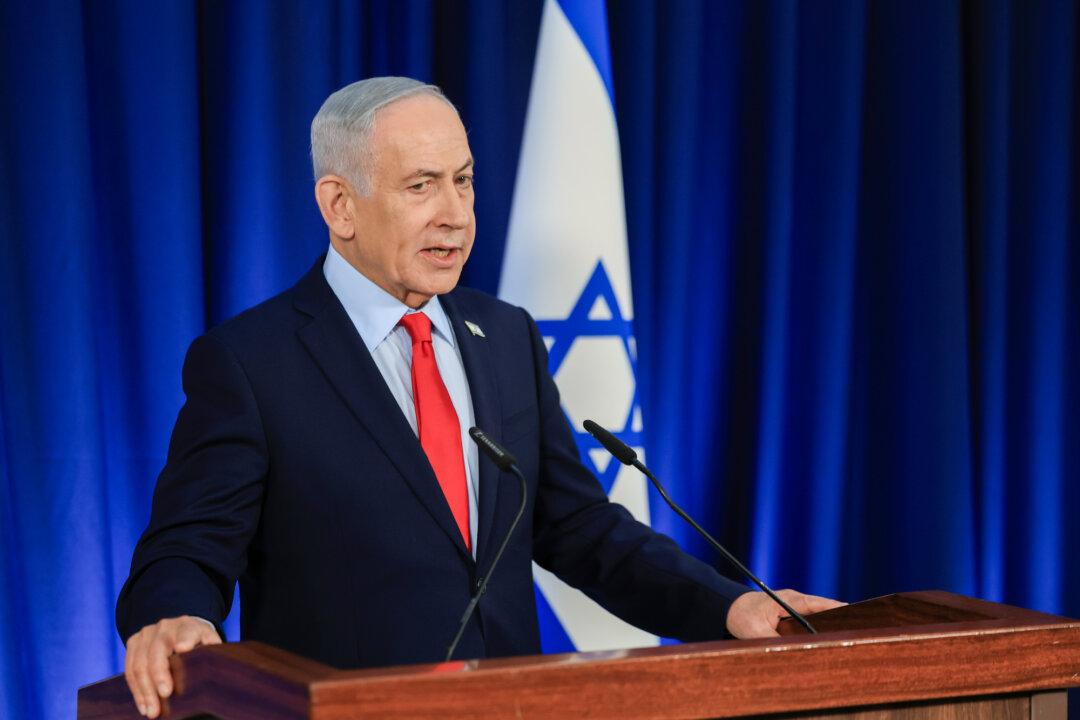
Israel’s move to increase the volume of aid to Gaza follows a pledge by Prime Minister Benjamin Netanyahu to continue working with international partners to ensure large amounts of humanitarian aid flow into Gaza.
U.N. agencies said in a July 29 report that there is evidence of famine and starvation in Gaza, and that humanitarian access remains severely restricted, with aid convoys frequently obstructed or looted.
“Mounting evidence shows that widespread starvation, malnutrition, and disease are driving a rise in hunger-related deaths,” a July 29 alert from the Integrated Food Security Phase Classification (IPC) initiative said. “Latest data indicates that Famine thresholds have been reached for food consumption in most of the Gaza Strip and for acute malnutrition in Gaza City.”
U.N. World Food Program Director of Emergencies Ross Smith said: “It’s clearly a disaster unfolding in front of our eyes, in front of our television screens. This is not a warning, this is a call to action. This is unlike anything we have seen in this century.”
COGAT said that there are “hundreds of aid trucks on the Gazan side of the Kerem Shalom Crossing.”
“The trucks belonging to the international aid organizations and the UN agencies, most of which contain food, have accumulated over recent months on the Gazan side of the crossings and are awaiting collection and distribution by those organizations following a security inspection,” the agency said.
Col. Abdullah Halabi, head of COGAT’s Coordination and Liaison Administration for Gaza, said in a July 25 statement, “Israel does not limit the number of trucks entering the Gaza Strip, and it is the collection issue that is preventing the continuous delivery of humanitarian aid into Gaza.”
COGAT, which blames the Hamas terrorist group for looting aid convoys, said that Israel has invested significant efforts in advancing the humanitarian response.
The new mechanism will operate in cooperation with security agencies, the unit said on Tuesday. It pledged to implement measures to prevent Hamas from being involved in the aid delivery and distribution process.
Israel maintains that the release of Israeli hostages held by Hamas and the elimination of the group’s military and governing capabilities are key to achieving a cease-fire. It has rejected European nations’ initiative to recognize Palestinian statehood, calling it a move that would undermine cease-fire efforts and Israel’s attempts to secure the release of hostages.
On Monday, Netanyahu said he would convene his security cabinet this week to direct the military on the next steps to meet his goals in Gaza.
“We must continue to stand together and fight together in order to achieve the objectives of the war we have set, all of them: Defeating the enemy, releasing our hostages and ensuring that Gaza will never again threaten Israel,” he said.
The statement follows a tactical pause in military operations in parts of the Gaza Strip to allow for the increased delivery of humanitarian aid, which was announced on July 27 and has since been maintained.
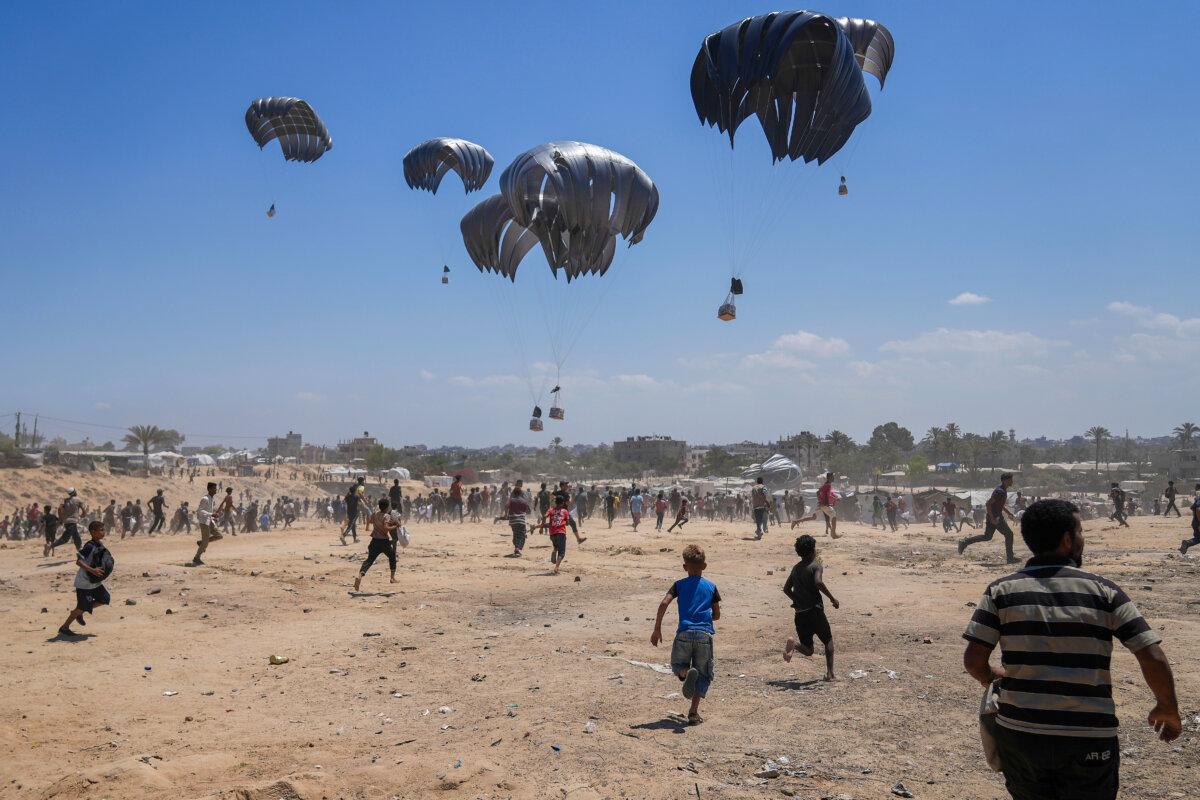
The pause allowed for humanitarian airdrops by Israel, the United Arab Emirates, and Jordan to resume, according to the Israel Defense Forces.
Palestinians rush to collect humanitarian aid airdropped by parachutes into Zawaida in the central Gaza Strip, on Aug. 4, 2025. Abdel Kareem Hana/AP Photo
British Foreign Secretary David Lammy said on July 27 that airdrops help, but only land routes offer a sustainable solution.
The chief of the U.N. Relief and Works Agency for Palestinian Refugees (UNRWA), Philippe Lazzarini, said last week that airdrops are vastly more expensive and less efficient than trucks.
“If there is political will to allow airdrops, which are highly costly, insufficient and inefficient, there should be similar political will to open the road crossings. As the people of Gaza are starving to death, the only way to respond to the famine is to flood Gaza with assistance,” Lazzarini said.
“UNRWA the largest UN agency on the ground, has 6,000 trucks loaded with aid stuck outside Gaza waiting for the green light to enter.”
Israel, UNWRA
Israel and the UNRWA are locked in a dispute over how aid is delivered to Gaza.
Israel has alleged that UNRWA is a compromised actor infiltrated by Hamas, following reports that several of its staff participated in or supported the Oct. 7, 2023, attacks on Israel.
UNRWA investigated 19 staff over the allegations. Nine members were dismissed. One was cleared. In nine other cases, evidence was insufficient to support claims of involvement.
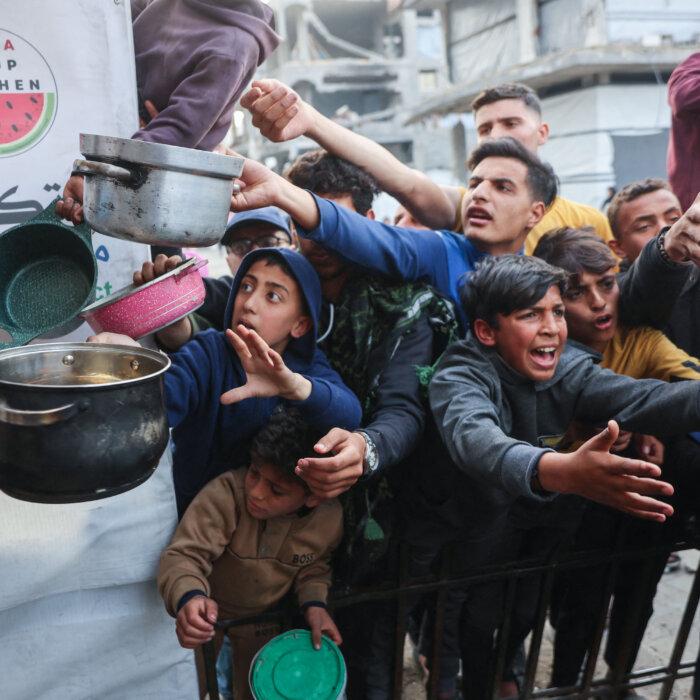
Palestinians receive lentil soup at a food distribution point in Gaza City on Aug. 2, 2025. Omar Al-Qattaa/AFP via Getty Images
On Monday, COGAT accused UNRWA of spreading false information about aid delivery, rejecting its claim that 6,000 trucks are waiting to enter Gaza.
“There are NO 6,000 UNRWA trucks waiting to enter Gaza,” COGAT said.
The unit alleged that UNRWA has done little on the ground and questioned why the aid has not been transferred to other U.N. bodies if it exists.
Israel and the United States back the Gaza Humanitarian Foundation (GHF), which has been operating since May as an alternative to U.N.-led relief efforts in Gaza. It reports delivering more than 100 million meals since May 5.
UNRWA has refused to work with GHF, calling it unsafe and politically driven and blaming its “aid system” for hundreds of civilian deaths near distribution sites.
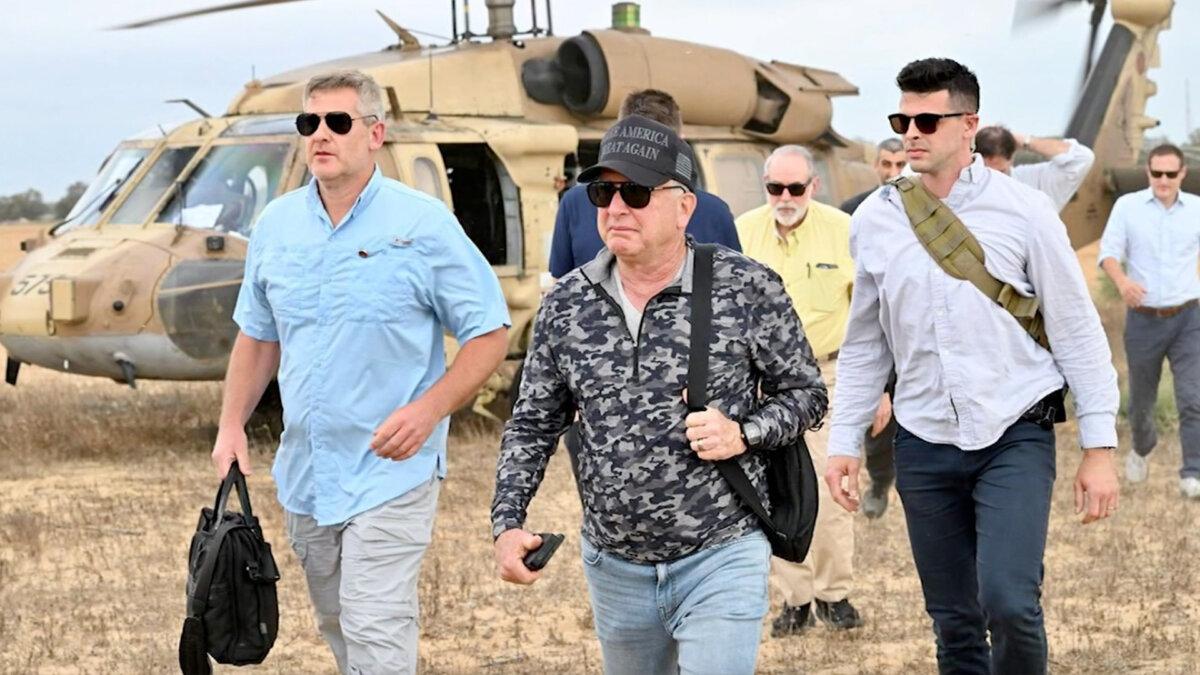
Special envoy to the Middle East Steve Witkoff and U.S. Ambassador to Israel Mike Huckabee visit Gaza on Aug. 1, 2025. Ambassador Mike Huckabee/X
Last week, U.S. special envoy to the Middle East Steve Witkoff and U.S. Ambassador to Israel Mike Huckabee traveled to Gaza at the request of President Donald Trump, visiting two sites connected to GHF and other organizations.
Trump recently confirmed that the GHF would be part of the new U.S.-led initiative to establish freely accessible food distribution points in Gaza.
GHF was created earlier this year as part of an Israeli-initiated plan to deliver aid to Palestinian civilians in Gaza without interference from Hamas, which Israel accuses of stealing aid and selling it to finance its military operations.
GHF Executive Director Jake Wood resigned on May 25, saying it was clear that the plan to deliver aid could not be implemented while adhering to “the humanitarian principles of humanity, neutrality, impartiality, and independence, which I will not abandon.”
Wood, a former U.S. Marine sniper, did not give further details.
GHF’s board put out a statement at the time, saying it was “disappointed” that Wood had resigned.
The Epoch Times reached out to UNRWA and GHF for comment but did not receive a response by publication time.
Evgenia Filimianova is a UK-based journalist covering a wide range of international stories, with a particular interest in foreign policy, economy, and UK politics.