Officials have released the full text of a U.S.-brokered framework agreement between the United States, Israel, and Lebanon that charts a path toward ending decades of conflict, calling for Hezbollah’s disarmament, phased Israeli troop withdrawals, and direct negotiations between the two neighboring countries aimed at achieving lasting peace.
The agreement was signed in Washington on June 26 and released later that same day by the U.S. State Department. It lays out a performance-based process under which the Lebanese Armed Forces would gradually restore state authority across Lebanon while disarming Hezbollah and other non-state armed groups.
As those steps are verified, Israeli forces would progressively redeploy from Lebanese territory, with the ultimate goal of ending the long-running conflict and establishing peaceful relations between the two countries.
It marks the most comprehensive U.S.-brokered effort in years to transform a fragile ceasefire into a lasting political settlement after months of fighting between Israel and Hezbollah, the Iran-backed group that the United States designates as a terrorist organization.
“We are happy to announce a framework agreement between the sovereign government of Lebanon and of the government of Israel, with the mediation and support of the United States of America, that begins to put in place a framework for lasting peace and security,” U.S. Secretary of State Marco Rubio said at the signing ceremony.
Path to Peace
The framework says Israel and Lebanon aim to end decades of conflict, formally conclude any state of war between them, and establish “peaceful neighborly relations” through direct negotiations mediated by the United States.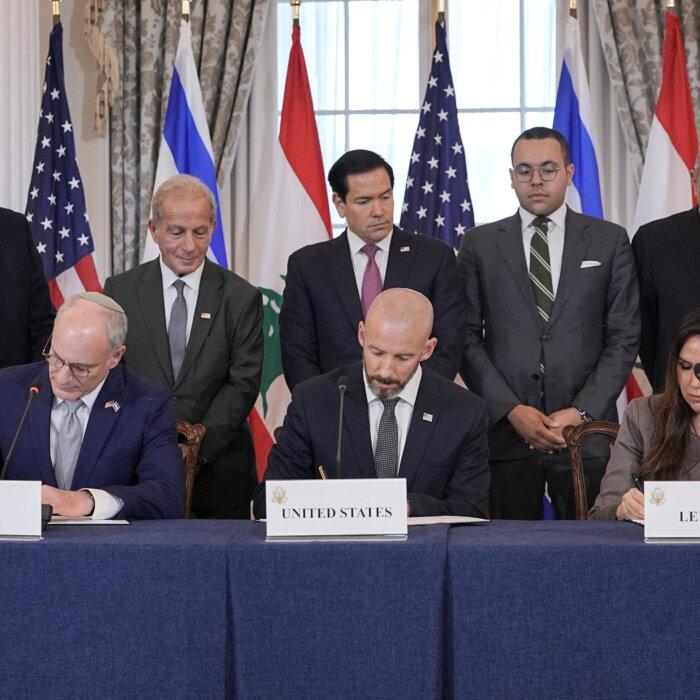
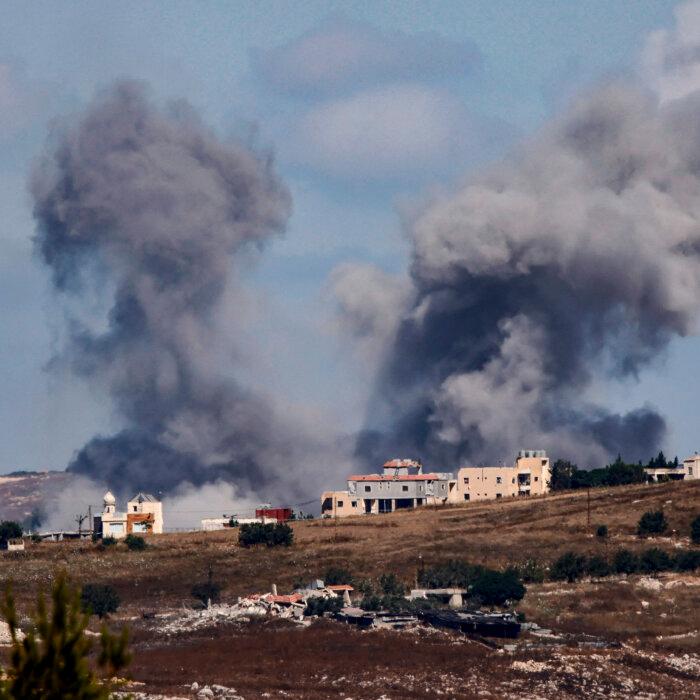
Implementation will follow a reciprocal, phased process detailed in a Security Annex—to be fleshed out later with Washington’s support—establishing verification mechanisms and conditions for expanded Lebanese military deployments and Israeli troop redeployments.
Under the agreement, the Lebanese Armed Forces will gradually restore state authority across the country by carrying out the verified disarmament of Hezbollah and other non-state armed groups and dismantling their military infrastructure. The framework states such groups will have “no military or security role and no armed capabilities anywhere in Lebanon.”
The process will begin in two pilot zones agreed by the Israeli military and the Lebanese Armed Forces, with more such zones to be set up in the future as Hezbollah disarmament gathers pace. Once disarmament is verified, Lebanese troops will assume security responsibility, reconstruction will begin, and displaced civilians will be allowed to return.
Lebanese Government Hails Deal, Hezbollah Rejects
Lebanese President Joseph Aoun welcomed the agreement, describing it as “the first step on the path to restoring Lebanon’s sovereignty over its complete, undivided territory.”In a statement issued after the signing, Aoun thanked President Donald Trump and his administration for supporting the negotiations and said the agreement should allow displaced Lebanese to return to “their fully liberated land.”
“We swear to continue working until it is fully realized,” Aoun said. “So that there shall be no occupation, no captives, no subservience, and no tutelage.”
Israeli leaders also hailed the framework but cautioned that any further troop withdrawals depend on Hezbollah’s disarmament.
“The most important thing is that, first of all, Israel remains in the security zone in southern Lebanon,” Prime Minister Benjamin Netanyahu said in a televised address after the signing. “We are maintaining it as long as Hezbollah does not disarm, as long as there is a danger to the State of Israel.”
Netanyahu also described the agreement as a “great blow to Iran,” accusing Tehran of using Hezbollah as its regional proxy to force Israel to withdraw from southern Lebanon and so undermine Israeli security.
“Our security comes first,” Netanyahu said, highlighting the two initial pilot zones where the Lebanese army will gradually assume responsibility while Israel retains its security zone.
Hezbollah and its allies swiftly rejected the framework.
In a televised address, Hezbollah leader Naim Qassem called the group and its supporters the target of a “war of extermination” and said Israel must completely withdraw from Lebanese territory and end all military operations.
Hezbollah-affiliated lawmaker Hassan Fadlallah said the Lebanese authorities could not implement the agreement without triggering a civil war.
“The authorities will not be able to enforce the agreement signed in Washington unless they resort to civil war with U.S. backing,” he said.