Israel and Lebanon announced Wednesday that they had agreed to implement a ceasefire.
The deal, reached after negotiations in Washington, depends on a full stop to attacks by the Hezbollah terrorist group and the withdrawal of all its fighters from the area south of the Litani River.
“The two sides agreed with the guidance of the United States to swiftly advance the creation of pilot zones in which the Lebanese Armed Forces will take exclusive control of the territory to the exclusion of all non-state actors,” the joint statement with the United States said.
Both countries agreed to hold further talks the week of June 22 on political and security issues to reach a lasting deal.
A U.S.-mediated agreement announced Monday had already prompted Israel to hold off on strikes in Hezbollah-controlled southern Beirut suburbs and Hezbollah, a terrorist organization based in Lebanon, to pause cross-border attacks. Yet violence continued.
Lebanese security sources reported Israeli drone strikes that killed at least six people in southern Lebanon on Wednesday, while Israel said it intercepted a hostile aircraft probably launched by Hezbollah.
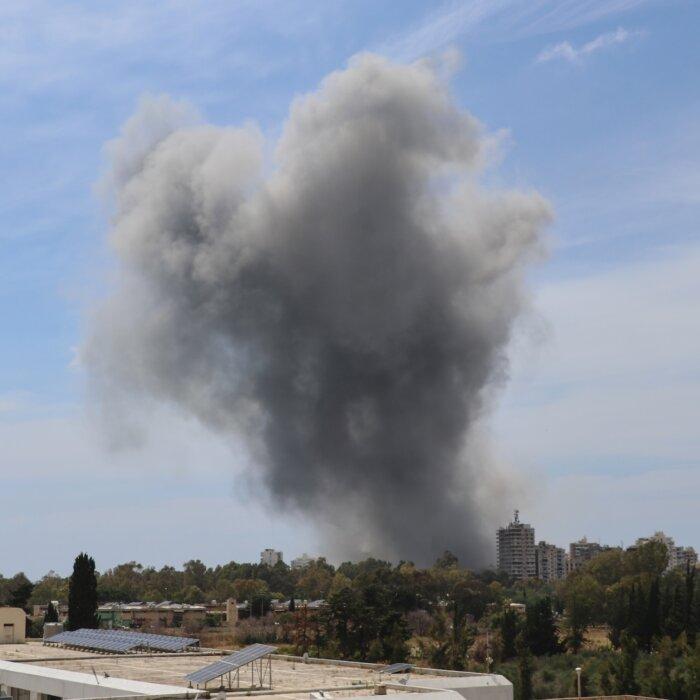
The current round of fighting began March 2, when the Iran-backed Hezbollah fired rockets across the border into northern Israel two days after the United States and Israel launched strikes on Iran. Israel responded with airstrikes across Lebanon and began ground operations in the south on March 16.
Iran has insisted that any final deal with the United States and Israel must also include Lebanon.
“Its violation on one front is a violation of the ceasefire on all fronts,” Iranian Foreign Minister Abbas Araghchi wrote Monday in a post on X, according to a translation from Persian. “The United States and Israel bear responsibility for the consequences of any breach of the truce.”
Hezbollah, while not a direct party to Wednesday’s statement, has been the main non-state actor driving the border violence.
The fresh implementation agreement builds on months of fragile truces and U.S. diplomatic efforts to strengthen Lebanese government control and remove armed terrorist groups from the south. Both sides condemned Iran’s role and affirmed Lebanon’s sovereignty in the joint statement.