This copy is for your personal, non-commercial use only. Distribution and use of this material are governed by our Subscriber Agreement and by copyright law. For non-personal use or to order multiple copies, please contact The Epoch Times Reprints.
Israel and Syria have agreed to a cease-fire proposal “embraced” by Turkey, Jordan, and other neighboring countries, U.S. Ambassador to Turkey Tom Barrack said on July 18.
Barrack said the leaders of both countries have agreed to a cease-fire of hostilities, with the support of the United States, which has acted as the mediator.
“We call upon Druze, Bedouins, and Sunnis to put down their weapons and together with other minorities build a new and united Syrian identity in peace and prosperity with its neighbors,” he stated on X.
The Syrian presidency also announced “a complete and immediate ceasefire” in the country, calling on all parties to commit to the cease-fire and end hostilities in all regions.
Syrian President Ahmed al-Sharaa’s office said that security forces would be deployed in certain areas to secure public order and ensure that the cease-fire is being enforced.
The Israeli government had not issued a statement regarding the cease-fire deal at the time of publication.
Tensions have intensified in recent days in Sweida, a predominantly Druze city in southern Syria, as clashes have broken out between fighters from the Druze minority and members of Bedouin tribes, leading to an intervention from Syrian government forces.
On July 17, Israeli Prime Minister Benjamin Netanyahu said that Israel had set a policy with two rules, first of demilitarization south of Damascus, and second to protect the Druze minority in southern Syria.
“Both those rules were broken by the regime in Damascus,” he said. “The regime sent troops south of Damascus, into the region that has to be demilitarized, and began slaughtering the Druze.”
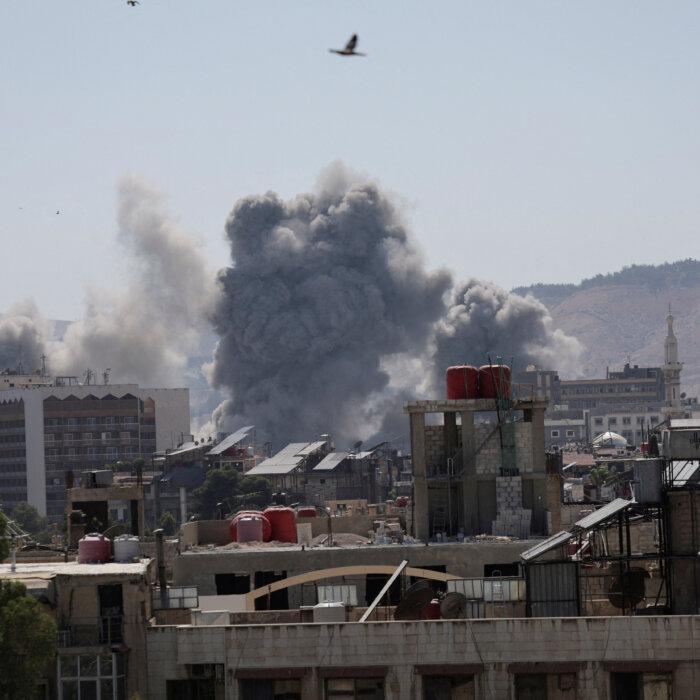
The conflict has drawn in neighboring Israel, which launched airstrikes in Damascus and the south of Syria on July 16, targeting the Syrian regime’s military headquarters. The Israel Defense Forces said the strikes were meant to protect Druze civilians—members of an Arab religious minority primarily residing in Syria, Lebanon, and Israel—in southern Syria.
The U.S. government said on July 17 that it did not support recent Israeli strikes, while condemning violence in Syria and calling for a cease-fire. State Department spokesperson Tammy Bruce said the United States was engaging diplomatically with Israel and Syria “at the highest levels” to resolve the situation.
Secretary of State Marco Rubio stated on July 16 that all parties involved in the clashes had agreed to take “specific steps” toward resolving the conflict.
“This will require all parties to deliver on the commitments they have made and this is what we fully expect them to do,” Rubio stated on X.
Syrian government forces largely pulled out of Sweida on July 16 after reaching a truce with Druze groups, mediated by the United States, Turkey, and Arab nations. But renewed clashes subsequently broke out between Druze armed groups and members of Bedouin clans.