The Iraqi government has announced a Sept. 30 deadline for pro-Iran terrorist groups in the country to disarm and hand over all their weapons.
“After this date, all weapons outside the state framework will be subject to legal redress,” Iraqi government spokesman Haider al-Aboudi told a weekly press conference.
The Iraqi government is committed to disarming the foreign-backed terrorist groups, “particularly as Coalition forces are scheduled to complete their withdrawal by Sept. 30,” the prime minister’s office said.
According to a June 15 joint statement, al-Zaidi and U.S. envoy Tom Barrack said the Iraqi government has plans to ensure “the complete disarmament and disbandment of all armed groups and formations” operating outside Iraqi state control to ensure that “Iraqi territory cannot be used by any side to threaten regional peace.”
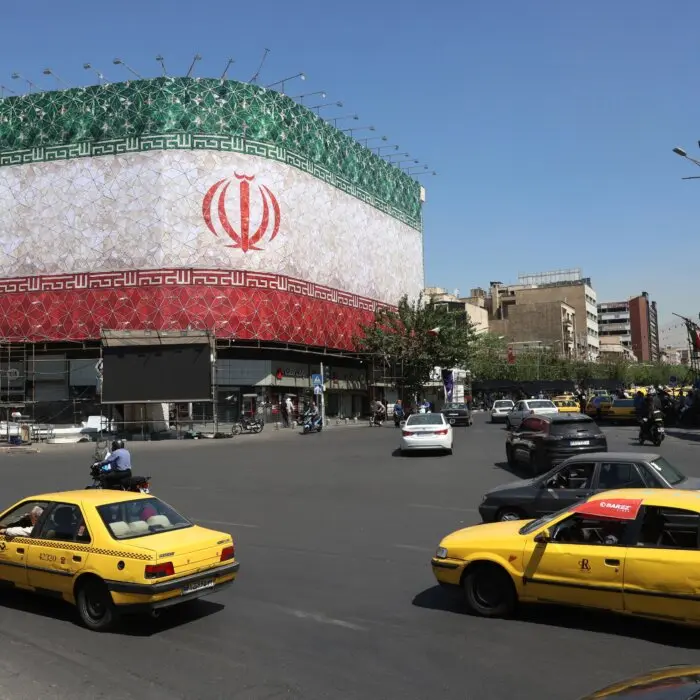
Following the 2003 U.S.-led invasion of Shiite-majority Iraq and the toppling of the Saddam regime, Iraq became a battleground for various groups, but also for proxies of neighboring Iran. Tehran spent decades and billions of dollars building up its regional Shiite network, which has consistently attacked U.S. facilities and bases hosting U.S. troops across the region.
But Iran’s proxies have been severely weakened since Iran-backed terrorist group Hamas attacked Israel on Oct. 7, 2023.
Meanwhile, several other powerful Shiite factions in Iraq have been signaling since last year that they are ready to disarm and focus on domestic politics to avert an escalating conflict with the Trump administration.
Anti-Corruption Purge
In another major development, al-Zaidi on June 28 ordered the arrests of dozens of Iraqi officials on anti-corruption charges after Iraq’s Supreme Judicial Council issued arrest warrants, a government spokesperson said.Iraq’s state news agency, INA, citing a senior official, said at least 47 suspects were detained in Baghdad’s heavily fortified administrative and diplomatic hub, the Green Zone, including members of parliament and government officials.
A senior source cited by INA said some arrests “included members of Parliament whose immunity had been lifted,” stemming from testimony by Adnan al-Jumaili, deputy oil minister for refining affairs, after his detention last month, with his statements allegedly implicating a wider circle of officials.
Al-Aboudi said arrests were ongoing, describing them as part of a wider effort in which “fighting corruption remained a central pillar of [the government’s] efforts to strengthen state institutions and protect public funds.”
Among those detained was Ali Maarij, the deputy oil minister for distribution affairs, the sources said, who declined to be identified due to the sensitivity of the matter.
Iraq’s Oil Ministry denied the allegations at the time, saying the activities described by Washington did not fall within Maarij’s responsibilities.
Maarij could not be reached for comment.
Iraq has seen anti-corruption campaigns before.
Retired U.S. Army general David Petraeus, who commanded coalition forces in Iraq from 2007 to 2008 and led U.S. Central Command from 2008 to 2010 before directing the CIA for a year, said this time may be different, as all of Iraq’s principal state institutions—the judiciary, the prime minister’s office, and the country’s most professional security organization—appear to be “acting together to reassert the control of the state.”
“No one will be allowed to misuse the Iraqi people’s wealth or gamble with their future,” al-Zaidi’s office said on X on June 29.
Al-Zaidi, 41, who took office in May with the United States’ blessing, pledged to tackle entrenched corruption, which remains one of Iraq’s most persistent challenges despite repeated promises by successive governments to hold officials accountable.
He took over as a consensus candidate after former Prime Minister Mohammed Shia al-Sudani stepped aside amid a political deadlock over the next premier. Al-Sudani was brought to power by the Shiite Coordination Framework, a Shiite coalition allied with Iran.
The United States was urging Iraq’s Shiite political blocs to prevent the return of former Prime Minister Nouri al-Maliki, who has close ties to Iran.
Iranian Foreign Minister Abbas Araghchi visited Baghdad on June 28 and met with al-Zaidi, President Nizar Amidi, Speaker Haibat al-Halbousi, Foreign Minister Fuad Hussein, and other officials. He said following the visit that Iraqis were preparing for a mass funeral for former Supreme Leader Ali Khamenei, who was killed on Feb. 28 by targeted U.S.–Israeli airstrikes at the start of the Iran war.
The event will “further strengthen the bonds between our two nations,” Araghchi said on X.
Meanwhile, al-Zaidi is scheduled to visit the White House in mid-July to discuss “a strong and mutually beneficial U.S.–Iraq partnership, able to fulfill Iraqi aspirations for a sovereign, secure, and prosperous future and to deliver tangible benefits for Americans and Iraqis alike.”