Australian Prime Minister Anthony Albanese has addressed media following an Iranian missile strike which damaged the Al Minhad Air Base in the United Arab Emirates (UAE).
The base is owned by the UAE but serves as the main logistics and training hub for Australian Defence Force’s Joint Task Force 633, which covers the Middle East. It also houses British troops.
Prime Minister Albanese revealed the strike hit the facility just after 9 a.m. AEDT on March 18, and despite damage to the facility, no one was harmed.
“I can confirm that no Australian personnel were injured and everyone is absolutely safe at this point in time,” Albanese told media in Burnie, Tasmania.
“There was minor damage to an accommodation block and a medical facility due to a small fire that was created as a result of that projectile hitting on a road leading up to that base.

“I have been to that base and spoken to our Australian Defence Force personnel on more than one occasion.”
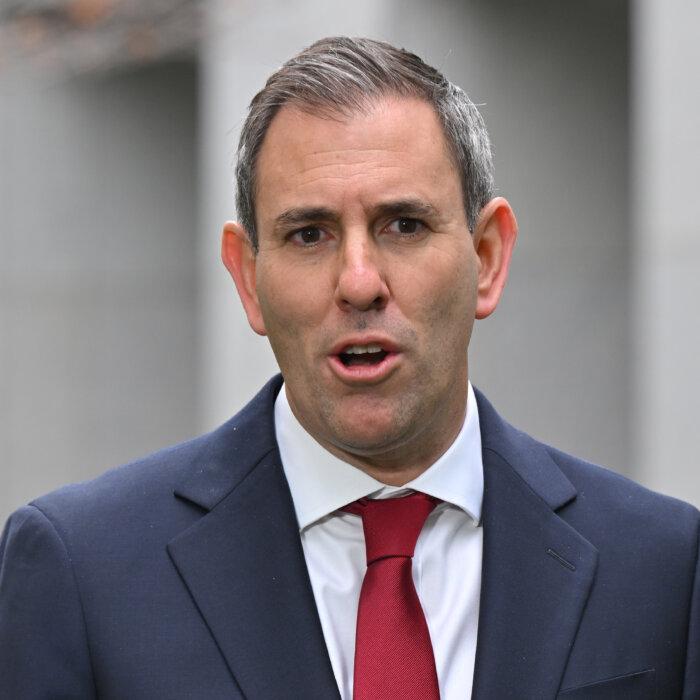
Albanese praised Australian personnel in the UAE, saying they “do a great job for Australia.” The UAE is Australia’s largest trading partner in the Middle East.
“I’ve spoken with the Defence Minister (Richard Marles) about this and it’s important that we recognise that the Iranian regime is continuing to engage in, frankly, random attacks right across the Gulf region,” Albanese said.
“As a result of that, we have an E-7 Wedgetail aircraft providing assistance for defence, particularly in the UAE, as well as our AMRAAMs [missiles] that we are sending to the region.”
“Well, I don’t need to elaborate,” he said. “There’s no need. What we need is proper assessments and statements. That’s what we’ve done.
“We’ve informed people all of the detail at the earliest possible opportunity. This happened, just a matter of hours ago.”
The Epoch Times has contacted the Department of Defence for comment.
The war with Iran was initiated on Feb. 28, when the U.S. and Israel launched surprise airstrikes on key targets of the Islamic Republic, killing its entire leadership class including Supreme Leader Ali Khamenei, as well as hitting military and nuclear sites.
Iran quickly retaliated with missile and drone attacks on Israel, and U.S. bases in nearby countries, striking several civilian facilities as well.
One analyst says the Trump administration’s offence, while largely aimed at forcing regime change—Iran is blamed for sponsoring several terror groups across the Middle East—is also aimed at removing another key ally of the Chinese Communist Party.