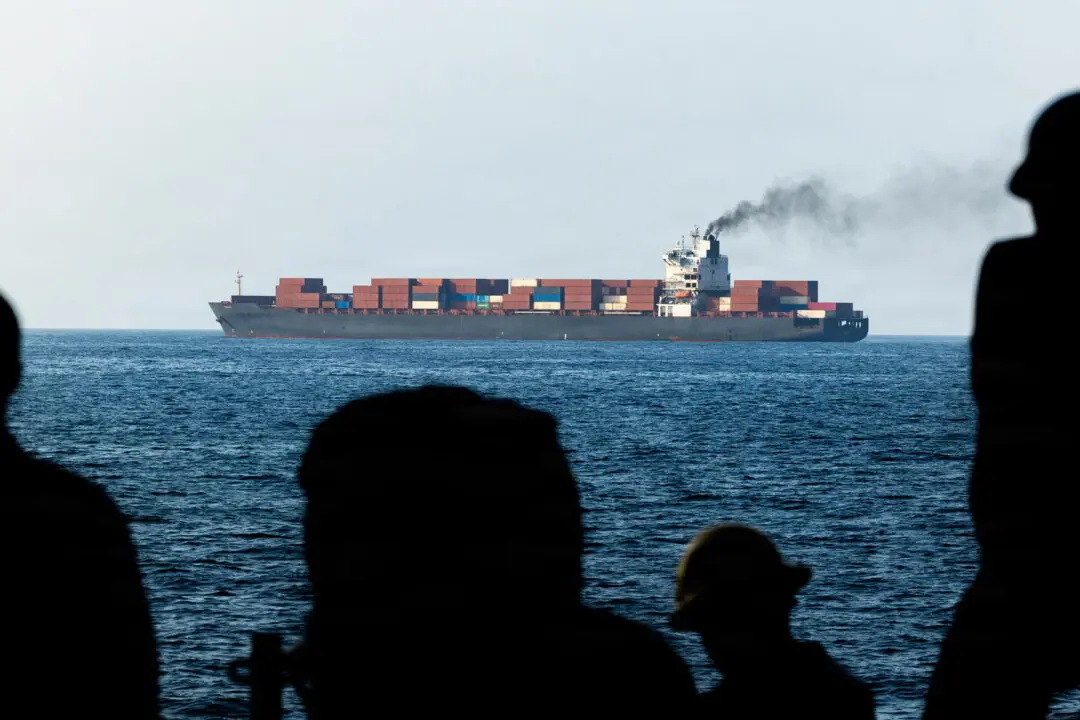
A top Iranian official on Wednesday said that it’s “impossible” to reopen the Strait of Hormuz amid what he claimed are ceasefire breaches, after its military seized ships in the strategic waterway.
Mohammad Bagher Ghalibaf, the speaker of the Iranian parliament and a lead negotiator, wrote on Wednesday in a post on X that “reopening the Strait of Hormuz is impossible with such a flagrant breach of the ceasefire,” according to a translation into English from Farsi.
“A complete ceasefire only makes sense if it is not violated by the maritime blockade and the hostage-taking of the world’s economy,” he said, adding that “the only way forward is to recognize the rights of the Iranian nation.”
A day prior, U.S. President Donald Trump announced an extension of a two-week-long ceasefire with Iran and cited fractures in the ruling regime, allowing for Tehran to submit a proposal at a later time. Pakistani officials also told him that they requested the Trump administration to “hold our attack” against Iran until a unified proposal is submitted by the regime, he wrote on Truth Social.
The Pakistani prime minister’s office said on X that Prime Minister Shehbaz Sharif held a meeting with Iranian Ambassador Reza Amiri Moghadam on Wednesday to talk about the peace efforts.


The seizure of one of the ships, the Panama-flagged MSC Francesca, was confirmed by Montenegro’s minister of maritime affairs, who said four Montenegrin seafarers were on board and that they and the rest of the crew were safe.
“Negotiations are underway between the shipping company and the Iranian side, and the competent state authorities are in constant contact with the crew,” the minister, Filip Radulovic, said on X, according to a translation into English.
The Revolutionary Guard accused the MSC Francesca and the Liberia-flagged Epaminondas of operating without required permits and tampering with their navigation systems.
The Strait of Hormuz, which connects the Persian Gulf with Gulf of Oman in the Indian Ocean, usually sees about 20 percent of the world’s daily oil and liquefied natural gas supply. Since the Iran war started on Feb. 28, Iran’s military has fired on commercial shipping vessels and has sought to effectively shut down traffic in the strait, sending gas and oil prices higher.