A high-level Iranian military official has warned that Tehran could “prolong” the war with the United States until U.S. President Donald Trump leaves office.
“We have to attain deterrence so that the enemy never dares to attack us, so we can live with security,” Mohammad Reza Naqdi said in an interview with PBS, published on Tuesday.
“One way is to prolong this war until we get to the next term of the presidency and cause attrition, so that if anyone else wants to attack Iran, they will know there is a cost.”
Naqdi added that “the longer this war lasts, the more experience we gain” and that “we had never seen a real war to gain real experience to learn how to fight with America.”
“In these five months, we have learned how,” he said. “We have also seen how the American military is weaker than what we perceived.”
He also claimed that Tehran is manufacturing more missiles than it uses on a daily basis, conflicting with remarks that Trump and other U.S. officials have made since the conflict erupted in late February.
“If there comes a day when Iran has no more missiles left, that’s when we will be even more dangerous for America—because America has thousands of economic interests throughout the world, and all of them can be easily destroyed,” Naqdi said, without elaborating.
“We are low-keying it,” Trump told Axios about negotiations with Iran. “We are only semi-negotiating with them. We are just watching Iran with its huge inflation and the fact they have no money.”
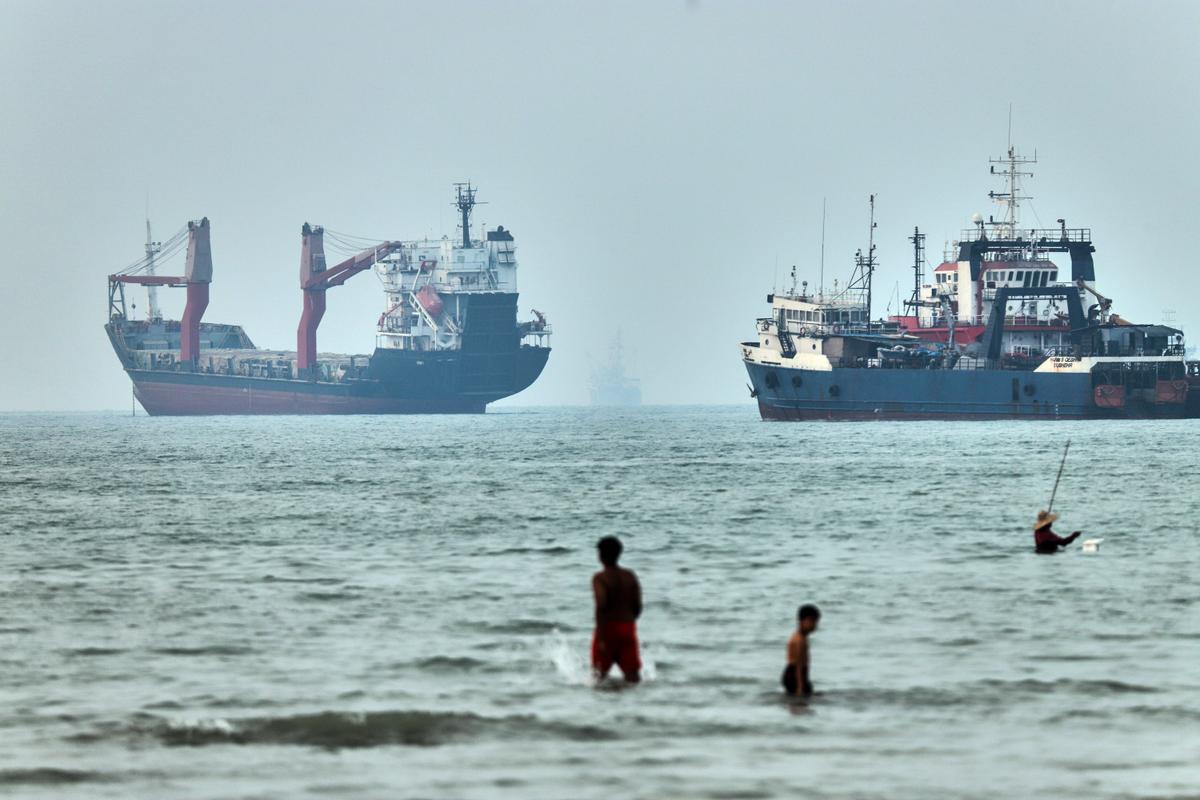
In July, the U.S. military launched strikes against targets in Iran for nearly two weeks straight but pulled back on the strikes to allow for the possibility of new talks. That last round of strikes was triggered by Iran’s attack on multiple ships attempting to transit the Strait of Hormuz, a key waterway through which significant amounts of oil and natural gas pass.
With the strait effectively remaining closed, the Paris-based International Energy Agency (IEA) warned that the waterway needs to be reopened soon. It noted that the closure and elevated fuel prices are putting downward pressure on oil consumption.
“Although the market is projected to return to surplus toward the end of this year, risks remain substantial, and the urgency of reopening the Strait has increased, as previously available inventory buffers are rapidly depleting,” the IEA said in a report on Wednesday.
Aside from the strait attacks, Iran has fired missiles and drones at U.S. assets and infrastructure in countries such as Oman, Jordan, Kuwait, Israel, the United Arab Emirates, and Saudi Arabia during the war.
While visiting Ohio on Tuesday, Trump told reporters that the situation with Iran is “going just absolutely fine.”
“We have a country that has been the bully of the Middle East for 50 years … and they’re no longer the bully of the Middle East,” he added.