Iran has warned that U.S. military activity meant to open up shipping in the Strait of Hormuz is Tehran’s “red line” and threatened to attack Middle Eastern infrastructure.
In a statement released through state-run media on Thursday, a spokesperson for Iran’s top military command said that if U.S. President Donald Trump’s threats to strike Iranian infrastructure occurred, Tehran would attack “all infrastructure throughout the region.”
That infrastructure “will be smashed under the iron blows of the powerful armed forces of the Islamic Republic, to such an extent that no trace of it will remain, as though it had never existed,” said military command spokesman Ebrahim Zolfaqari, according to PressTV.
The spokesman said that the United States also cannot act in the Strait of Hormuz, describing it as “Iran’s invisible red line,” according to comments carried through the semi-official IRNA news outlet.
He did not elaborate.
Earlier this week, Trump said in an interview with Fox News that American forces would soon attack power plants and bridges if Tehran doesn’t return to the negotiation table to come to an agreement with Washington.
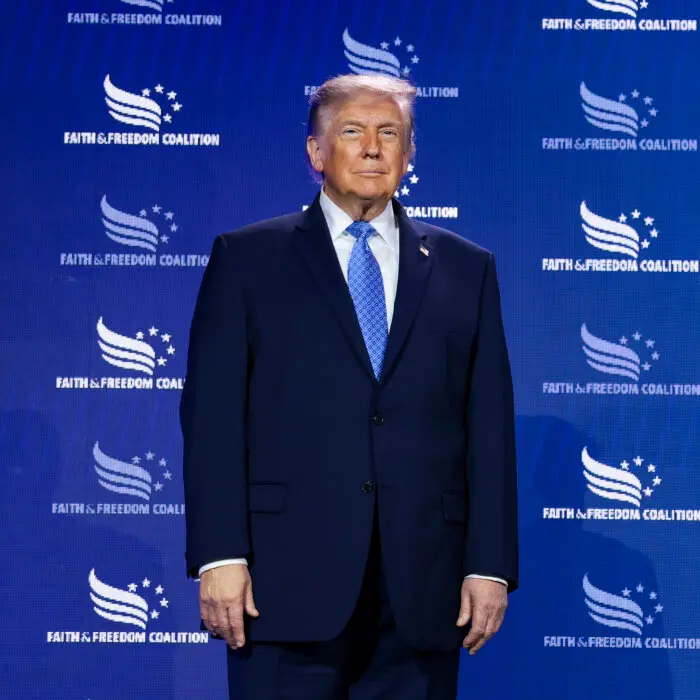
Primarily, Trump has said Iran cannot obtain a nuclear weapon.
U.S. Central Command (CENTCOM) has carried out strikes against Iranian military targets over the past week or so in a bid to free up shipping in the strait, a waterway that allows for significant portions of the world’s traded oil and gas to pass through.
Before the strikes, Iran launched attacks on multiple oil tankers attempting to transit the strait, asserting that those vessels can only travel on pre-approved routes.
So far, the military said two ships have been redirected.
CENTCOM said it opened fire on the Curacao-flagged oil tanker Belma sailing toward Kharg Island, Iran’s main oil export terminal in the Persian Gulf.
After the ship allegedly “ignored multiple warnings,” a U.S. aircraft disabled the merchant vessel by firing a missile into its smokestack.
The renewed strikes, meanwhile, have sent Brent crude oil above $80 a barrel as of Thursday morning, while U.S. gas prices have trended higher, on average, and are nearing $4 per gallon.
Iran’s parliament speaker and lead negotiator, Mohammad Bagher Ghalibaf, said on Wednesday that Iran was prepared for a fuller military confrontation and claimed that the United States was attempting to place pressure to weaken Tehran’s control over the strait.
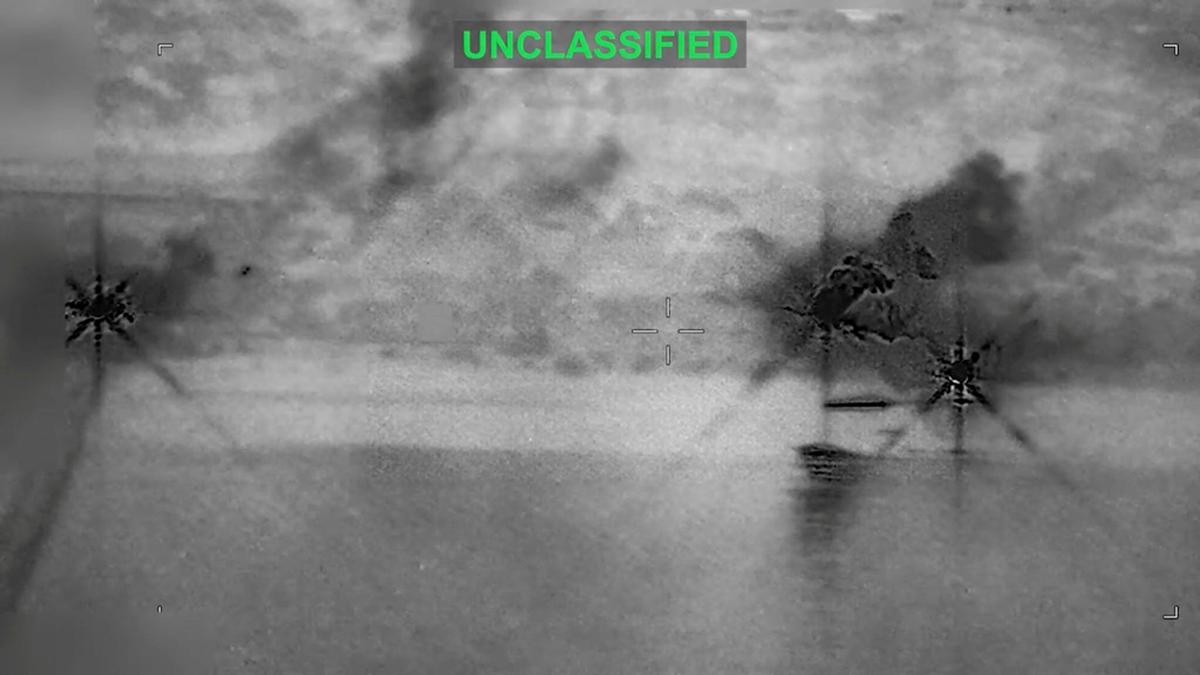
On Wednesday, the U.S. military resumed striking Iran during daylight, showing an increasing tempo of the attacks.
Its strike on Greater Tunb Island, a strategic point in the Strait of Hormuz, targeted Iranian defense and missile sites, Central Command said.
Additional U.S. strikes early on Thursday hit around Tehran, Iranian state media reported.
It also reported that American attacks targeted Semnan province, home to Iran’s ballistic missile production and space program.