CANBERRA, Australia—India and Australia have signed a series of new defence agreements that will deepen military cooperation and make defence talks an annual fixture.
The Memoranda of Understanding were signed in Canberra on Oct. 9 during India Defence Minister Rajnath Singh’s visit, in the presence of Australia’s Defence Minister Richard Marles.
The new pact cover cooperation on submarine rescue and support, joint staff talks, and more exchanges between Australia and India’s militaries.
They come in the same week Australia concluded defence deals with Singapore and Papua New Guinea, signalling Canberra’s accelerating regional outreach amid ongoing competition from Beijing.
Marles described the new arrangements with India as “a hugely significant step.”
“What we are seeing in terms of deep trust and strategic alignment is now being expressed in a much deeper operational level of engagement between our two defence forces,” he said.
Annual Dialogue and Joint Trainings Locked In
Among the agreements, both sides agreed to make the first Australia–India Defence Ministers’ Dialogue a recurring annual fixture.The Implementing Arrangement on Mutual Submarine Rescue Support and Cooperation was also signed allowing both navies to assist each other during submarine emergencies.
The ministers also reviewed progress on the Air-to-Air Refuelling Agreement signed in 2024 and agreed to increase real-time information sharing between militaries.
Also, a new forum for Joint Staff Talks was established to improve coordination on operations and training.
Under this framework, the two nations will take part in major exercises, including Talisman Sabre 2025 in Australia and other naval and air force drills through 2027.
Cooperation on Defence Technology
A major focus of the visit was to boost defence industry collaboration.Australia will send a Defence Trade Mission to India, scheduled for Oct. 7–10 next year, and India will have a pavilion at the Land Forces Expo 2024.
A Defence Industry Roundtable in Sydney on Oct. 10 will advance talks on co-production, research, and technology transfer.
The two sides also agreed to strengthen cooperation under the Joint Working Group on Defence Industry, with emphasis on supply-chain resilience and emerging technologies.
Maritime and Regional Security
The two nations also signed a Joint Maritime Security Collaboration Roadmap to guide future cooperation in the Indo-Pacific.They reaffirmed their shared commitment to an open rules-based maritime order, upholding freedom of navigation, and adherence to international law under the 1982 U.N. Convention on the Law of the Sea.
Australia and India will continue joint anti-submarine operations, expand maritime domain awareness, and allow maritime patrol aircraft to operate from each other’s territories.
The ministers also reaffirmed cooperation under the Australia–India–Indonesia trilateral framework.
CCP Looms Large
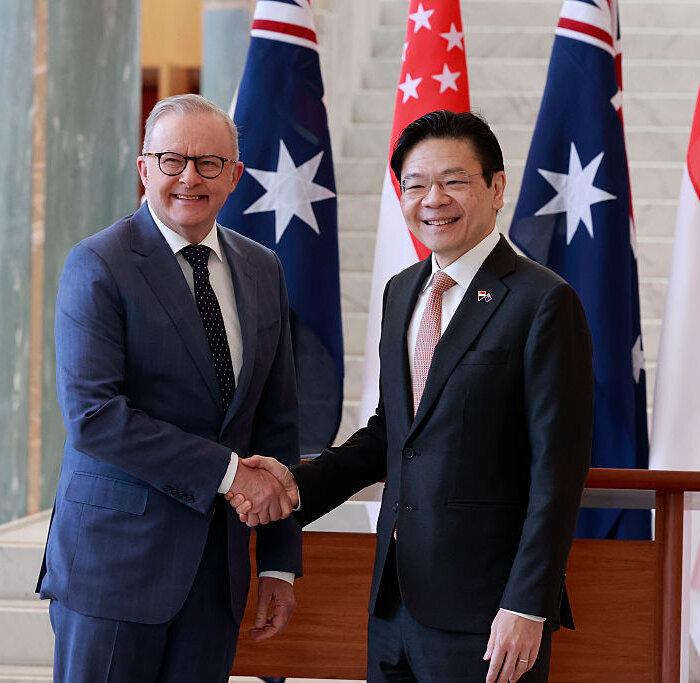
The signing of the India–Australia defence agreements comes after Australia and Singapore upgraded their ties under a new Comprehensive Strategic Partnership on Oct. 8, signing pacts to expand joint training, logistics, and counterterrorism cooperation.
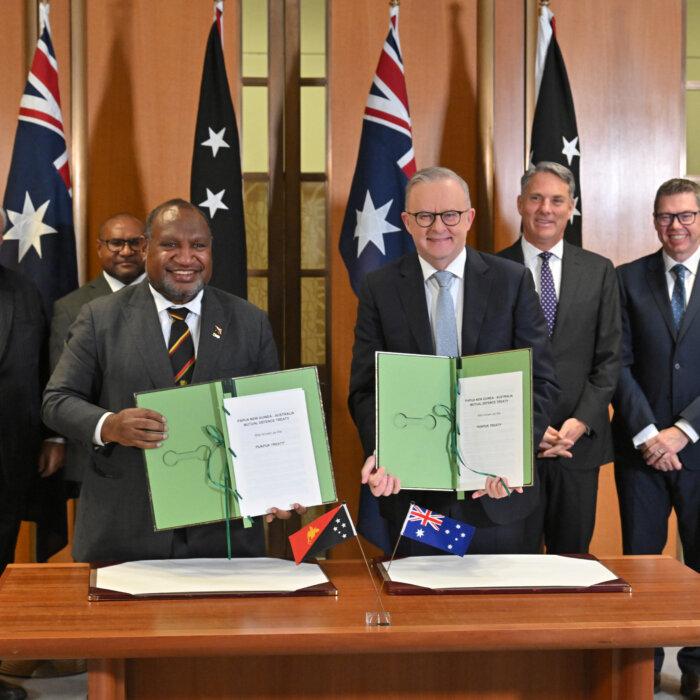
Two days earlier, Australia and Papua New Guinea signed the “Pukpuk” Treaty, a security pact that obliges each country to defend each other in the event of attack—elevating PNG to “ally” status.
Last month speaking at the Bush Summit, Liberal Party Senator Jacinta Nampijinpa Price cautioned Australia must not underestimate the security risks posed by the Chinese Communist Party, urging a national debate on Beijing’s military ambitions and interference efforts.
Price said the CCP’s military build-up over the past decade was not about self-defence but regional dominance.
“When its navy tested weapons off our east coast, that wasn’t a benign exercise. That was a rehearsal. And there can be no doubt that the Chinese Communist Party wants to see China become the dominant power within the region,” she said.