A strict code of ethics deployed by Sweden’s mainstream media, based on protecting individuals’ privacy, has meant that, over the years, many criminals have not been publicly identified.
But Sweden also has a strong culture of transparency—known as “offentlighetsprincipen” (public access to official documents)—which means that all court verdicts are open to the public.
The gulf between what is in the public domain and what the media publishes has led to the creation of a thriving database industry—unique to Sweden—in which companies obtain public records of criminal convictions and upload them onto a database.
Customers can pay a fee and find out if someone—a new boyfriend, or a potential business partner, for example—has a criminal record.
Checking New Partner’s Background
Gunnar Axen, chairman of the board and publisher of the Nyhetsbyran Verifiera, which owns two of Sweden’s biggest databases, Verifiera and Lexbase, said people use them for various reasons, such as “a woman checking the background of someone she’s dating, a landlord verifying a prospective tenant, or a business owner researching a potential partner.”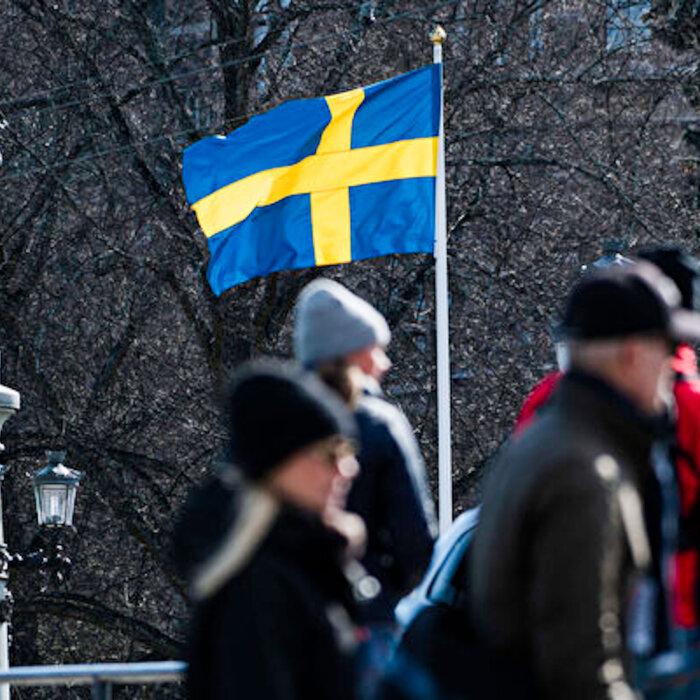

“These are legitimate uses—grounded in the idea that access to public information promotes trust, safety, and accountability,” Axen said.
He said he did not think that the news media should be able to publish the names of all criminal suspects, but noted, “I believe strongly that the public must retain access to information—and that includes the right to independently examine and republish what is legally and publicly available.”
Daniel Westman, independent legal adviser and media law expert, told The Epoch Times: “The goal of the database rule in the Swedish fundamental law of freedom of expression was not to make criminal record databases possible, but to create equal protection for online publications as printed newspapers.
“However, the way the rule was formulated opened up for them in practice.”
Westman said there have been “a couple of legal initiatives to ‘close the loophole’ over the last 10 years, and a new proposal from a public inquiry is currently on the government’s desk.”
He said there are some people in Sweden advocating public, searchable criminal record databases.
Westman said that in the 19th century, the media in Sweden tended to name all people at the point of arrest, rather than when they were charged or convicted.
“So ’the carpenter, Svensson,' who was arrested for beating up his wife, would have been named,” he said.
Westman said that as Swedish journalism developed, the culture changed, and the default position eventually became to not name individuals who had been charged, unless they were in political office or there was some other public interest in identifying them.
He said many European countries, such as Germany, had a similar media and legal environment that deterred news media from fully identifying individuals. The belief was that once someone was named, he or she could never be fully rehabilitated.
In January 2025, Aftonbladet reported that Swedish Prime Minister Ulf Kristersson said at a news conference: “Sweden is in the midst of a new wave of violence. It’s abundantly clear that we do not have control over this wave of violence; otherwise, we wouldn’t be here.”
The naming of an individual would also automatically identify whether he or she is ethnically Swedish.
Many of the immigrants who arrived in Sweden in the 1990s, 2000s, and 2010s have found themselves drawn into organized crime.
Mistrust in Media on the Rise
“There is a risk that selective reporting, or an overly cautious approach to naming individuals or discussing certain trends, can lead to a perceived lack of transparency,” Axen said.“This, in turn, can fuel mistrust in mainstream media and authorities.”
Westman said distrust of traditional media appears to be on the rise in Sweden, and could be tied to the rise of right-wing parties such as the Sweden Democrats, which has campaigned against immigration.
“There is research saying that levels of trust, not just for the traditional media, but for institutions in general, are far lower when it comes to [the] far right,” Westman said.
The Swedish media’s hesitancy to identify criminal suspects may seem odd to someone who has grown up in the United States, Canada, the UK, or many other countries where, if someone is charged with a crime or indicted, he or she can instantly be named in the media and on social media.
But Axen said he believes that “this self-regulation is crucial.”
“It protects individuals’ rights without the need for censorship laws, and it leaves room for editorial judgment,” he said.
Sweden’s media landscape is dominated by three institutions—Bonnier Group, Schibsted, and state-owned national broadcaster SVT—which long ago adopted a code of ethics.
This allowed them to decide what was in the “public interest” to report.
Most journalists in Sweden move between jobs at these three main employers and sign up to the same code of ethics.
So mainstream journalists in Sweden effectively have become “gatekeepers” of what should be public information.
“In Sweden, we have long valued the balance between freedom of the press and journalistic ethics,” Axen said.
“The law allows for the identification of criminal suspects, but the ethical code of practice among professional media often recommends restraint, particularly if the person has not been convicted, or if publication would cause disproportionate harm.”
The Swedish media’s naming of criminal suspects is still fairly arbitrary.
But Lina Ishaq, 52, was known in the Swedish media only as “ISIS woman” until she was convicted in February 2025 for committing war crimes and genocide against the Yazidi people in Syria, at which time her identity was revealed.
Angelo Brown, associate professor of criminology at Arkansas State University, told The Epoch Times that Sweden’s ethical code for naming criminal suspects is very different from that of the United States, where there has long been an emphasis on identifying people as soon as they are indicted.
In Sweden, it is also possible—unlike in the United States or the UK—for a convicted criminal or a dead person’s relatives to sue successfully for defamation.
In 1966, five years after then-secretary general of the United Nations, Dag Hammarskjold, was killed in a plane crash in Africa, a Swedish newspaper reported that a foreign magazine had published a story claiming that Hammarskjold had caused the crash, intentionally killing himself and his fellow passengers.
Hammarskjold’s brother claimed that the publisher of the newspaper should be held liable for defamation of the deceased.
The Swedish courts ruled that the newspaper article was “hurtful to the living” and fined the publisher 10,000 krona (about $1,038).
In 2021, Netflix was threatened with a lawsuit in Sweden over a drama called “The Unlikely Murderer,” about the unsolved murder of the country’s former prime minister, Olof Palme, in 1986.
Truth Can Be Defamatory
Sweden also has some of the harshest libel laws in the world, and in 2021, leader of the Christian Democrats, Ebba Busch, pleaded guilty to defamation even though she had stated the truth about an individual.Jan Rosen, professor of private law at Stockholm University, said that at the time, even the truth could constitute defamation under Swedish law.
He told Sveriges Radio, “Telling the truth must always be justified.”
Brown said that with the internet and social media, the world now is so global that it might be difficult for Sweden to maintain its levels of privacy.
“If the Swedish media doesn’t, the American media, or British media ... all these other media outlets outside of Sweden will release the name, and it’s often not actually even protecting their name internationally,” he said.
Axen echoed Brown’s view, saying: “Global platforms have already changed the reality of information flows.
“People share, repost, and expose information regardless of national laws or ethical guidelines.
“It’s essential that Sweden does not respond by limiting domestic freedoms in a futile effort to control international platforms.”
As for the databases, the fight goes on.
Axen said the court’s ruling “risks undermining the very foundation of the Swedish transparency model.”
He said some “ongoing legal avenues” include potential appeals to the European Court of Human Rights and the Court of Justice of the European Union, “especially given the tension between EU privacy law and national constitutional freedoms.”
Westman said: “It might sound paradoxical, but Sweden is very keen on protecting freedom of speech and information, but at the same time is willing to accept limitations to freedom of speech in relation to defamation.
“Both the GDPR and the law of defamation are protecting the right to privacy and private life.”
So what does the future hold?
“I don’t believe the solution is to abandon ethics, but to ensure full transparency of public records, so that anyone, whether journalist, researcher, or citizen, can verify the facts,” Axen said.
“When institutions are open, speculation is replaced by evidence. I also believe in the value of independent databases and public scrutiny to prevent suppression of inconvenient truths.
“In a world of disinformation and polarization, truth must remain accessible. That doesn’t mean shouting names irresponsibly, but it does mean trusting citizens with information, rather than withholding it.”