The International Monetary Fund (IMF) has urged Australia to take politically difficult steps—including reviving a mining tax, tightening spending on the NDIS and aged care, and reining in fiscal expansion—to shield the economy from weak productivity and global uncertainty.
In its annual review released on Nov. 20, the IMF praised the government for winding back pandemic-era support and beginning fiscal repair.
However, it said deeper structural reform is now unavoidable if living standards are to be maintained.
The Fund argued that stronger budget discipline, combined with a “comprehensive tax reform package,” is essential to lift economic efficiency and improve fairness across generations. Among its recommendations were higher indirect taxes, “the reintroduction of a resource revenue tax,” and the removal of income tax exemptions to help offset lower corporate and labour taxes and “increase incentives for investment and work.”
It also called for continued efforts to improve spending efficiency in “growing cost areas (such as NDIS and aged care)” while maintaining investment in productive infrastructure.
On monetary policy, the IMF said the RBA must stay “cautious, agile, and data-dependent,” warning against cutting interest rates prematurely.
Growth Outlook ‘Solid but Fragile’
The IMF expects economic momentum to gradually improve, forecasting real GDP to rise from 1.8 percent in 2025 to 2.1 percent in 2026, supported by recent monetary easing and a recovery in private demand.Inflation is projected to return to the RBA’s 2 to 3 percent target band next year.
However, ABS figures show the annual inflation rate climbed to 3.2 percent in September, up from 2.1 percent in June.
The Fund warned that risks remain “tilted to the downside,” including a global showdown, trade tensions, weaker Chinese demand, and falling domestic consumption.
At the same time, wage pressure could keep inflation elevated if the labour market remains tight.
The report also noted Australia faces “elevated risks” from shifting global demand for coal as countries accelerate their energy transitions.
Productivity ‘Urgently Needs Fixing’
The IMF also warned that a decade-long slide in productivity has become a brake on growth, saying entrenched structural issues require “faster and more coordinated action.”While it welcomed reform such as banning non-compete clauses from 2027 and suppressing wage-fixing arrangements, it said entrenched problems require more rapid progress.
High regulatory compliance costs, skills mismatches, falling R&D spending, and complex overlapping state–federal rules were identified as major barriers to business productivity.
The Fund encouraged faster adoption of AI and advanced technologies, combining labour-market reform with innovation, and using the clean-energy transition to drive investment and diversification.
Housing, Tax, and Savings
The Fund also weighed in on structural problems in housing affordability and intergenerational equity.It said replacing stamp duty with recurring property taxes would improve land use and reduce distortions, while reducing negative gearing and other tax breaks could free up funds for housing supply.
It said budget imbalances between states, driven by uneven commodity revenues and divergent health and infrastructure spending, would require stronger national coordination.
It welcomed greater transparency at the RBA since its review, but reiterated its recommendation that the Treasurer’s power to override the central bank should be abolished.
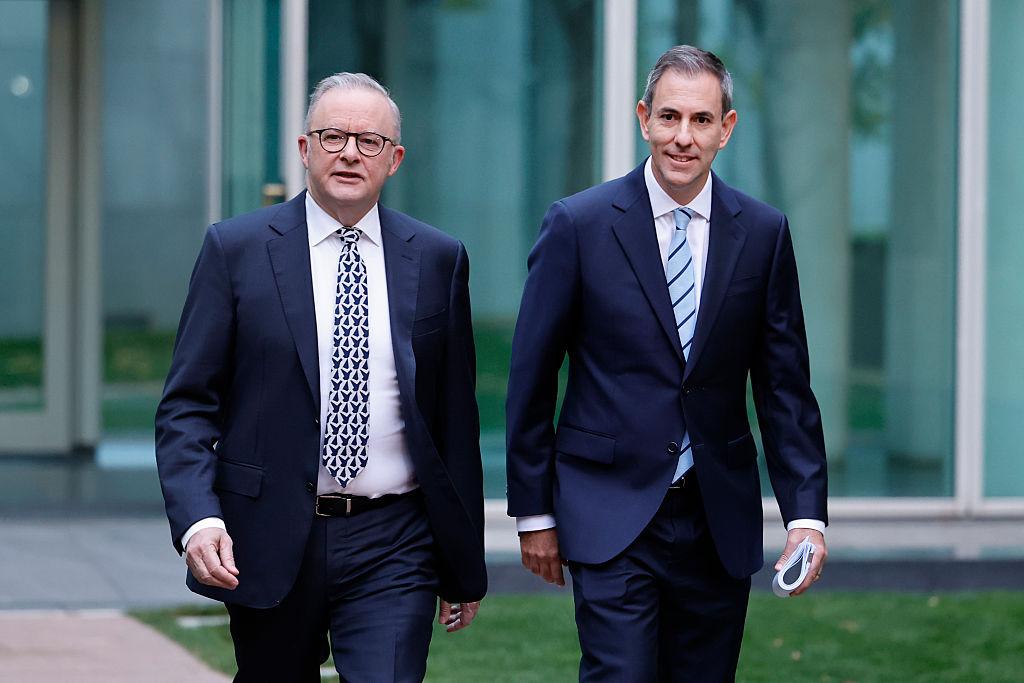
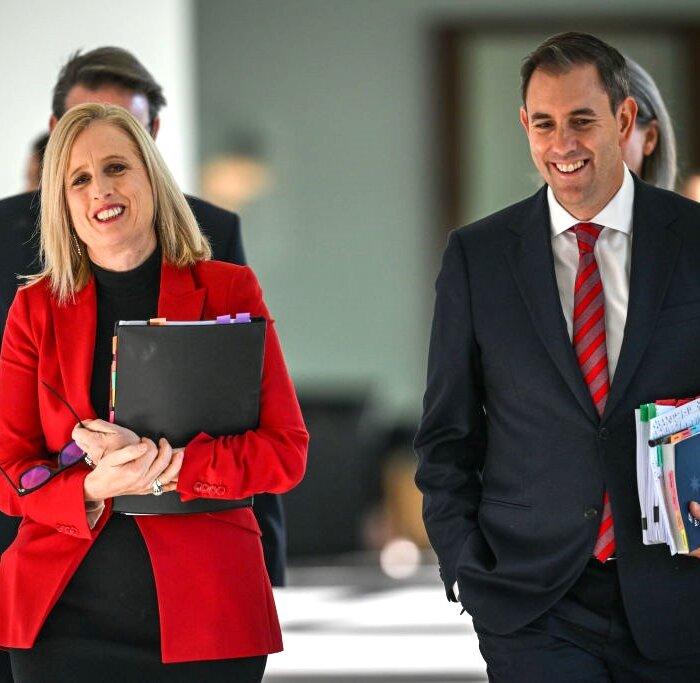
Treasurer Jim Chalmers said the report was a “powerful endorsement” of the government’s strategy.
“Under Labor, inflation is around a third of its peak, debt is down, real wages are growing, unemployment is low, we’ve overseen the creation of more than 1.2 million jobs, and interest rates have already fallen three times this year,” he said.
Coalition Points to ‘Jimflation’
The Coalition disagreed, accusing the government of fuelling inflation through its spending spree.“This is going to be a brutal blow when Australians understand that because Labor keeps spending money, it is inflation,” said Shadow Treasurer Ted O’Brien.
He described rising prices as the “Jimflation effect” and said stalled interest cuts were a consequence of government spending.
“The average Australian mortgage holder … pays an extra $1,800 every single month in interest payments compared to when the Coalition was in office,” he said.