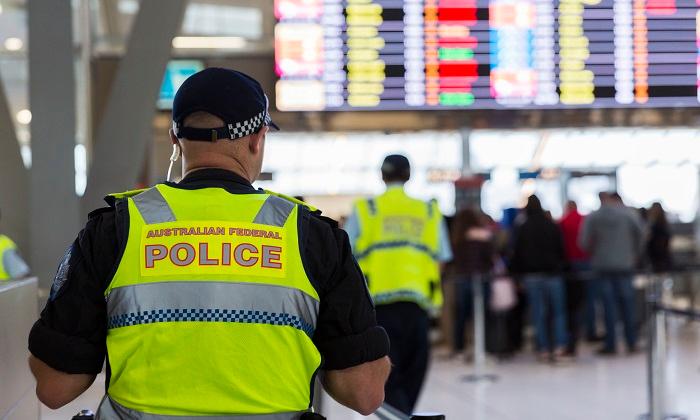
There were 328 reports of modern slavery and human trafficking offences in the 2023-24 financial year, the Australian Federal Police (AFP) have revealed.
It’s a 12 percent increase on the 340 figure the year before, making it the highest on record.
What makes the figures even more concerning is research from the Australian Institute of Criminology, which estimates that for every one victim of human trafficking or slavery who is rescued, four remain undetected.
Part of the issue with detecting such offences is that potential victims may be unaware they are considered as such under Australian law, or feel too vulnerable or scared to speak up.
“This can especially be the case when perpetrators are members of their family or community, or where they may fear shame or embarrassment from their communities,” AFP Commander Helen Schneider said.
The reports cover human trafficking, debt bondage, forced marriage, servitude, and slavery, but the AFP says forced marriage accounts for the largest proportion of reports, at 91 for the year, or roughly one every four days.
It’s also common to see multiple offences being committed against a single victim, Schneider said.
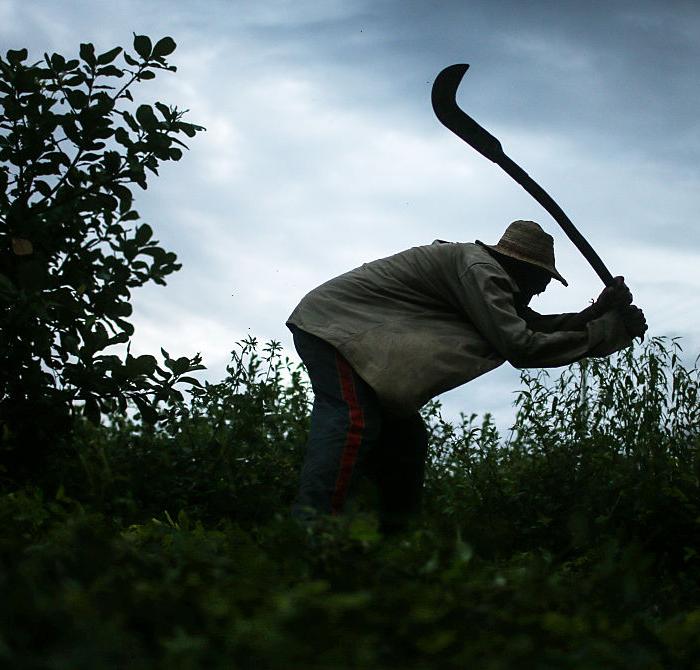
“For example, someone who is a victim of forced marriage may also be a victim of slavery or servitude. Or someone who is a victim of forced labour may also be a victim of deceptive recruiting or debt bondage,” she said.
Australia a ‘Destination Country’ for Trafficking
Australia is primarily a destination country in terms of human trafficking, with AFP investigations uncovering victims brought from around the globe.“The fact is, human exploitation offences do happen right here in Australia—in our communities, neighbourhoods, workplaces, and schools. These occur across varied industries and sectors, including in private and domestic settings. But while the circumstances may change, the horrendous impacts of these crimes are wholesale, exploiting the vulnerability of victims and subjecting them to mental and physical abuse,” Schneider said.
“Human trafficking and exploitation know no borders, denying victims their dignity and basic human rights.
“Australia is, and must remain, part of a global response to combat people trafficking and modern slavery.”
In 2023, the AFP launched its Human Exploitation Community Officer (HECO) program, which empowers those at high risk of harm to report these crimes and seek support.
Working alongside the AFP’s Human Trafficking teams, the HECOs have significantly boosted the agency’s work in raising awareness and protecting vulnerable members of the community.
Leading Senior Constable Afra Prodan, the first HECO for South Australia and the Northern Territory, said the role was extremely fulfilling.
‘Gut-Wrenching’ Stories From Victims
However, working directly with communities also brings to light the painful and heartbreaking reality that some people were living through.“I was shocked to learn how many people in the Australian community are affected by human exploitation every day—and how many are unsure of where to report these crimes and find support,” Prodan said.
She recalled one of the first conversations she had with a victim of human exploitation in South Australia.
“It was probably one of the most gut-wrenching and challenging moments I have encountered in my role as a HECO. The young person was explaining her situation to me, not even realising she was a victim and being horrifically exploited. She was just looking for help.”
The Red Cross Support for Trafficked People Program (STPP) and the Life Without Barriers Forced Marriage Specialist Support Program (FMSSP) also offer services to victims of human exploitation.
A first-of-its-kind, FMSSP assists victims of human exploitation to reconnect with family and the community and supports them to safely reestablish trust with family, community, and religious groups.
The recently introduced Additional Referral Pathway (ARP) gives victims of human trafficking and modern slavery an alternative way to access the STPP and FMSSP. It includes Anti-Slavery Australia, the Scarlett Alliance (Australian Sex Workers Association), the Australian Muslim Women’s Centre for Human Rights, and Project Respect.
Schneider said the new pathway was a game-changer for victims.
“[It] provides victims the opportunity to go directly to non-government support groups, and they no longer need to go through law enforcement. [They] can also be offered immediate safety and wellbeing needs.”
If you suspect you, or another person, is experiencing, or is at risk of, modern slavery or human trafficking, call 131 AFP (237) or use the AFP’s confidential online form. If you have immediate concerns for your safety, or that of another person, or there is an emergency, dial Triple Zero (000).
If you, or someone you know, is being exploited, help is available. For information and confidential advice, contact Australian Red Cross via their website or call 1800 113 015.