
The federal government’s road to a net-zero emissions transportation sector has not been without potholes and detours, as it seeks to nudge reluctant consumers and navigate a shifting global environment.
The electric vehicle (EV) sector has undergone dramatic shifts in recent years, marked by multibillion-dollar government investments, major manufacturing projects, and high-profile setbacks, as evolving policies in the United States and China continue to reshape global market dynamics.


This further reduced demand for EVs, adding pressure on Canadian EV manufacturers as their largest potential export market shows weakening appetite for their products.
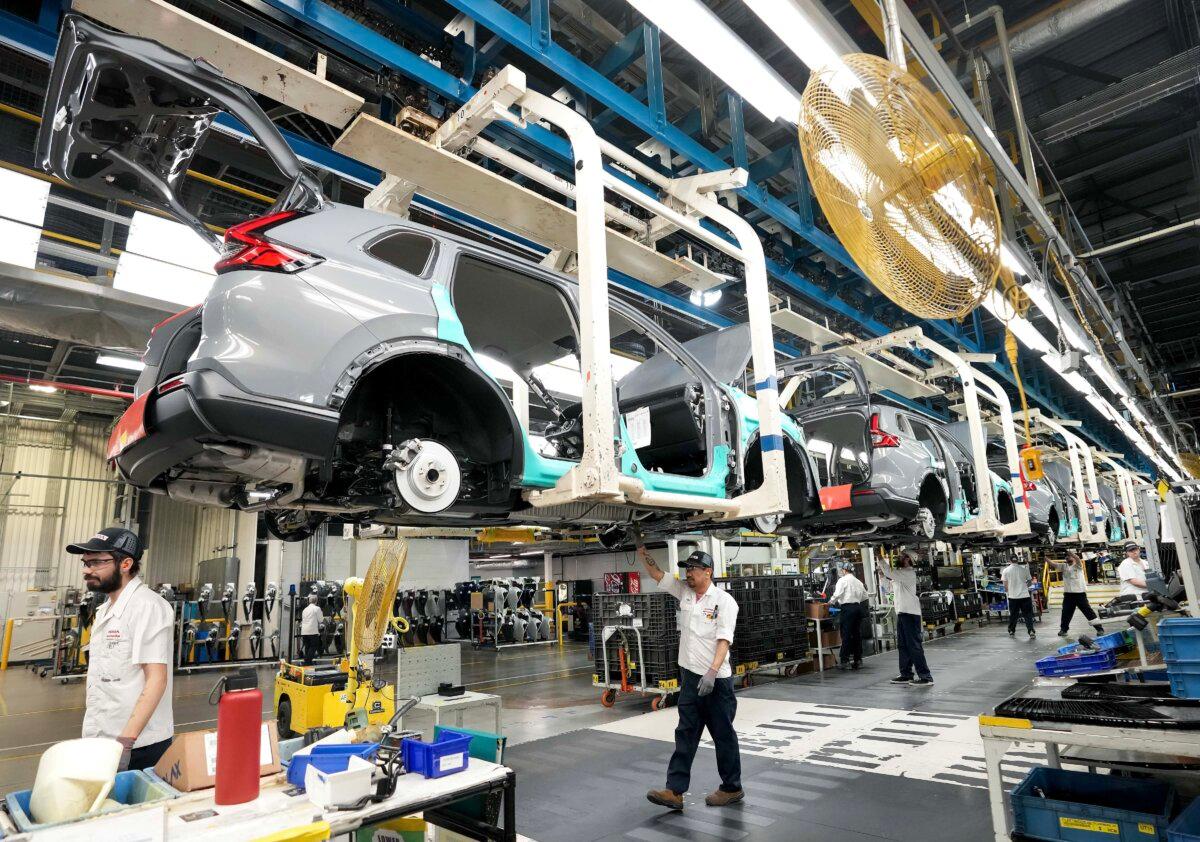
Honda’s changing plans in Canada are reportedly linked to weak EV sales in the United States and a related plan to shift its North American strategy to focus on hybrid vehicles.
The move also comes as future tariff-free access to the United States is uncertain and as Chinese EVs are set to hit the Canadian market.
Chinese EVs
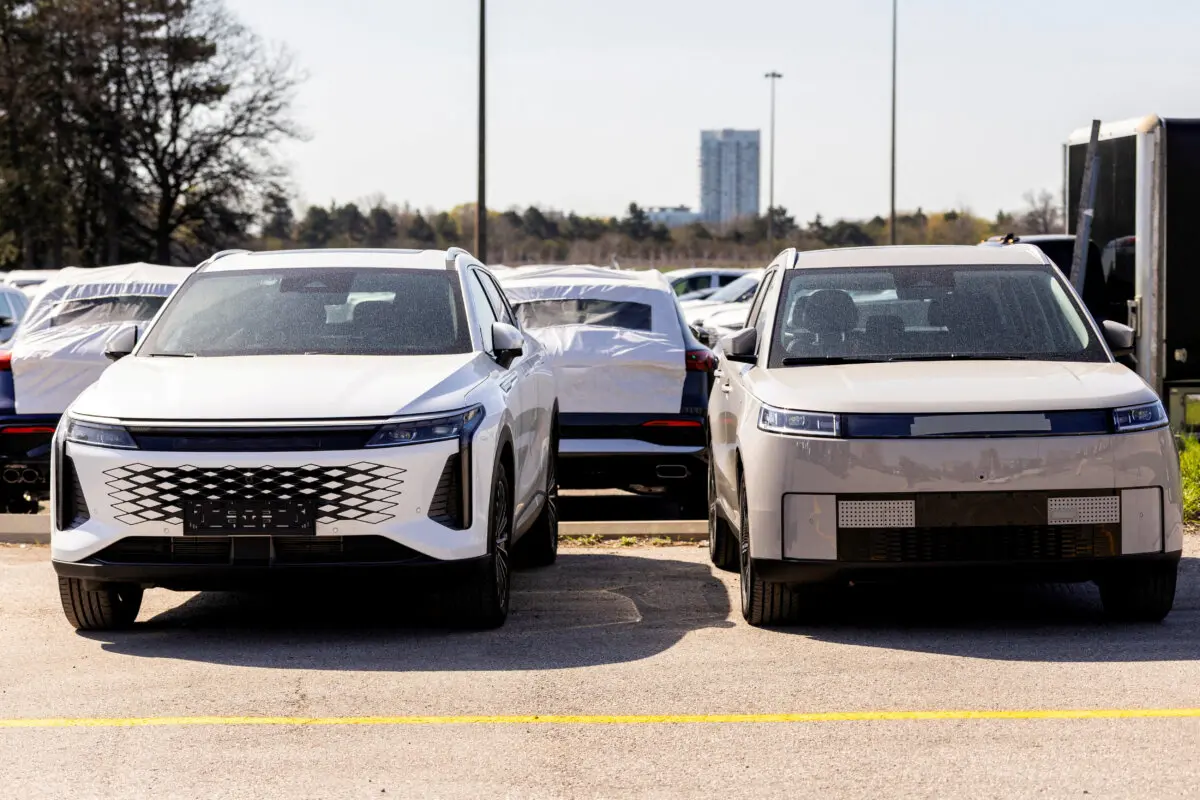
During his visit to Beijing in January, Prime Minister Mark Carney reached an agreement with China to have the country temporarily reduce or suspend tariffs on certain Canadian agricultural and seafood exports. In exchange, an initial 49,000 Chinese EVs will be allowed to enter Canada at a discounted most-favoured-nation tariff rate of 6.1 percent instead of the 100 percent surtax that has applied to the vehicles since October 2024.China expert Margaret McCuaig-Johnston says Ottawa’s new policy of allowing Chinese EVs into Canada played into Honda’s decision to pull back.
“It’s a terrible thing to lose Honda. So we lost a US$11 billion factory because of 49,000 Chinese EVs,” she told The Epoch Times in an interview.
“This is not worth it to lose a long-term investment for this short-term concession to China to get our canola farmers their market back,” McCuaig-Johnston said.
Forced Labour
Beyond the risk of losing Honda, McCuaig-Johnston warned that concerns over the possible use of forced labour in China-made EVs destined for Canada could further strain Ottawa’s trade relations with Washington. The U.S. administration launched investigations into Canada and 59 other countries in March to determine whether they are effectively banning goods made through forced labour.“We’re gonna fail this forced labour investigation,” she said, noting the repercussions could be a 25 percent tariff come July 1.
A primary concern about forced labour in the EV supply chain stems from the use of aluminum made through the exploitation of the minority Uyghurs from China’s Xinjiang region.
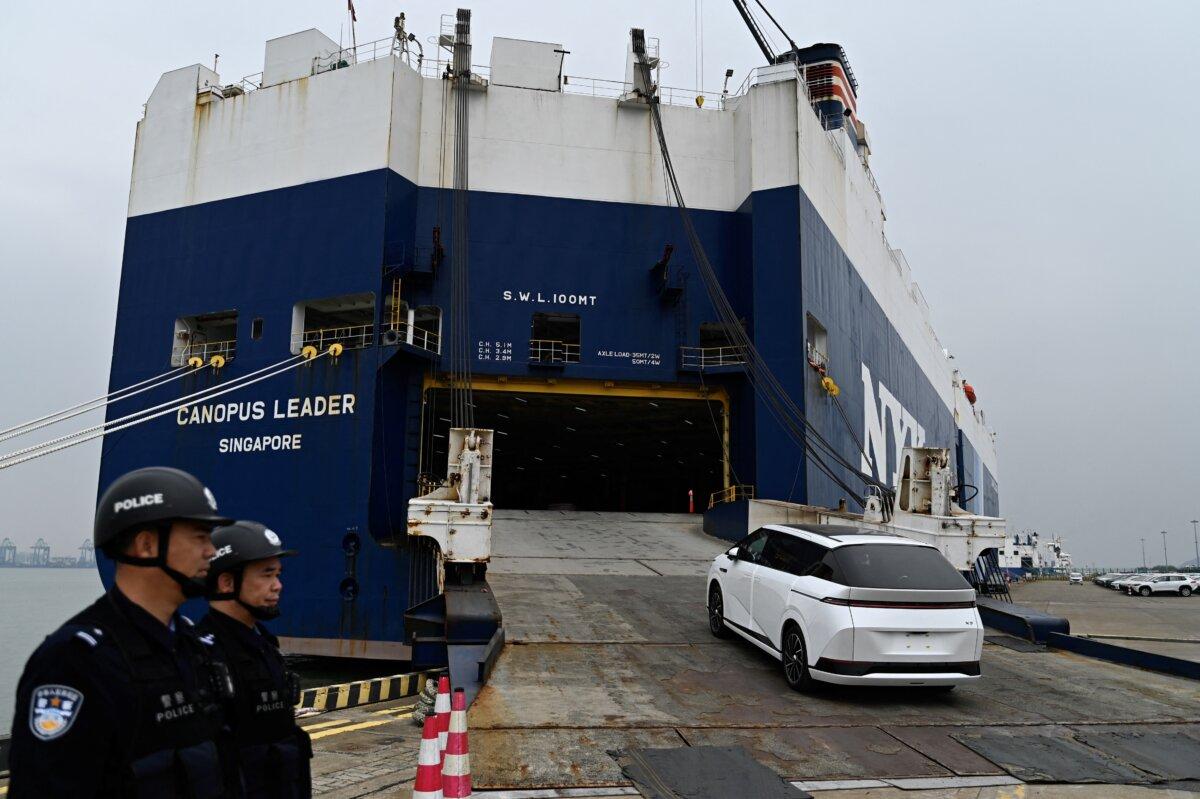
Another six shipments detained containing auto parts were re-exported back to China in 2023 before a formal determination could be made in relation to their content. Over a similar timespan, the United States blocked entry to nearly 23,000 Chinese shipments.
Joly said her government’s approach to Chinese EVs is “very holistic” in protecting auto workers and supply chains “while bringing in really good technologies.”
“And at the same time, what we want is affordability,” she said.
North American EV Policy
The Trudeau government imposed a 100 percent surtax on Chinese-made EVs effective Oct. 1, 2024, following in the footsteps of the Biden administration. The Canadian government had expressed concerns at the time about “pervasive subsidization” and dumping of Chinese EVs, as well as “concerning labour practices” such as forced labour in Xinjiang.Keeping Chinese EVs outside U.S. borders has been a rare point of agreement between Republicans and Democrats south of the border.
EV Mandate
Aside from geopolitical issues impacting the Canadian EV market, there have been some notable domestic developments on the file since Carney became prime minister in March last year.Carney said the EV mandate would be replaced by emissions standards, which he said would have roughly the same effect, with the goal to reach 75 percent EV sales by 2035, and 90 percent by 2040. The Trudeau mandate aimed to reach 100 percent EV sales by 2035.
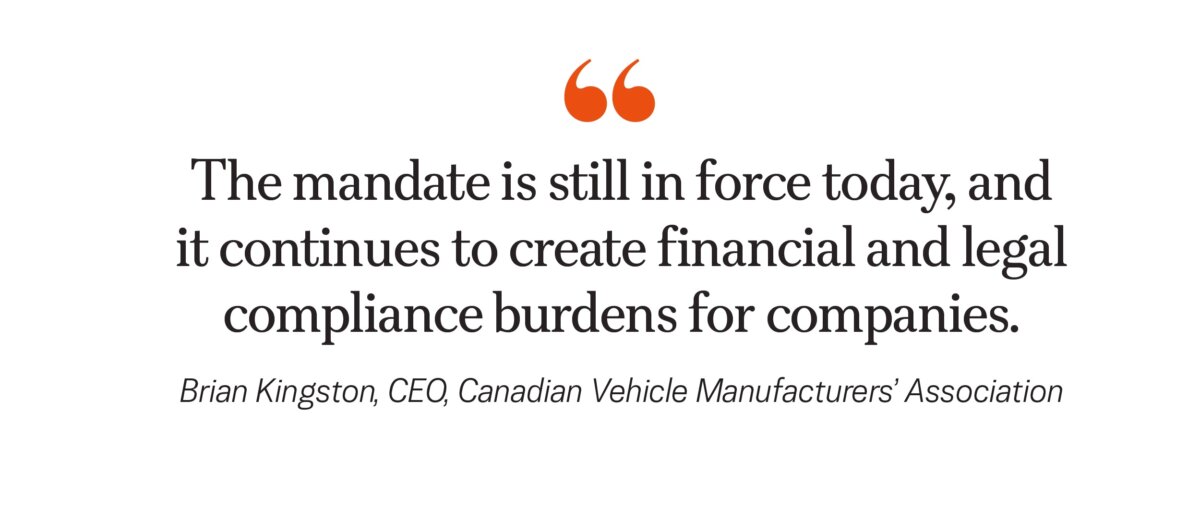
Meanwhile, at the same committee meeting, Minister Joly said “there’s no EV mandates.”
David Adams, head of Global Automakers of Canada, agreed with Kingston in saying that the EV mandate remains in place.
He said reaching the target of 75 percent EV sales by 2035 through emissions regulations is “still a bit of a stretch.”
“We’re going to need to ensure that we have ongoing dialogue and review of these targets to make sure that they’re realistic and are reflective of how Canadians are adopting the technology,” he told The Epoch Times in an interview.
Environment Canada told The Epoch Times that the EV mandate will be replaced after new greenhouse gas emissions standards for light-duty vehicles are adopted. A department spokesperson said proposed amendments will be published this summer in the Canada Gazette, with final amendments to be released later this year.
“In doing so, Canada will rationalize emission reduction policies, focusing on the outcomes that matter to Canadians without placing undue burden on the Canadian industry,” spokesperson Eleni Armenakis said in a statement.
Numbers Up
Adams and other industry stakeholders say the higher price of oil due to the Iran war combined with Canada’s new auto strategy with its rebates has pushed EV sales up in recent months. Quoting internal data, Adams said EV sales were up 30 percent year-over-year in April.Joanna Kyriazis, director of policy and strategy at the think tank Clean Energy Canada, also noted how automakers have adjusted their prices to fall below the $50,000 threshold granting consumers access to the federal rebate. She said the car companies are also getting ready for the arrival of lower-cost Chinese EVs, saying “sticker prices have come down significantly.”
Cara Clairman, an EV advocate who heads the non-profit Plug’n Drive Canada, told The Epoch Times in an interview that increased EV adoption is “good news” while noting how prospects for increased manufacturing in Canada have decreased with carmakers scaling back.
“The market is kind of what it is and the car companies make independent decisions,” she said. “There’s very little policy that we can do on our side that I think will change what’s happening right now.”
“That would mean a state-intervention that is beyond what we’ve used in recent history,” he told The Epoch Times in an email.
Pineau instead recommends capping the number of cars sold in Canada to increase the ratio of EVs sold, in addition to promoting public transportation.
Pineau said he doesn’t favour the current path of importing more EVs, including from China, noting its impact on the local car industry and on the relationship with the United States.