Wildfire smoke that has blanketed vast regions of Ontario this week will begin to dissipate overnight for many of the hardest-hit cities, as changes in wind patterns improve air quality.
Air quality will improve across southern Ontario late on July 16 and overnight into July 17, according to forecasts from Environment Canada and IQAir, a Swiss company that operates the world’s largest real-time air quality information platform. However, the extent of this change will vary by region.
“Particles in the air settle to the ground depending on their size, with large particles settling quickly and small, submicron particles remaining suspended in the air for several weeks unless they are removed by other processes, such as rain,” Saari said. “This means fires can affect air quality both locally and across continents. These hot, sunny, dry days are conducive to fires, haze and smog.”
Toronto
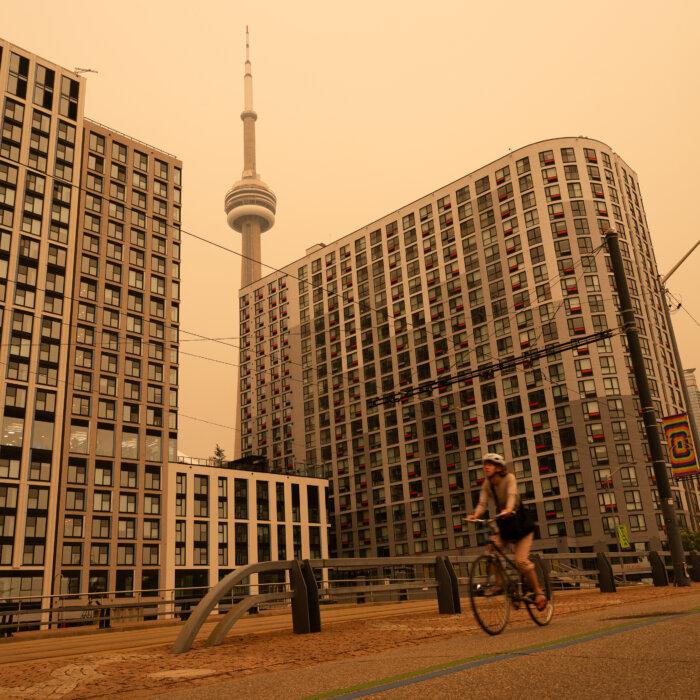
Environment Canada is forecasting Toronto’s air will begin to clear around midnight and IQAir is predicting the city’s air quality will drop out of the unhealthy zone by late this afternoon.IQAir uses the US EPA scale, which categorizes any reading above 300 as “hazardous” and indicates an emergency-level air pollution. Toronto had an air quality score of 400 at 9 a.m. but that had dipped to 153 by 3 p.m., dropping it to “unhealthy” only for those with breathing issues and allergies.
Windsor, Sarnia, and London
Windsor, Sarnia, and London will not see clear skies nearly as soon. Environment Canada forecasts show the southwestern Ontario cities will be contending with smoke well into the day on July 17 but a changing weather pattern will bring rain and clearer skies overnight.All three cities had an air quality score of more than 200 at 3 p.m., placing them in the “very unhealthy” zone. They are expected to remain in that zone until this evening when it is forecast to drop to the less severe “unhealthy” rating, according to IQAir.
Kitchener-Waterloo and Hamilton
Environment Canada is predicting widespread smoke dispersal overnight in Kitchener-Waterloo and Hamilton, and residents will wake to clear morning skies on July 17.Conditions are expected to worsen once more that evening, leading to smoke-laden skies and a possibility of showers, before clearing up again for the weekend.
Peterborough and Belleville
Residents further east in Peterborough and Belleville can expect some relief from the smoky air come nightfall. Environment Canada said the widespread smoke residents grappled with all day would disperse early this evening, bringing clear skies and sun on July 17. The air quality in both cities is expected to drop from “very unhealthy” at mid-afternoon to “moderate” before midnight, according to IQAir. The air quality will improve to “good” by morning.Central Ontario
The forecast was similar for much of central Ontario from Barrie and Orillia to Collingwood and Owen Sound. Environment Canada is forecasting widespread smoke through tonight before clearing in the morning.Northeastern Ontario
The poor air quality will continue throughout the afternoon in Sudbury, North Bay, and Timmins before dissipating in the evening, bringing clear skies overnight, according to Environment Canada. All three cities can expect smoky skies again late in the day on July 18.The cities were all predicted to have a “good” air quality rating this evening but will dip to “moderate” when the smoke makes a slight reappearance the following evening, IQAir is predicting.
Thunder Bay
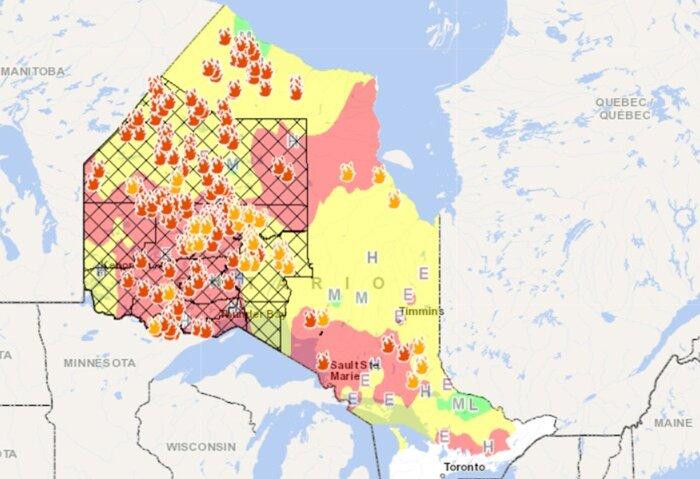
Thunder Bay, the largest city near the wildfires raging in the northwestern part of the province, is expected to have widespread smoke in the air until at least July 19, according to Environment Canada.The air quality remained at “hazardous” levels by late afternoon and will fluctuate in the coming days, but IQAir is not predicting it will hit “moderate” until July 19 for a brief period before smoke pollution pushes it back up to “unhealthy” by mid-morning. The air is expected to improve again to “moderate” by the early morning hours of July 20.