This copy is for your personal, non-commercial use only. Distribution and use of this material are governed by our Subscriber Agreement and by copyright law. For non-personal use or to order multiple copies, please contact The Epoch Times Reprints.
How 7-Year Investigation Into UK Novichok Poisonings Led Back to Kremlin
The Dawn Sturgess Inquiry report says Novichok attack in 2018 was carried out on the orders of Russian President Vladimir Putin, not ’staged' by Britain.
Undated images of a perfume bottle (Left) containing the deadly nerve agent Novichok—and the fake packaging (Right) it came in—which killed Dawn Sturgess in Salisbury, England, on July 8, 2018. Metropolitan Police/Dawn Sturgess Inquiry
An attack in 2018 using the nerve agent Novichok—which targeted a former Russian agent, Sergei Skripal, but unwittingly killed 44-year-old Dawn Sturgess—was carried out on the orders of Russian President Vladimir Putin, according to a report published at the conclusion of a 14-month public inquiry.
The Dawn Sturgess Inquiry published its report on Dec. 4, and the chair, Lord Anthony Hughes, ruled out both a “staged attack” by Britain and an initiative taken by rogue Russian agents.
Sturgess died in July 2018, after spraying a liquid on herself, which had been inside a perfume bottle she had been gifted by her boyfriend, Charlie Rowley, a drug user, who had found it in a garbage bin in Salisbury.
The report said those who attempted to assassinate Skripal were “morally responsible” for the death of Sturgess.
Here is a reminder of the key events.
Dawn Sturgess Inquiry
In the spring and summer of 2018, the cathedral city of Salisbury in the west of England was at the center of a global news story after the Russian nerve agent, Novichok, was identified to have killed Sturgess and poisoned Sergei Skripal, a 66-year-old former FSB agent, and his daughter Yulia, 33, who both recovered.
The Dawn Sturgess Inquiry was set up to look into the death of Sturgess, an alcoholic mother-of-three who died on July 8, 2018.
Originally meant to be an inquest, the British government decided in November 2021 to convert it into a public inquiry, a decision supported by Sturgess’s family.
Although the inquiry, which was chaired by Lord Hughes, a UK Supreme Court judge, was largely held in public, some hearings were held in secret, and matters were not disclosed, following a ruling in 2022.
The inquiry has cost £8.3 million ($11 million).
Who Is Sergei Skripal?
On March 4, 2018, Skripal, a former agent of Russian military intelligence, the GRU, was found ill on a bench in Salisbury along with his daughter, Yulia, who had been visiting from Moscow.
It was initially believed they might have taken an overdose of fentanyl, or possibly carfentanyl, which is even more potent.
After tests were carried out, Novichok was identified as being responsible.
Skripal had been accused of spying for Britain in Russia, and in 2004 he was convicted of espionage and sentenced to 13 years in prison. In 2010, he was part of a Cold War-style exchange involving British and U.S. spies, was given a pardon by Russia and came to live in exile in Britain.
The former spy and his daughter—who gave statements to the police in 2018—were both excused from giving evidence to the inquiry.
Detective Sergeant Nick Bailey also fell ill on March 8, 2018, after visiting Skripal’s home in Salisbury while wearing a forensic suit, but has since made a full recovery.
“The operation to assassinate Sergei Skripal must have been authorized at the highest level, indeed by President Putin,” said Lord Hughes at a press conference on Thursday.
The report said Skripal was offered security measures, including being given a new identity, but turned it down because he had been given a presidential pardon and “wanted to lead as normal life as possible.”
One of World’s Most Deadly Toxins
Novichok—which means “newcomer” in Russian—is a man-made toxin, which, according to the U.S. National Library of Medicine, was first created in the Soviet Union as part of a secret chemical weapons program.
The lead scientific adviser, from the UK’s Defence and Science Technology Laboratory (DSTL), referred to only as MK26, told the inquiry they tested for two other nerve agents, sarin and VX, which were both negative, before they found traces of Novichok-butyryl cholinesterase, “a characteristic marker for exposure” to Novichok.
Sturgess had been given a bottle of what she believed to be perfume, because it was in a pink box with the branding of Premier Jour by Nina Ricci.
Puig, the company that owns Nina Ricci, later told the police it did not manufacture a 5.5 milliliter size box, and also pointed out the barcode on the box was fake.
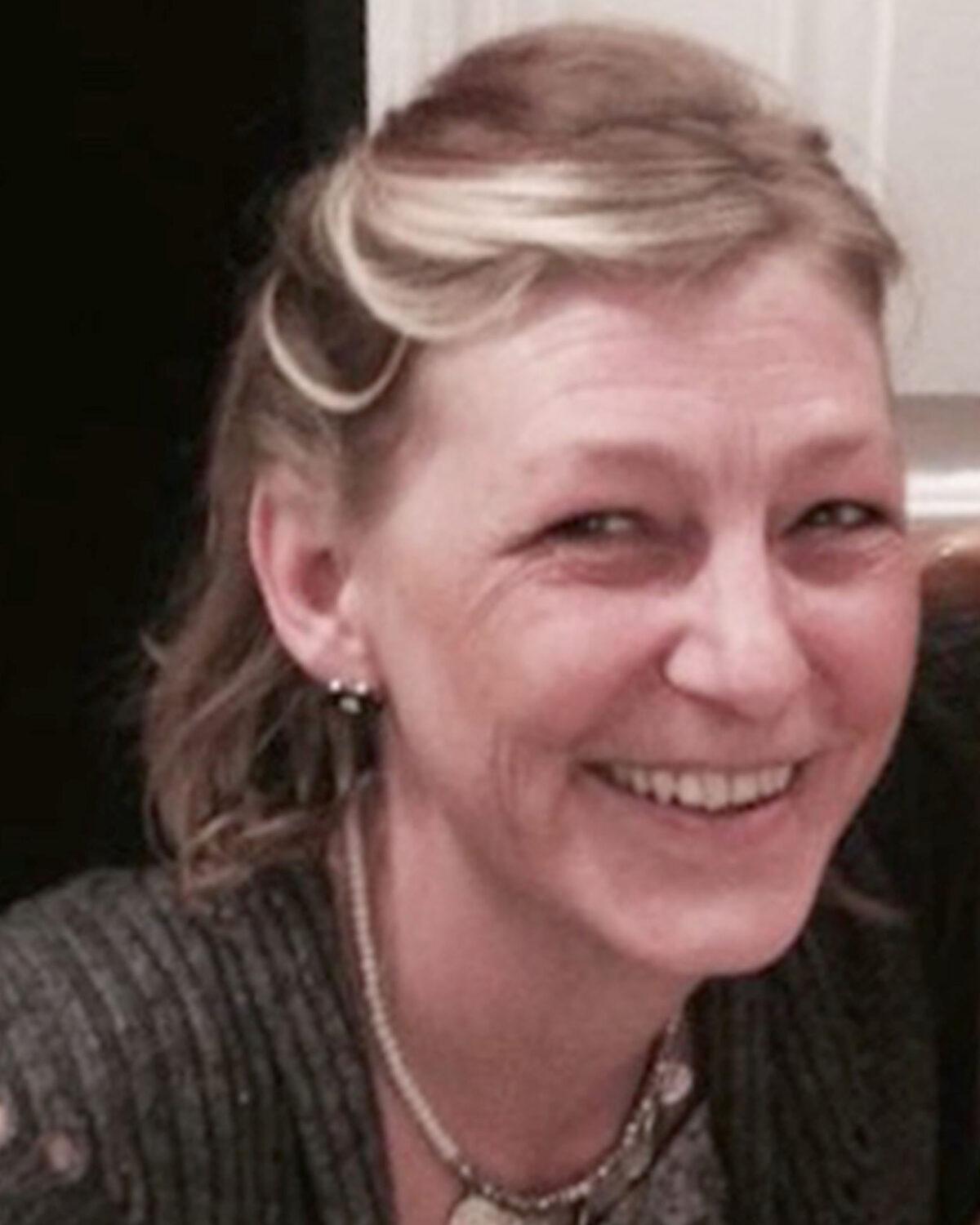
An undated image of Dawn Sturgess, who died after being exposed to the Novichok nerve agent in Amesbury, England, on July 8, 2018. Metropolitan Police
The Novichok found in the perfume bottle at Rowley’s house was at a “high level of purity,” MK26 told the inquiry, and when tested, contained sufficient material that had the potential “to kill many thousands of innocent people” if delivered effectively.
Commander Dominic Murphy, head of the Metropolitan Police’s counter-terrorism command, told the inquiry he believed GRU operatives had sprayed Novichok on the knob used to open the front door of Skripal’s home, and he said they had a “strong assessment” that the perfume bottle had been the actual weapon used on the Skripals.
The report said it is “not plausible” that the perfume bottle was not the same source of the Novichok that poisoned the Skripals. It said Rowley’s account of how he came to be in possession of it was “fraught with inconsistency,” but it was a reasonable possibility that he found it in a bin in March 2018.
Russian Agents or Cathedral Tourists?
In September 2018, it emerged that two Russian nationals had arrived in Britain on March 2, using the names Alexander Petrov and Ruslan Boshirov, visited Salisbury on March 3, and again on the following day.
The pair, back in Moscow, did an interview with the Russian television channel RT, in which they claimed to be genuine tourists.
“Our friends had been suggesting for a long time that we visit this wonderful town,” said Petrov, while Boshirov said they had wanted to visit Salisbury Cathedral, which he said was “famous not just in Europe, but in the whole world. It’s famous for its 123-metre spire [404 feet], it’s famous for its clock, the first one ever created in the world, which is still working.”
Alexander Petrov (L) and Ruslan Boshirov (R) during a television interview at an unidentified location in Russia on Sept. 13, 2018. RT/Handout via Reuters TV
In January 2019, the pair were sanctioned by Britain, along with GRU boss Igor Kostyukov.
The report said it accepted evidence that Petrov’s real name is Aleksandr Mishkin, and Boshirov is really Anatoly Chepiga, who have both been sanctioned by the U.S. government.
“They said [in RT interview] that they had never heard of Sergei Skripal and did not know whether or not they had been anywhere near his home,” said the report.
Lord Hughes said the pair’s account given on RT was “false, not to say ludicrous.”
“It seems to be more consistent with making a formal denial for public purposes, which only the credulous would be likely to take seriously,” he said.
The evidence “points firmly against a private initiative” by rogue GRU agents, he said.
“In the context of a state where executive power is heavily concentrated in the person of the President, an attempt on the life of Sergei Skripal would not have been made without the approval of the Russian President [Putin],” said the report.
Lord Hughes also discounted the possibility of a false flag operation by British intelligence services.
“If any staged process took place, that would mean that those who staged it must have taken advantage of the fortuitous arrival in the UK of two Russian travellers to blame Russian hands for the attack,” he said.
Political Reaction to Salisbury Poisonings
Theresa May was the British prime minister at the time of the Salisbury poisonings, and on March 12, 2018, she told Parliament it had been a “reckless and despicable act.”
“The government have concluded that it is highly likely that Russia was responsible for the act against Sergei and Yulia Skripal,” May said, adding that it was either “a direct act by the Russian state against our country” or the Russian government had “lost control of their potentially catastrophically damaging nerve agent and allowed it to get into the hands of others.”
Five days later, the Kremlin retaliated by expelling 23 British diplomats.
In April 2018, the left-wing leader of the opposition Labour Party, Jeremy Corbyn, said it had not been proven that Russia was the source of the incident.
On Sept. 5, 2018, May told Parliament there was enough evidence for the Director of Public Prosecutions to bring charges against Petrov and Boshirov.
The Russian Embassy in London said in a statement on March 4, 2019, that, “Despite huge efforts the police have been unable to support the official political version of the incident with facts and proof.”
“The immense work of the police turns out to be meaningless when they are expected not to establish the truth, but to follow the artificial script written by the Conservative government days after the attack,” it said.
In August 2019, U.S. President Donald Trump imposed extra sanctions on Russia as a direct result of the Skripal case.
In September 2021, Britain’s Crown Prosecution Service charged a third man, Denis Sergeev, also known as Sergey Fedotov, with conspiracy to murder Sergei Skripal, and possession and use of a chemical weapon.
British Prime Minister Keir Starmer said on Dec. 4: “The Salisbury poisonings shocked the nation and today’s findings are a grave reminder of the Kremlin’s disregard for innocent lives.
“Dawn’s needless death was a tragedy and will forever be a reminder of Russia’s reckless aggression.”
Starmer also announced sanctions on the GRU and 11 named individuals, who were described as “actors behind Russian state sponsored hostile activity.”
The Sturgess family issued a statement criticizing Lord Hughes for not making any public health recommendations.
“After Dawn was killed, the public were given clear advice: do not pick up items you have not dropped,” said the family. “We have always believed that that advice should have been issued after the Salisbury attack, before Dawn was killed.”
Unanswered Questions
On Sept. 5, 2018, May told Parliament the two Russian suspects had been in the vicinity of the Skripals’ home at 11:58 a.m. on March 4, 2018.
They returned by train to London, arriving at 4:45 p.m., and flew back to Moscow at 10:30 p.m., but the inquiry was unable to explain where they disposed of the perfume box, and it also was unable to explain how they had resealed the packaging.
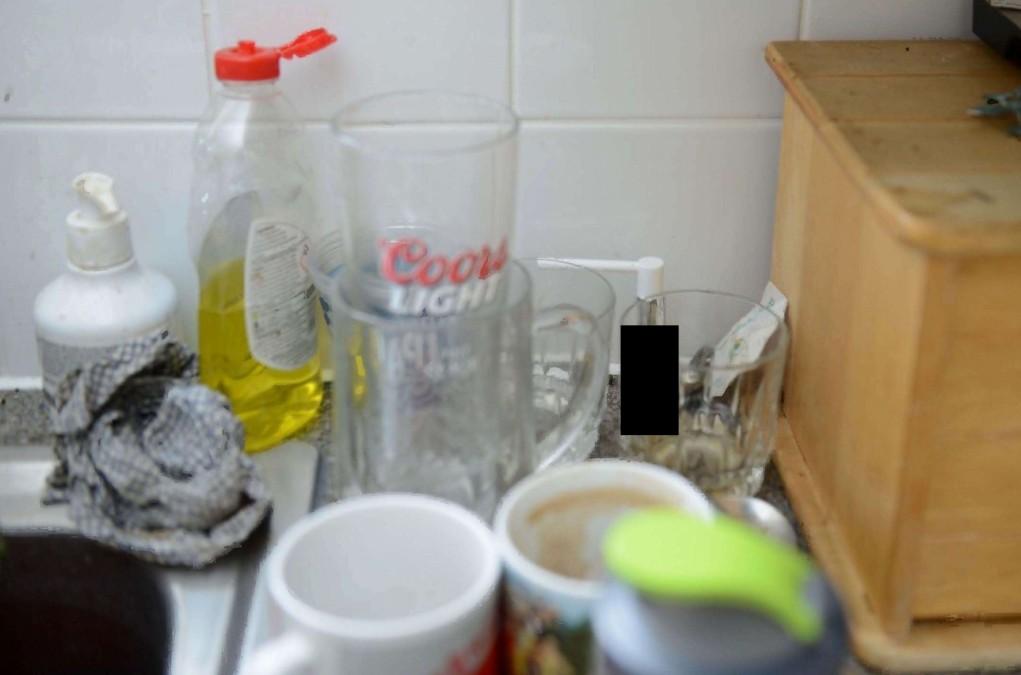
An undated image showing the perfume bottle (behind the black rectangle) containing Novichok, which was found at Charlie Rowley's home in Amesbury, England, after his girlfriend Dawn Sturgess died on July 8, 2018. Metropolitan Police/Dawn Sturgess Inquiry
Rowley had told ITV News he remembered the perfume had still been in its cellophane packaging, and the nozzle had been separate from the bottle, requiring him to reattach it before giving it to Sturgess on June 30, 2018.
The Sturgess Inquiry heard that there was only a 33-minute window, between 12:17 p.m. and 12:50 p.m. on March 4, 2018, when the pair were not on CCTV cameras.
Andrew O'Connor, the lead counsel to the inquiry, asked Murphy, head of the Metropolitan Police’s counter-terrorism command, if it was possible during that period for the pair to have walked down to a public toilet, unpacked it, heat-sealed it into some plastic packaging, put it back into the box, then walked back to the Brown Street parking lot, left the box in a bin, and then reappeared on cameras in the High Street.
“It’s entirely possible,” Murphy said. “I think it would be quite challenging but entirely possible they could do that in 33 minutes, yes.”
Rowley—who is said to be in “poor mental and physical health”—was unable to remember where or when he had found the perfume box. He was also excused from giving evidence to the inquiry by a ruling in November 2024.
Another question that has never been fully answered is why the Novichok did not kill more, and how Yulia Skripal made such a remarkable recovery.
“This was a girl I never thought I would see move again,” said Dr. Stephen Cockcroft, referring to Yulia regaining consciousness four days after she fell ill.
“I was quite convinced she suffered a catastrophic brain damage and I couldn’t believe that she could be as neurologically intact as she obviously was. She was looking at me, she was nodding, she was crying, she was absolutely terrified,” he told the inquiry.
Later that day Yulia Skripal, who was too unwell to talk, apparently underwent an interview where she was asked questions by a medical professional and asked to give “yes” or “no” replies depending on a number of blinks, and seemed to indicate she had been sprayed at Zizzi’s restaurant.
But when she made a statement to the media on May 23, 2018, Yulia made no mention of waking up on March 8, or of her “blink interview.”
“After 20 days in a coma, I woke to the news that we may have been poisoned,” she said. “I still find it difficult to come to terms with the fact that both of us were attacked.”
The report did not mention the resealed packaging, but said Rowley’s memory was “fallible.”
It also said there had been a great deal of uninformed comment and “sometimes imaginative theories” in various postings on social media.
Echoes of Litvinenko Case
The Salisbury incident came 12 years after Alexander Litvinenko, a former agent of the Russian federal security service (FSB), who defected to Britain and became a critic of Putin, was killed in London.
Litvinenko, 44, died in hospital on Nov. 23, 2006.
A public inquiry in the UK found in 2016 that two Russian men—Andrey Lugovoy and Dmitri Kovtun—had deliberately poisoned Litvinenko by putting polonium-210 into his tea during a meeting at a London hotel on Nov. 1, 2006.
Russia has always denied murdering Litvinenko.
In September 2021, the European Court of Human Rights ruled that Russia had been responsible for Litvinenko’s death.
A Russian judge on the ECHR panel, Dmitry Dedov, disagreed with the ruling and said, “I found many deficiencies in the analysis by the British inquiry and by the court which raise reasonable doubts as to the involvement of the suspects in the poisoning and whether they were acting as agents of the state.”
In a statement published in November 2021 after a public inquiry was announced, the Russian Embassy in London said, “It confirms our earlier assumption that the situation around Salisbury and Amesbury ‘poisonings’ and the tragic death of Dawn Sturgess would develop in accordance with the painfully familiar Litvinenko case playbook.”
“Both Alexander Litvinenko and Sergei Skripal were perceived traitors to the Russian state,” the Dawn Sturgess report said, but it said their cases are not entirely analogous, as Litvinenko was a defector who had “campaigned energetically and noisily against the Russian state, and against Mr. Putin personally.”
US Anthrax Letters
The Salisbury poisonings have some similarities to the infamous anthrax letters incident of 2001, sometimes called Amerithrax.
In the fall of 2001, five people—two journalists, two postal workers, and a 94-year-old woman—were killed, and 17 became ill after a number of letters, containing samples of anthrax, a deadly toxin, were mailed to media outlets in Florida, New York, and New Jersey.
The letters—which contained phrases like “death to America, death to Israel”—came only weeks after 9/11, and caused widespread alarm as they were widely perceived to be a terrorist attack.
The FBI identified Bruce Ivins, a government-employed microbiologist, as the prime suspect.
Ivins died in August 2008, after apparently taking an overdose and committing suicide.
When, in February 2010, the FBI and the Department of Justice formally closed the case, they issued a statement which said, “As disclosed previously, the Amerithrax investigation found that the late Dr. Bruce Ivins acted alone in planning and executing these attacks.”