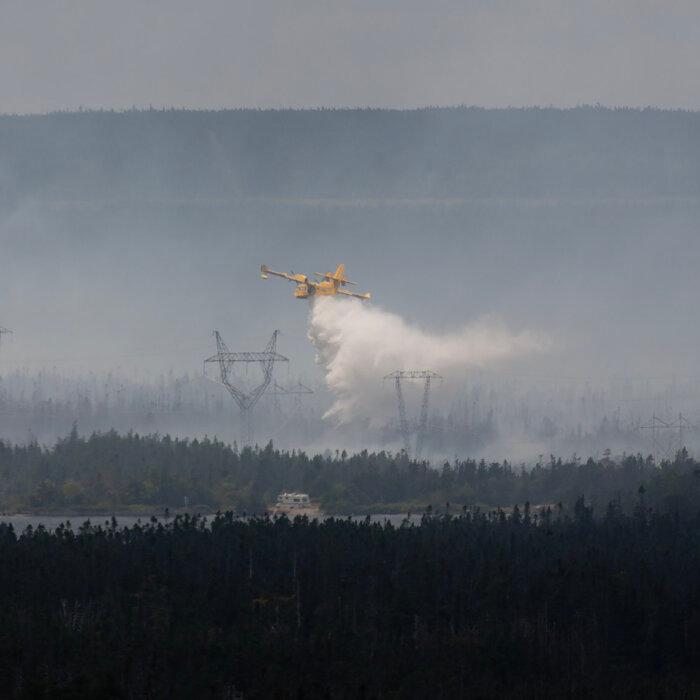
A helicopter crashed on the afternoon of Aug. 15 while battling to contain wildfires in Long Lake, Nova Scotia.
“The pilot was conscious and talking with firefighters who quickly reached the aircraft. By 6 p.m. he was rescued from his aircraft and taken for medical assessment,” DNR said, noting that Transport Canada will be investigating the incident with full DNR cooperation.
DNR added that the pilot’s name is not being released for reasons of privacy.
On Aug. 14, DNR spokesman Dave Steeves said the province’s efforts to use helicopters to help put out forest fires is highly effective.
“I’ve been a professional firefighter for over 20 years now and the helicopter resources that we have are extremely effective,” Steeves said, adding, “We have a group of very talented pilots.”

DNR has set up emergency shelter at the Annapolis Valley Campus of Nova Scotia Community College to house evacuees.
Nova Scotia fire protection director Jim Rudderham warned Aug. 15 that thunderstorms and lightning, which occurred the night of Aug. 14, will likely spark more wildfires in the province in the days to come as lightning can go deep into dry soil.
“Lightning has a lot of power. It could drive into the ground and take some time to work its way back out again with fire,” Rudderham said. “It might take a while to pop up.”
Rudderham said that on Thursday, provincial officials asked for help from water bombers in another province, but those aircraft could not make it to Nova Scotia because of the long line of thunderstorms. The availability of water bombers has been stretched thin because of the ongoing wildfires across Atlantic Canada, he added.
Nova Scotia has experienced particularly dry conditions in recent weeks, with no major rainfall predicted until Aug. 17 for Annapolis County.