Heat advisories and air quality warnings have been issued across the country as elevated temperatures and wildfire smoke continue to affect several provinces.
Environment Canada issued 90 heat advisories throughout Ontario, Quebec, Nova Scotia, and Newfoundland and Labrador on July 14, as well as hundreds of air quality statements or warnings across seven provinces and territories.
Ontario, Quebec Air and Heat Warnings
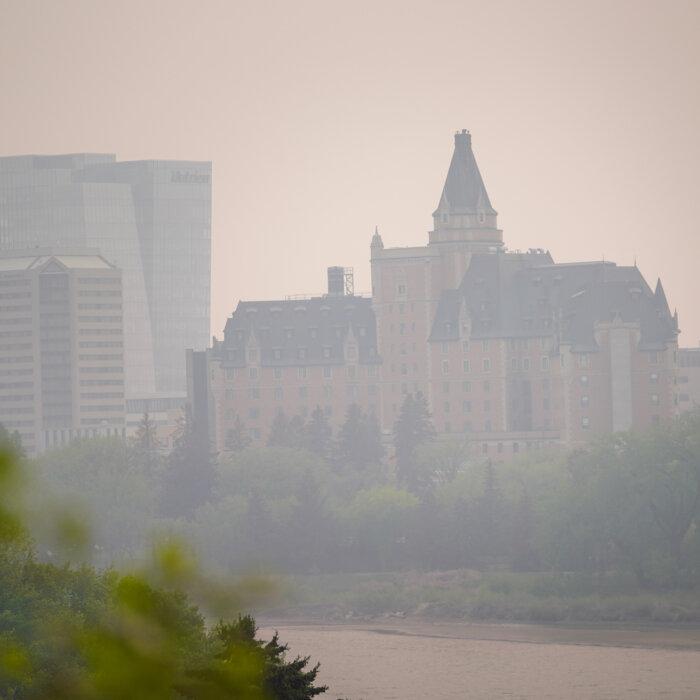
Smoke from forest fires in the far northwestern area of the province is drifting south causing the air quality to deteriorate, Environment Canada said.Air quality warnings are currently in place for Toronto and the surrounding Greater Toronto Area, as well as Cobourg, Northumberland County, the Kawarthas, and the Peterborough region, while statements have been released for the rest of the province, extending from Thunder Bay in the north to Windsor in the south.
The poor air quality is expected to persist into June 15 for some areas.
Daytime temperatures are expected to hit as high as 32 degrees Celsius in the Toronto region today, with humidex readings ranging from 35 degrees Celsius to 40 degrees Celsius, the government agency said.
Much of southeastern and southwestern Ontario can expect similar temperatures, the weather service said. Temperatures in Belleville, Hamilton, Kingston, Kitchener, London, Niagara Falls, Ottawa, Peterborough, Sarnia, and Windsor are also expected to hit up to 40 degrees Celsius with the humidity.
The heat and air quality warnings also apply to parts of southern Quebec, including Montreal, Laval, and Trois-Rivieres where the mercury will rise to 33 degrees Celsius but will feel like 40 with the humidity, the weather agency said. The nights will also be warm, with minimum temperatures ranging between 20 and 23 degrees Celsius.
Air quality statements were primarily issued for northern Quebec, although some areas further south, such as Gatineau and Maniwaki, will also be impacted.
A smaller number of heat advisories were issued for Atlantic Canada. Annapolis, Digby, and Kings counties in Nova Scotia can expect maximum daytime temperatures of 29 to 33 degrees Celsius but it could feel as warm as 37 with the humidity, Environment Canada said.
Air Quality Issues Hit Prairies
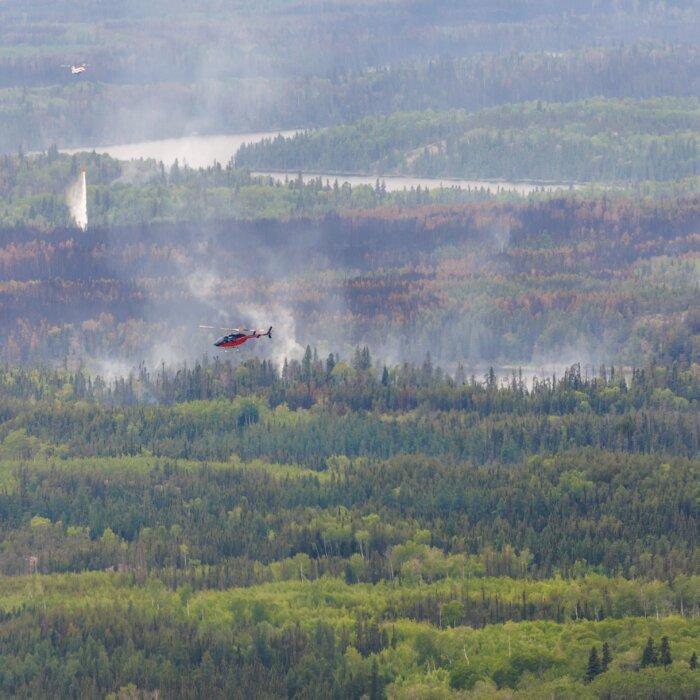
Wildfires that continue to rage in Saskatchewan and Manitoba are generating large volumes of smoke that are saturating the atmosphere across several provinces.The weather agency issued more than 70 air quality warnings for Saskatchewan today as well as air quality statements for much of Manitoba. A handful of statements were also issued for a small section of Alberta, located north of Red Deer and east of Edmonton.
Two of Canada’s territories could also have smokey skies. Three air quality statements were issued for the Northwest Territories while five were published for Yukon.
The agency noted that air quality and visibility due to wildfire smoke can fluctuate over short distances and vary from hour to hour.
The worst wildfire season on record in Canada was in 2023, when 18.4 million hectares were consumed by flames, far surpassing the 10-year average of 2.5 million hectares.