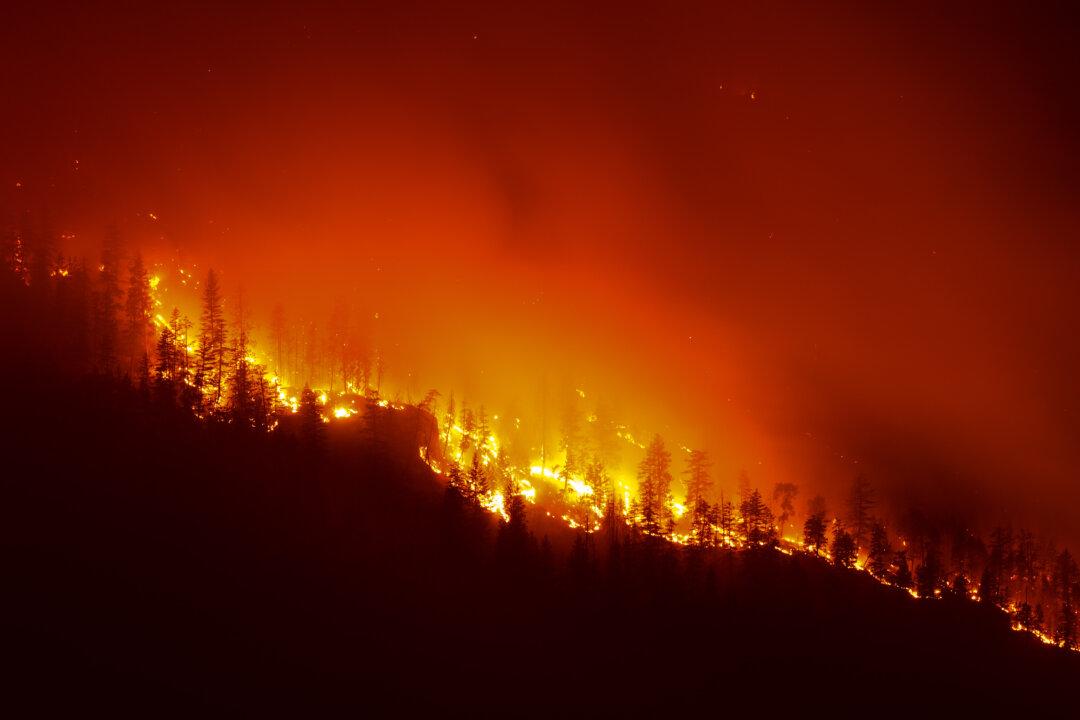
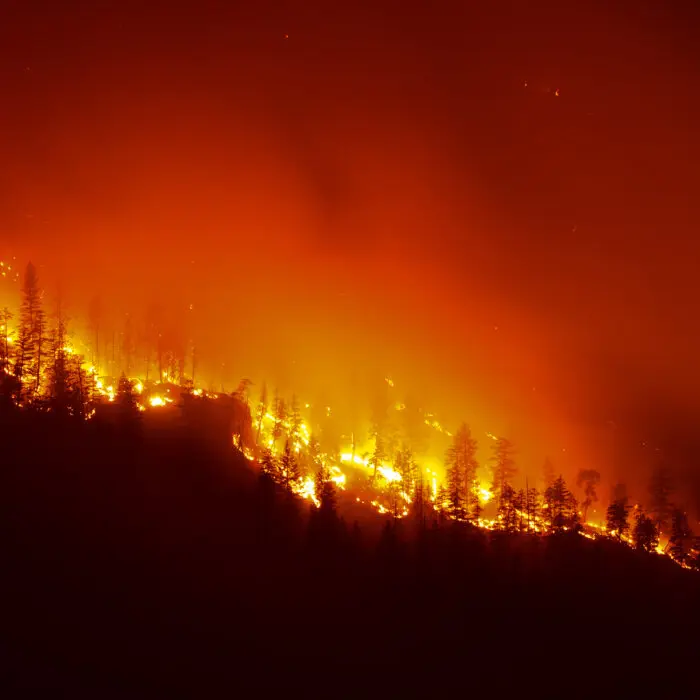
About 120 active wildfires are burning in British Columbia and roughly 8,000 residents have been ordered to evacuate their homes as of Aug. 5.
While this year’s wildfire season is not unusually severe compared to recent years, wildfires are generally more intense than they were decades ago, leaving opinions divided over what’s driving the trend. Some argue drier, hotter conditions and climate change are making fires more fierce, while others contend decades of forest management decisions have left forests primed to burn.
From April 1 to Aug. 4 of this year, B.C. recorded 869 fires, compared with 833 over the same period last year and a 10-year average of 943, according to the Canadian Interagency Forest Fire Centre (CIFFC).
Some 301,000 hectares have burned so far this fire season, compared with 729,000 last year and a 10-year average of 454,000, the agency added.
“As per our summer 2026 outlook, released in June 16, 2026, we did see above-average drought conditions in areas in the Chilcotin, Lower Thompson, Okanagan, Vancouver Island and then also the Northeast regions of B.C.,” CIFFC wrote in an Aug. 4 email to The Epoch Times. “You will see that the current fire activity is mostly concentrated in this area as well.”
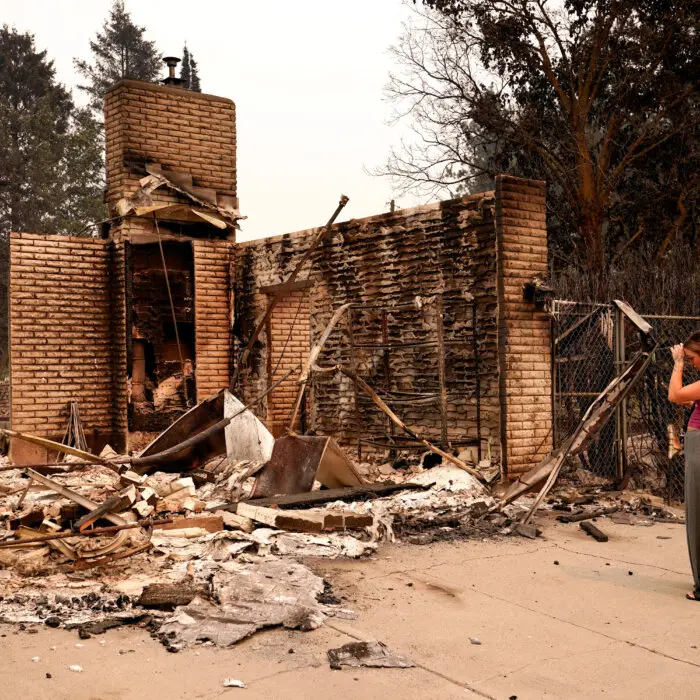
Weather Conditions and Forest Management
Phil Burton, professor emeritus of ecosystem science and management at the University of Northern British Columbia, said this year’s wildfire season is consistent with wildfire seasons since 2017, which he attributes mainly to extreme weather.“We’ve had record fire years repeatedly over the last decade—2017, 2018, 2021, 2023,” Burton told The Epoch Times. “I won’t say it’s the new normal, but it’s certainly consistent with the trend, the pattern we’ve seen over the last decade, maybe two decades even.”
Burton said climate change is disrupting climate systems and leading to extreme weather events, including extremely hot and dry weather as well as flooding and unpredictable weather systems in other areas.
“Because the Arctic is warming faster than the temperate and tropical latitudes, it’s sort of thrown the high-altitude air movements—the jet stream—for a bit of a loop, so it’s wobbling more, and it can stall more easily,” he said.
“That’s why you can have floods in Edmonton and fires in northern Ontario at the same time.”
Not all researchers agree that climate change is the main force behind the destructive wildfires, however. Some argue that decades of forest management decisions have played a larger role in how intensely the forests burn.
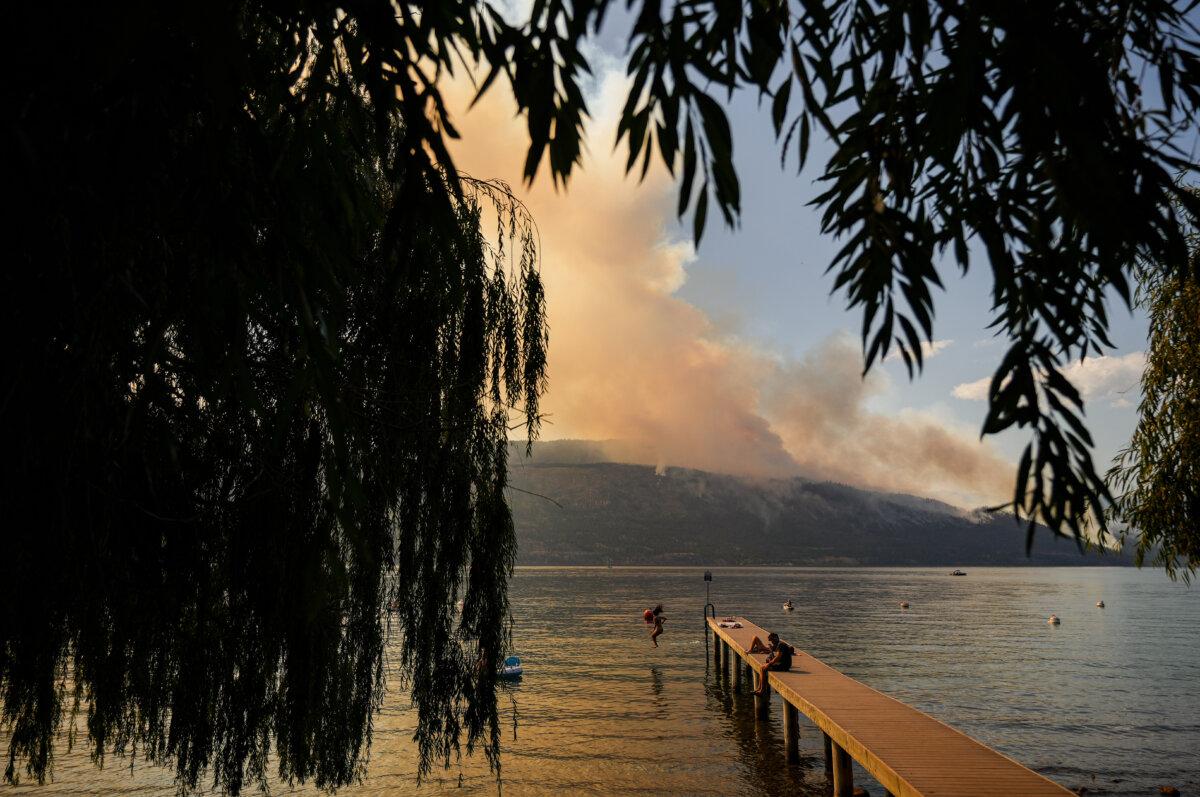
Cornelis van Kooten, professor emeritus of resource economics at the University of Victoria and a former Canada Research Chair, said forest management practices have left many of B.C.’s forests with heavy fuel loads that allow fires to spread more intensely.
Forest management includes practices meant to reduce risks of fire and keep forests healthy, including using controlled burns, thinning dense tree areas, clearing debris and dead wood, creating fire breaks, and managing brush and vegetation near populated areas.
Van Kooten said that logging in particular often leaves limbs, treetops, stumps, and bits of wood on the ground where they can become potent fuel during summer months.
“We found they have more burns on places that you’ve cut, so that immediately tells you that you have a forest management issue,” van Kooten told The Epoch Times.
“This climate business—that’s a big excuse,” he said. “Sure, it’s getting warmer, but the problem is really forest management.”
Curbing Wildfires
Burton said wildfire severity and frequency can sometimes be lessened by clearing dry vegetation and debris from around residences and carrying out controlled burns as indigenous people have done throughout history, along with thinning trees and bushes.He also pointed to the possibility of changing logging practices to reduce woody debris left on the ground, as well as planting more deciduous trees, which have more moisture than conifers, getting rid of flammable material near buildings, and constructing structures out of fire-resistant materials.
“Forewarned is forearmed,” Burton added. “Be prepared in terms of some of these immediate home-hardening treatments around houses, residences, businesses. Keep that flammable material away.”
However, Burton said that while FireSmart measures and controlled burns may reduce wildfires and save homes in some cases, they can’t fully offset the effects of extreme weather events.
“It’s all about reducing the chances of spread, reducing the chances of catastrophic, high-intensity, high-severity fires,” Burton said. “But you’re still rolling the dice.”
When long-term drought, low humidity, and windy conditions come together, he said, there is often little communities can do but evacuate.
“Once those things all concur, then your chances of either being able to stop a fire or anything you change on the forest landscape making a difference are out the window,” he said.
Burton said that, in some parts of B.C.’s southern interior, the landscape itself may be changing.
“We’re going through a switch whereby what used to be Douglas fir forest now wants to be grassland and sagebrush, and that will reduce some of the threats somewhat over time,” he said, noting that the area near Lytton, B.C., for example, “is probably not going to stay forest, even if they tried to replant it.”
Van Kooten said using prescribed burns, thinning forests, and removing logging debris can reduce wildfire intensity, although he acknowledged such measures can be costly, particularly across B.C.’s vast forested landscape.
Controlled burns are generally less expensive, he said, but they often face public resistance because of concerns they could escape containment.
Van Kooten said governments often prioritize fighting fires once they begin rather than investing in long-term prevention.
‘Fire Deficit’
Burton and van Kooten say that parts of the province’s southern interior have accumulated combustible debris after decades of aggressive fire suppression. Both describe the result as a “fire deficit”—too few frequent, low-intensity fires to clear out fuel before larger, more destructive wildfires occur.Burton said “small-scale, cool fires” would help burn up some of the fuel accumulated in these areas and help reduce the intensity and frequency of some wildfires. However, he cautioned against using the same technique across the province.
“For most of Canada—the boreal, the wet coast, the northern interior—it’s much more of a climate-limited system,” Burton said. “Just controlling the fuel won’t make much difference. It’s a different problem that requires a different solution.”
Burton said B.C. and Canada more widely shouldn’t turn to one approach as a solution but should adapt approaches to the ecology and fire risks of each different region.
“We really need to beware of one-size-fits-all,” he said. “There’s an ongoing discussion, and people are amassing data within the scientific community now as to how much good that can really do everywhere.”
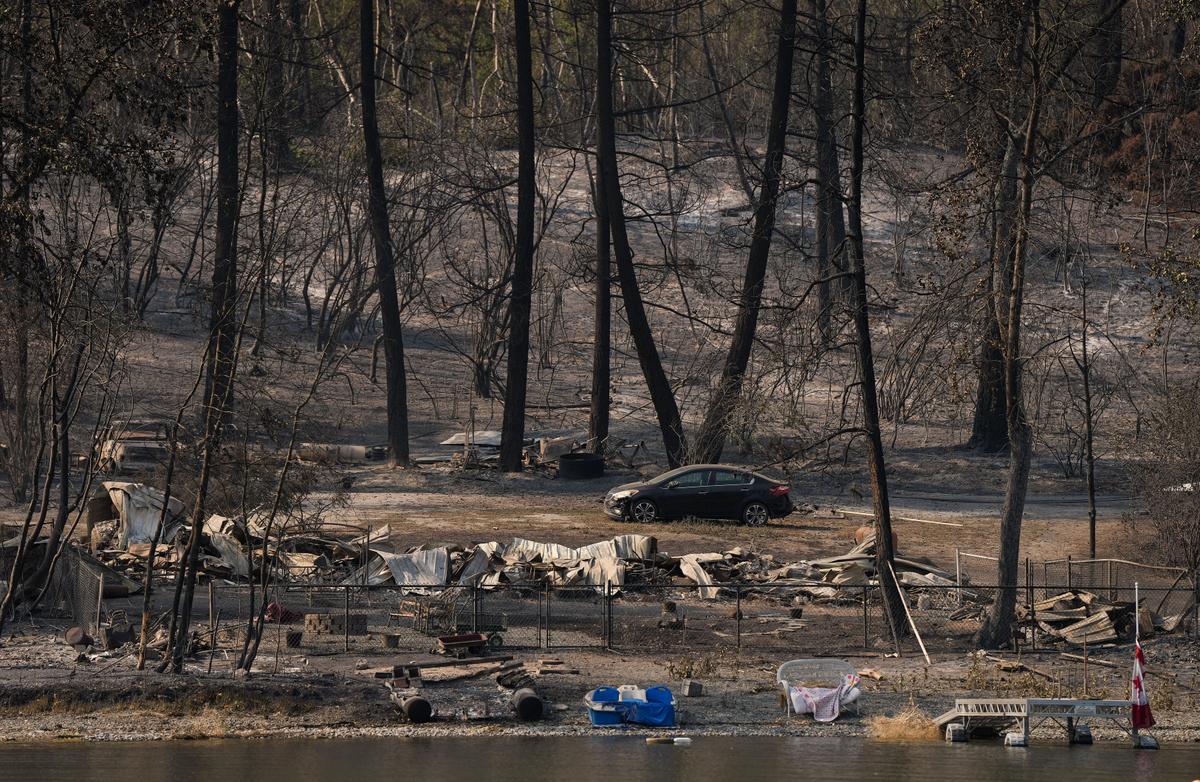
Van Kooten, meanwhile, said prescribed burning should be used so that hot temperatures and high winds don’t have dry fuel to light up on the forest floors.
Government’s Response
The B.C. government said its fire prevention program works with First Nations, municipalities, and industry to lessen fire risks in forested areas and places where treed areas overlap with residential areas.Provincial officials say continued hot, dry weather and lightning could trigger additional wildfire starts later this week.