Federal and provincial governments have promised to match donations to the Red Cross to support those impacted by the wildfires raging in Manitoba and Saskatchewan.
Both provinces declared provincewide states of emergency last week to enable different levels of government to coordinate resources and provide support as tens of thousands of residents are forced to evacuate their homes.
Ottawa has promised to match each dollar contributed to the Canadian Red Cross up to $30 million, which will aid in wildfire disaster relief and recovery initiatives throughout both provinces, according to government press releases from June 4.
Saskatchewan said it will “immediately” provide $15 million to the Canadian Red Cross to work with the Saskatchewan Public Safety Agency to support the more than 15,000 residents who have been displaced by wildfires.
Premier Scott Moe noted in a June 3 social media post that every dollar donated to the Canadian Red Cross 2025 Saskatchewan Wildfires Appeal would become $2 with Ottawa’s matching funding.
“Saskatchewan people are known for coming together in times of need,” Moe added in the release. “This fundraising initiative to support those impacted by the wildfires reflects the generosity shown in our province and throughout the country. We thank the Canadian Red Cross for their fundraising efforts and for providing support for evacuees as we continue to fight these wildfires.”
Saskatchewan donation matching is in effect from May 30 to June 29.
Like Ottawa, Manitoba’s NDP government will also match donations up to $15 million. The province said in a press release that the funds will be used to support evacuees and the communities hosting them as well as recovery efforts and community preparedness initiatives to reduce risk for future “disaster events” within Manitoba.
Manitoba Emergency Management Minister Lisa Naylor described the provincial donation as a reflection of the generosity embodied by its own residents.
“Since the start of the evacuation process, the people of Manitoba have stepped up and shown incredible kindness and empathy toward their fellow citizens facing hardship during a crisis,” Naylor said in the press release.
“The provincial government is proud to reflect those values and, on their behalf, we have humbly stood with the federal government and the Canadian Red Cross to support evacuees and their families from the moment they begin to navigate the challenges of staying secure and healthy while away from their communities until they can safely return home.”
Donation matching began on May 28 and will be open for 30 days.
Out-of-Control Fires
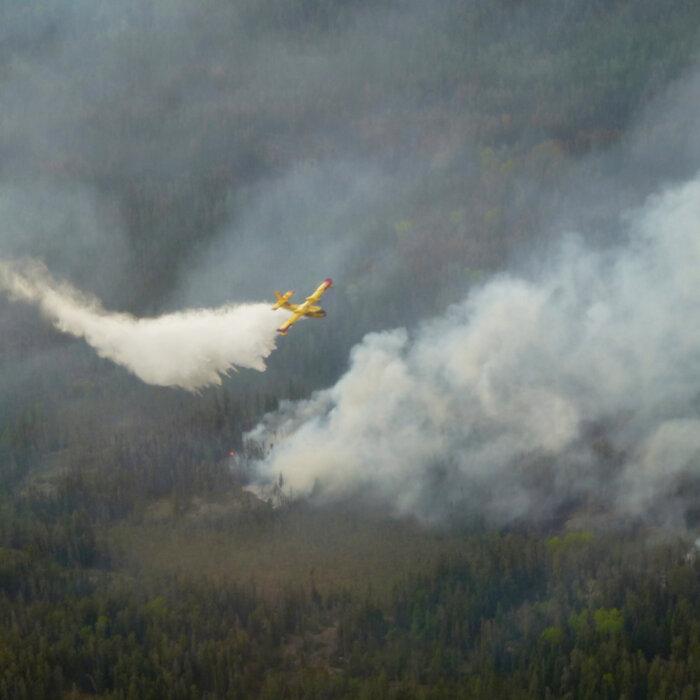
More than 30,000 residents in Manitoba and Saskatchewan have been forced to evacuate as dozens of wildfires continue to blaze in the northern regions of both prairie provinces.There are currently 27 wildfires burning in Manitoba with more than a dozen burning out of control, some in “close proximity” to communities such as Flin Flon which was evacuated last week, Conservation Officer Service and Manitoba Wildfire Service assistant deputy minister Kristin Hayward said in a June 5 press conference.
The fires span roughly 465,000 hectares to date and more than 17,000 residents have been forced to leave their homes thus far.
Evacuations in Saskatchewan have climbed past the 15,000 mark as a June 5 voluntary evacuation order was issued for the Resort Village of Candle Lake in response to a fast-moving fire. A pre-evacuation was also issued for the Paddockwood region due to a wildfire that is threatening the community, according to the Saskatchewan Public Safety Agency.
“The Shoe Fire is currently uncontained and is susceptible to wind conditions,” the advisory said. “Individuals in the Aspen Ridge and Cranberry Creek Subdivisions, Torch Light RV Park and surrounding properties are under a pre-evacuation order.”
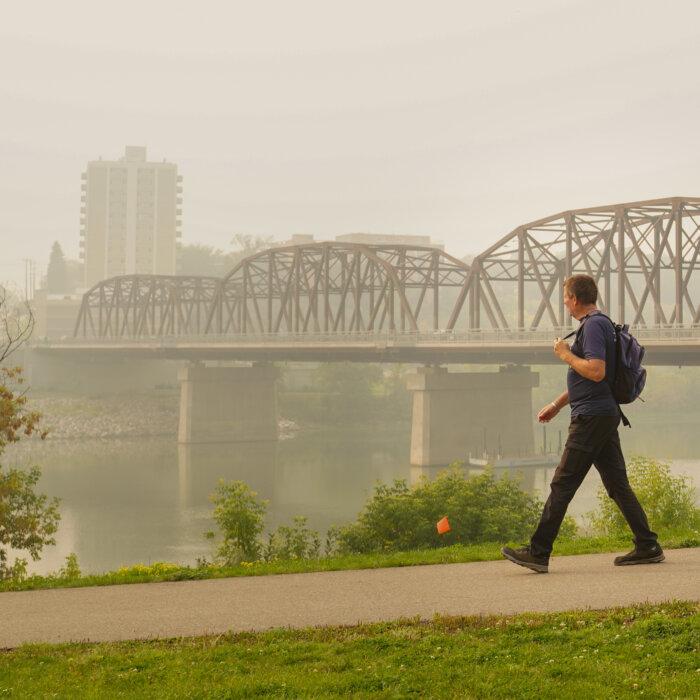
Dry and windy conditions have made the blazes tough to battle in both provinces. Air quality warnings have been issued by Environment Canada in parts of Saskatchewan and Manitoba as well as for northern Ontario and Quebec as winds push the smoke east across the provinces.